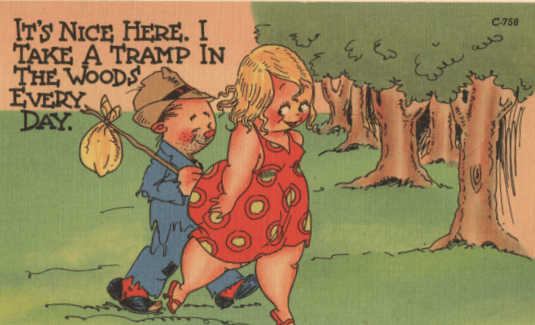
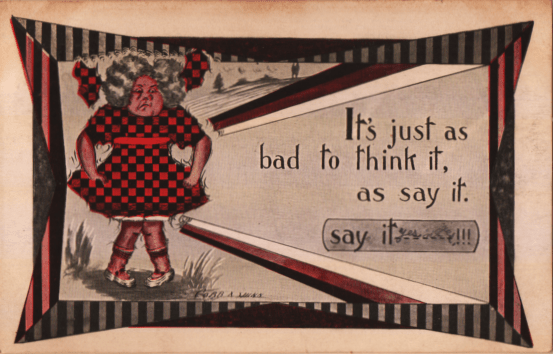
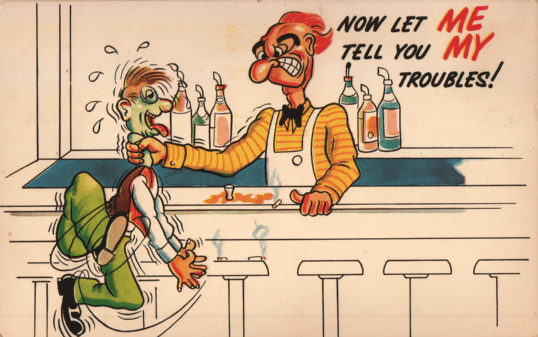
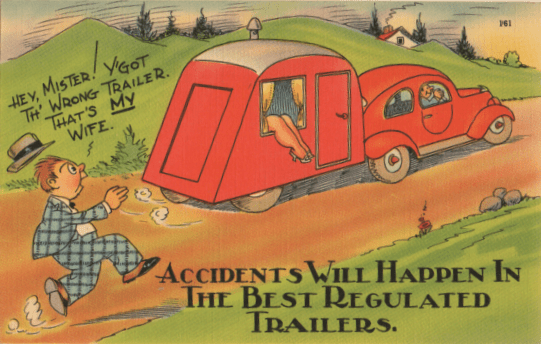
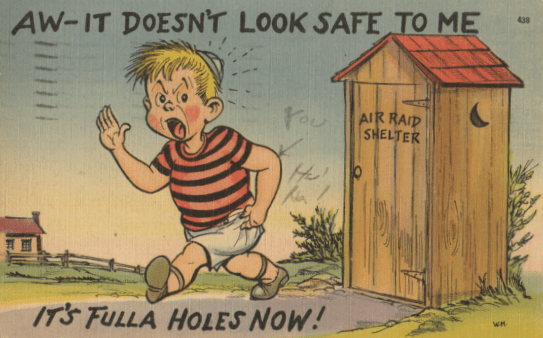
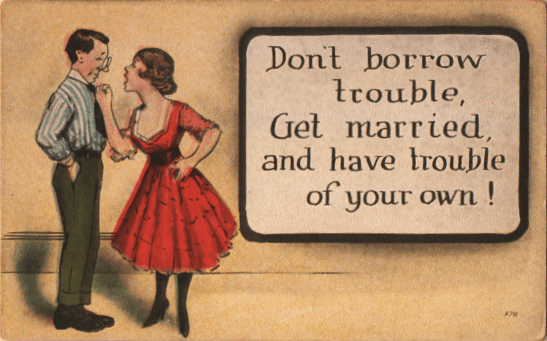
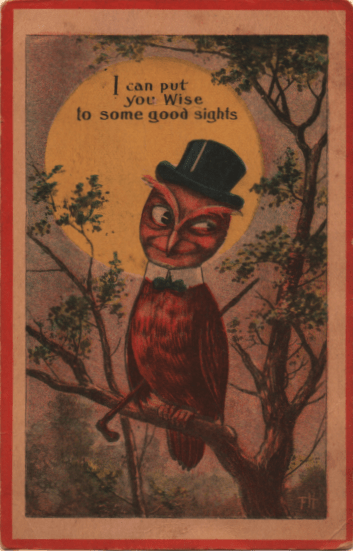
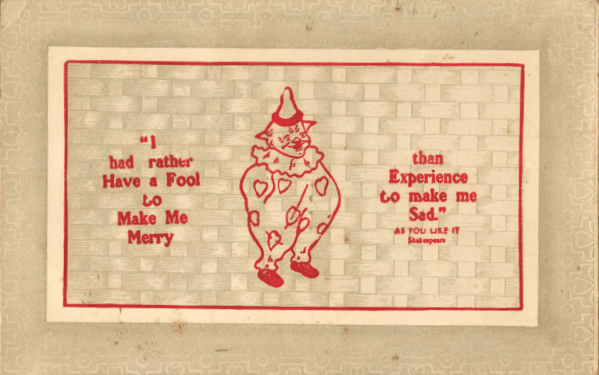
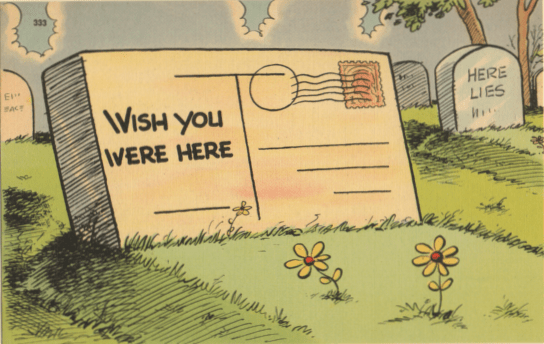
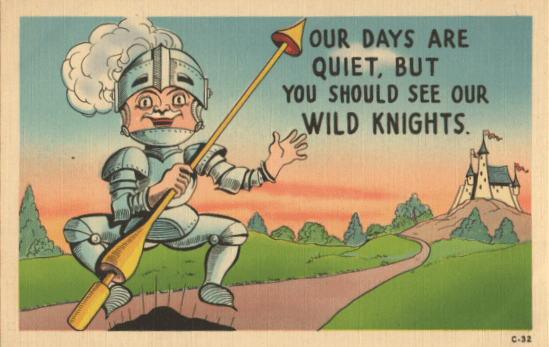
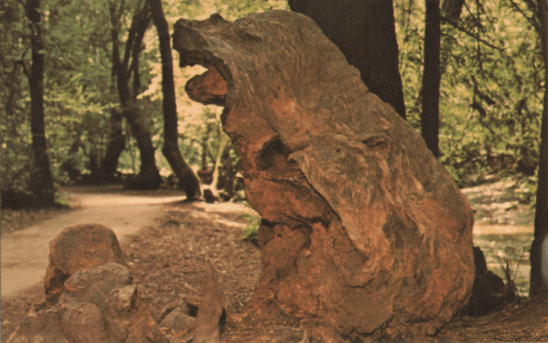
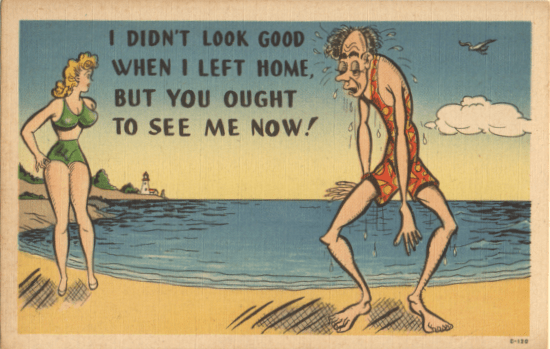
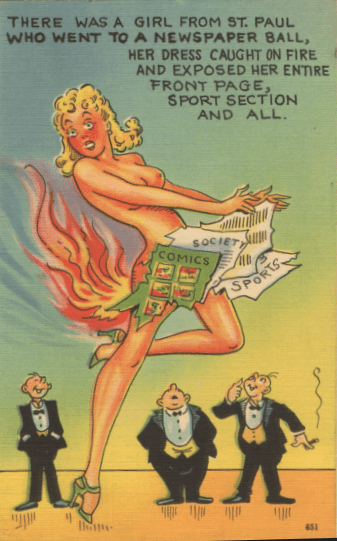
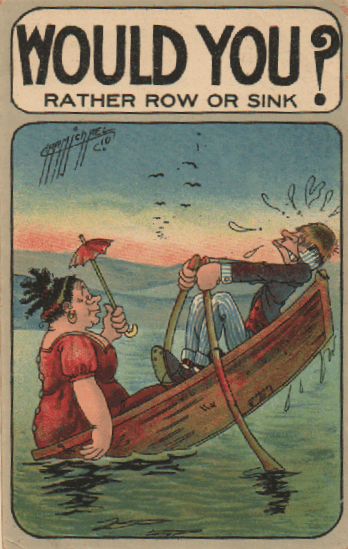
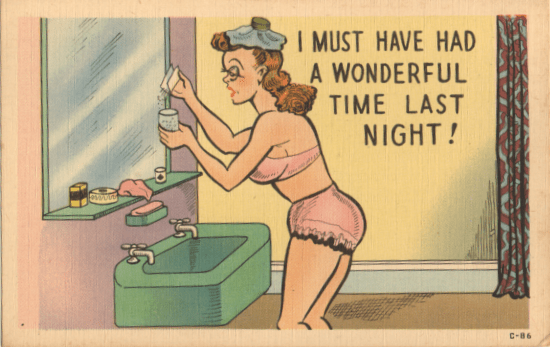
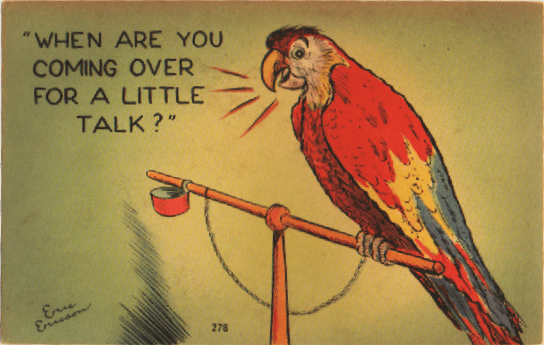
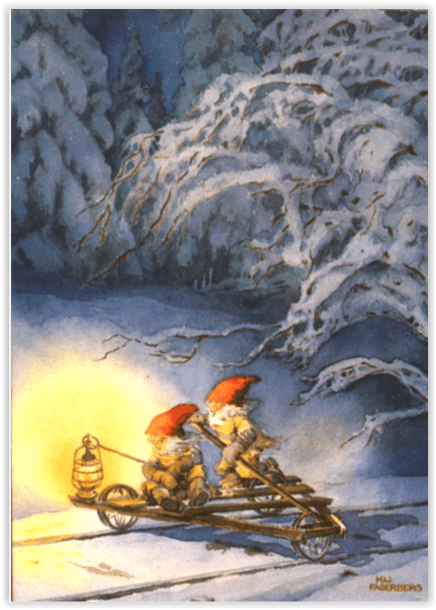
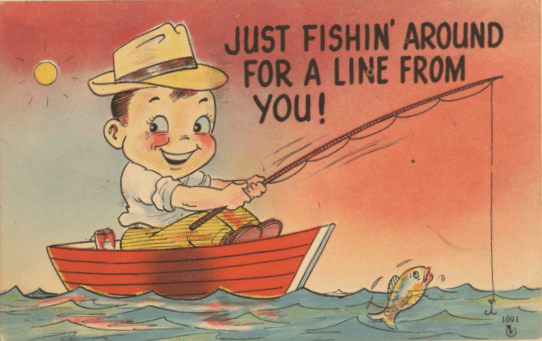
The time approaches once again for making New Year’s Resolutions, that combination of confessional and strategy which will make the impending 365 days a successful quest for happiness and joy (at LEAST until January 3.) As usual, your Uncle Blogsy, being so full of wisdom that he finds it hard to lift his head from the pillow each day, is making available some suggestions for those less fortunate. And, as always, the postcard artists of the past are lining up to assist in this noble endeavor.
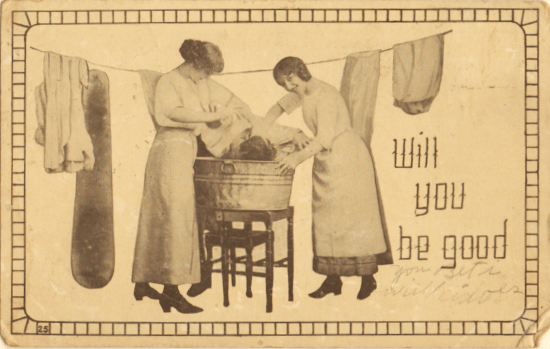
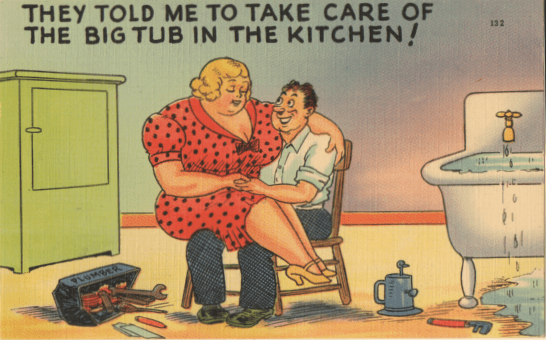
The key to all resolutions is self knowledge. Do not be afraid to seek assistance. If you KNOW you can’t handle those big home maintenance jobs, call on a professional.
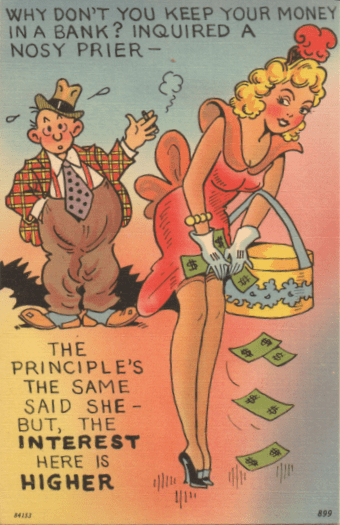
You can acquire needed skills in the new year, of course. If you really look into money management, you can handle things yourself and ignore random advice from your relatives and/or the Interwebs.
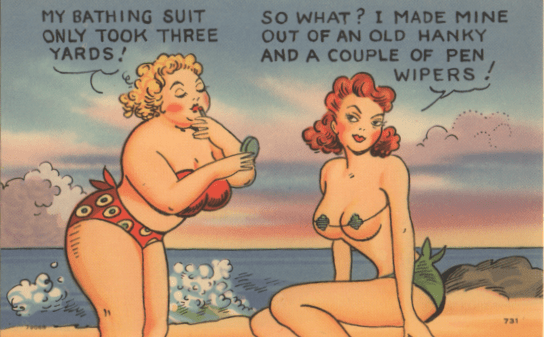
Many people will naturally be making resolutions to be thriftier this year. They generally don’t have a choice after the holidays, of course. That’s the best argument against this trend to want to spread the big expensive holidays of November and December farther apart: this way you can spend the money, regret it, and have all kinds of time to forget all that buyer’s remorse and do it all over again.
The same goes for all that overeating: it really pushes people to hunt up a new fitness program.
As always, you need to take more into account than just regret at eating that fifth slice of figgy pudding. A steady, regular routine is much better for you than taking on more than you can handle.
Some people prefer more abstract resolutions, repairing defects of the spirit instead of the flesh.
They will resolve to do more listening than complaining this year. (Note to self: this is not practical for bloggers.)
They may resolve to look at the world around them with childlike wonder and innocence.
Or to be more alert to opportunities, and seize what the moment offers.
Like most resolutions, these decisions are all right in moderation. Add a footnote about restraint and reflection. You don’t want to go rushing into trouble.
Unless it’s really fun trouble.
I believe that the second-best advice offered in this meditation is the first given: whatever you do, consider whether there is someone wiser and more experienced who can provide you with all the answers. No, not Alexa or Siri. I mean you should resolve to keep checking out Uncle Blogsy’s bloggerly recommendations. (See? I just answered your question about what the first-best advice to be found in this column is.)
There is occasional confusion online between the 1922 “Scrooge” and the 1923 “A Christmas Carol”. Each was made in England, and each was part of a longer series of films based on literature. The Gems of Literature series ranged farther afield in its sources, including Shakespeare and Edgar Allan Poe. If you go hunting for it, this version is the one which starts with what LOOKS like a quote but is not.
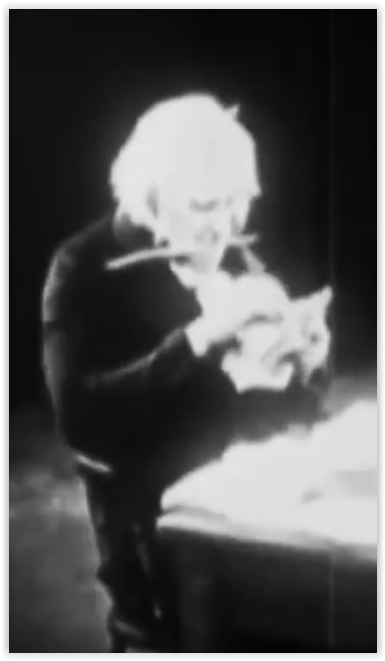
“Wise men have always contended that the toughest skin that covers any animal os tp be fund on that of a miser.” After this dubious assertion we are told that we will see a squeezing, wrenching, etc. old sinner. We are over a minute into the movie before we finally get to see a white-haired man, the “surviving partner” of Scrooge & Marley. He sits at a cluttered desk, riffling through documents as he holds his quill pen in his mouth, with somehow enhances his Scroogeness.
When he glances over his shoulder, we get our first look at Bob Cratchit who, as in the novel, works in a “dismal cell” off the main office. It is clear from the way Scrooge does this that he is in the habit of checking to make sure his clerk is busy. Cratchit tries to slip out of his cluttered cell to add some coal to the fire (which is in the boss’s part of the office. The attempt fails, as usual, and we see through the window that someone is approaching.
Fred is a cheerful and fashionable (look at those points on his lapel) soul who slaps his uncle on the back and maintains his spirit even through his uncle’s remark that the idiots who go about with Merry Christmas on their lips should be buried “in a holly through his heart.” (Scrooge is upset enough to get the line wrong.) Fred feels Scrooge is miffed because his nephew married for love and now becomes a little fierce. Scrooge tries to shoo him away, but he persists with an invitation to Christmas dinner. Scrooge rises to reinforce his “Good afternoon”. Fred, a little resentful, does take his leave, pausing to offer one last “Merry Christmas” and throwing up his hands when this is rejected. On his way out, he raises his hat in a cheery wave and a Christmas greeting for Bob Cratchit.
Bob, who has been making faces all through the previous conversation and looking as if he’s ready to come out fighting on the behalf of Fred and a merry Christmas, responds with a call and a wave of his own. This obviously makes Fred feel better, but draws the wrath of his employer, whose bark makes Bob huddle over his desk again. Meanwhile, we follow Fred outside, where he digs deep in his pocket to give a coin to a ragamuffin who next positions himself in an archway which must lead to the offices. (Though we do not see a window). Here he clearly sings at the top of his lungs until Scrooge charges out and knocks him down with a ledger.
Another figure can be seen through the window when Scrooge sits down at the desk again. Scrooge orders Cratchit to open the door, so THIS visitor apparently knocked first. Cratchit admits a tall prosperous chap in a coat nearly as fashionable as Fred’s. The visitor inquires whether he is speaking to Mr. Scrooge or Mr. Marley, allowing Scrooge to remind us that his partner is dead. The visitor is woeful at this revelation, but goes on with that under-appreciated line about Marley’s liberality being well-represented by his surviving partner.
Scrooge, not having realized his visitor’s purpose, invites him to sit down. The two men now, in alternating close-ups, demonstrate Scrooge’s basic nature, Ebenezer enjoying his own jokes more and more as the Charity Solicitor grows increasingly earnest. (Bob, meanwhile, is trying to keep his hands warm…to reinforce the visitor’s point about the poor and destitute AND his employer’s apathy about them.) Scrooge finally, with great glee, pounds the desk and cries “Not one penny!” before wishing his visitor a “Good afternoon” with a triumphant smile. The Solicitor, outraged, takes his leave.
We now cut to “Mrs. Fred and her sister” who are decorating a cheerful room with greenery for the holiday. Mrs. Fred is the one on the ladder, since when Fred comes in, he teases her by shaking the ladder (which she is sitting on, so there’s no real danger.) They have a mock fight, though Fred seems to feel she has grabbed his hair too energetically. He admits he is touchy because Uncle Ebenezer refused to come to dinner and said Christmas was a humbug. The two ladies seem genuinely disappointed, but their indignation over Uncle Ebenezer’s attitude makes him feel better.
We return to the office. At closing time, Bob and his employer have that exchange about a day off, which Scrooge denounces as “Christmas humbug!” Scrooge departs and Bob, making sure through the window that the boss is really gone, gleefully rushes to get his own coat. (Is that clock pointing to 7:50? Is Bob riotously closing up ten minutes before his time?)
Jumping right past the doorknocker and the stairs, we find Scrooge in “his own gloomy room” where he is brooding “over the stupidity of Christmas festivities”. This is shown by his rubbing his hands and saying “Humbug” before he reaches for his gruel. A ghostly man walks unannounced through the door. The apparition announces he was Jacob Marley. Scrooge goes through an array of reactions as the conversation goes on: you can see he believes, doubts, is frightened, is encouraged as he declares his liver must be out of order and Jacob gets all of Dickens’s lines in quite the wrong order, announcing the visit of three spirits before he demands whether Ebenezer believes in him or not. Marley is quite a solid ghost, looking more healthy and hearty than Ebenezer, and not the least bit frightening until, objecting to that joke about gravy and the grave, he throws up his arms and advances.
Scrooge drops to his knees and is treated to the long speech about the chain Marley forged in life and regrets about never taking an interest in that blessed star. Scrooge is impressed by all this. (Did they argue this way in the office when they were both alive?) They eventually get back to saving Scrooge through the visit of three spirits. Scrooge buries his head in the chair and Marley vanishes. Scrooge then eyes his gruel suspiciously, still ready to blame his liver, and asks why spirits roam the earth.
He has been feeling chilly all evening: now he pokes up the fire and turns to find a ghost no taller than his table. This reinforces what Jacob said, and Scrooge rises, frightened, to ask who the new visitor is. The Ghost of Christmas Past introduces himself, they exchange the remark about “Long past?”, and then the Ghost orders Scrooge to “Behold the girl who would not marry you because your heart was obsessed by love of Gold” before putting on his cap and disappearing. Scrooge rubs his eyes and sits down. The scene appears: his girlfriend looks as if she is sitting on the current Scrooge’s table, with the young Scrooge and another fireplace beyond. She is exceedingly upset, and very dramatic in whatever she’s saying to Scrooge (the Ghost has already told us, so there are no title cards to interrupt her performance.) The current Scrooge remembers it, and is very upset. His state of mind is not improved when the little ghost reappears to taunt him, pointing out that Scrooge has lived alone with his gold when he and she might have been so happy together. Scrooge, arms flailing, orders the Ghost to haunt him no longer, and when the little prig vanishes, pronounces it all humbug.
Scrooge turns to find his fireplace blocked by a massive Father Christas, flanked by trees (all transparent). He finds this ghost much more pleasant, rubbing his hands and holding them up to be warmed by the presence. The spirit has come merely to warm Scrooge’s hands and then refuse to stay, in spite of Ebenezer’s entreaty, because he only visits those who love Christmas; Scrooge, who loves himself, is not eligible. The self-righteous giant vanishes, despite Scrooge pleading that he is not the man he was. Weeping, Scrooge totters toward the door.
A robed character enters, announcing itself as the Spirit of the Future (no Christmas.) Scrooge whose acting has not been terribly restrained so far, now becomes an out-take from Nosferatu, his eyes bulging, his hands clutching at his throat. The Spirit steps out: one long white hand stays to beckon. Scrooge is drawn to the door, trying to hold back but dragged by a powerful force outdoors, where the Spirit stands over a tombstone flat on the ground. There is a low stone tomb handy for Scrooge to sit on while he tries to avoid looking at what the Spirit wants him to see. Scrooge wants to be assured that these are the shadows of tombs that MAY BE only. The sight of his name horrifies him, and he grips his head so fiercely that he knocks his cap off. He begs for a chance to sponge away the writing on the stone, and the Spirit vanishes. Scrooge weeps into his hands.
His face is still buried in his hands when we see him next, sitting in his chair by the fire. He sits up and realizes where he is (not even amazed that he has his cap on again). He touches the gruel pan and the fireplace for reassurance, concluding that the shadows of what would have been may be dispelled. He is thankful on his knees for this, and we cut to Fred’s house.
We now introduce Topper, who is proposing to Mrs. Fred’s sister in the dining room. Mr. and Mrs. Fred, who are just trying to get the meal on the table, understand, and hold back (though Fred is carrying a heavy tureen) until Fred sneezes, alerting the now engaged couple to his presence They rush in to congratulate Topper and the soon to be Mrs. Topper. Fred closes the door, perhaps so the servants won’t see, or to shut out a draft, and certainly not to set up the next scene.
For his uncle appears, assuring the servants (whom we never see) that it’s all right. He thinks about entering, but Mrs. Fred is saying grace, which makes him pause and almost turn away. When he enters, to the apparent joy of Mr. and Mrs. Fred (the other two, who apparently have never seen him before, are simply surprised), Mrs. Fred grabs another place setting, while Topper grabs a chair. Scrooge then takes out what seems to be a large wad of money and forces it into Fred’s hand. After wishing Fred a Merry Christmas, he is kissed several times by Mrs. Fred and then dragged to the table where Fred reveals the steaming soup inside the tureen.
We are told that Scrooge finished off his first REAL Christmas by sending for his downtrodden little clerk. We are once again at Scrooge’s own fireplace where he, he the Scrooge, himself, serves Bob a glass of hot punch. He then gets himself a glass and announces he is doubling Bob’s salary. They touch glasses and raise them to Scrooge’s declaration that he is as happy as an angel, as giddy as a drunken man, and so forth, all the way through Whoop! Hallo! The End.
This movie is twice as long as the 1922 fragment, but does away with even more. Not just Tiny Tm but the whole Cratchit family is gone, save Bob. The poor caroler who was knocked down never gets to fetch a turkey, the Charity Solicitor is not given money, the Ghost of Christmas Present has nothing to do but lecture. The Fezziwigs and the ragpickers and many other side issues must wait for another movie. More of the original text is here than in previous versions, mainly because there are way more title cards, and the screenwriter has sort of tossed these into the air and let them fall into the story wherever he saw fit.
But it would be unfair to be hard on the 1923 “A Christmas Carol” (at least it reverted to the original title.) The surviving print is not good, and Scrooge (Russell Thorndike) and Bob Cratchit (not even billed) have mobile faces, when we can see them. (Thorndike makes Scrooge especially loathsome in his discussion with the Charity Solicitor—also not billed.) The producers apparently felt this was Scrooge’s story first, and Fred’s second (Fred and Mrs. Fred ARE in the credits, along with the solid and unfrightening Jacob Marley.) Perhaps there is some genuine influence by Nosferatu: there seems to be an attempt to make use of shadows (again, in this print it’s hard to tell.) As for the re-ordering of Dickens’s text, well, there are plenty of sound versions which have done more (Mr. Magoo changed the order of the very ghosts, after all.)
And it does help explain why the early sound versions…but we’ll save that for next time.
Beth swept snow from the top of the last box and threw herself onto a chair. She was immediately sorry she’d done this: her soaking wet gloves and sodden stocking cap were right under her. It didn’t really matter. The last of the snow was disappearing into her coat, turned into ice water to mix with the sweat drenched clothes. Throwing off the coat, cursing as she did so, would have taken more energy than she had at the moment. She sat in her personal puddle and glared at the forty boxes piled up in her tiny living room.
But the job was done, at least this far. She waited for the sense of accomplishment to make her feel better. This did not happen.
“Oh, Daddy, why can’t you be here?” Her moan was more of irritation than of sorrow. He could have told her why he’d saved the popcorn buckets the high school football team sold him every fall. If he’d saved them. Were they a treasure to him, or just something he never got around to throwing away? If he had just taken the time to leave a note on every damn thing he owned, she’d have known what to keep, and been more sure of what she threw away.
The coming year, he’d decided, they would sell the house. No one had lived there for three years, and it had become no more than an expensive and risky storage locker. Beth glared again at her share of the boxes.
It wasn’t as though she hadn’t had help. Her sisters were always available for advice and assistance in packing, especially advice. Why did you save that? Why did you throw that away? Didn’t you realize….
There had been no fights. After all, there had been no right answers to most of the questions. Beth sat up with a squelch, and looked the boxes up and down. So why were there so many WRONG answers? Every discussion left Beth feeling she’d messed up again. Meg was in a hurry to get this over with; Josie thought they should take more time. The emails from her supervisor, reminding her that November and December were bad times to be short-handed, were no consolation. Now that she had this much work done, even Beth wasn’t happy with it. Now she had to find places for all the junk in these boxes. (Treasures! Boxes full of treasures! She had to keep reminding herself not to call it junk: not after what the boxes and movers had cost.)
She stood up and wrestled herself out of the clinging wet coat. So the disappointment was unanimous. Beth swung open the door of the front closet; if a burglar was waiting, no doubt HE was disappointed, too.
He didn’t look disappointed. The white makeup and big red nose probably concealed his expression, of course. Beth stood staring, too startled to scream.
“Hi,” he said. His voice was flat. His big red smile did not alter.
Beth backed away. She’d never had the clown aversion so many of her co-workers bragged about. There was nothing really threatening, no matter how unwelcome, about those ragged bagged pants or the big orange ears. He didn’t follow her. His hands held nothing more threatening than a curious curly brass horn which….
Orange ears. Brass horn. Beth frowned. “Do I know you?”
The big clown’s voice was bland to the point of being mechanical. “In the days when computers were big scary inventions and only experts could use them, somebody thought of programming a children’s book with spaces for personal formation to be filled in. Parents would mail in a child’s name and age and address and pets’ names and other material. This data was used to create a personalized book.”
Beth blinked. This all mattered to HIM, obviously, but why should it matter to her?
His shoulders sagged a little, and he honked the brass horn. “Ah-ooh-gah!” it said, in her father’s voice.
He was the wrong height and weight to be her father, so…. Beth leaned in, studying that gaudy red and white complexion. “What a thing! You’re the Christmas Clown!”
His face did not change; perhaps it couldn’t. But his shoulders rose again, and a hand rose to his face as if to conceal a gasp he couldn’t actually form.
“You remember me? I wasn’t a very exciting book.” He glanced down at his big red buttons: the bottom one kept disappearing and then coming back into view, as if not sure of its welcome. “And not well printed. I sold a lot, as a novelty. Waste of ink, really. I’ve been going to all the boys and girls who had a copy, to see if anybody…remembered.”
“But I remember you! Daddy read you to us every Christmas until….”
His face still did not change. “Yes.”
Beth took a step back. “Until I was twelve.”
“And you had known for several years that I was really much of a story and you wondered why you bothered.” The pain was more obvious, really, in this apathetic, automatic tone. The face stayed exactly the same.
“Well, I….” There wasn’t much to say. She’d been in junior high and, of course, on her full dignity as a mature woman.
“That stupid clown and his stupid jokes.” He was quoting her exactly. Well, he’d been there, of course.
She remembered Daddy had seemed saddened and relieved at that turn of events. Beth’s face contained more fear than regret as she looked to his hands again. “I….”
“It doesn’t matter.” The clown shrugged. “What animal falls from the sky?”
Beth glanced at the window, remembering that page. “Rain, dear.”
“Stupid joke.” The Christmas Clown shook his head.
She had laughed and laughed at it when she was five. “There are worse jokes!”
The clown’s shoulders, which had been sagging again, rose just a bit. “That’s nice of you, but it isn’t a nice thing to say about a joke.”
“Sorry.”
“Don’t be.” The horn shifted toward the front door. “You’re the first person who’s remembered me.”
Beth couldn’t tell if this was a good thing or not. What was he leading up to? She held her sodden coat a little farther up, as it might serve as a shield.
“To get permission to walk out of my book, I had to promise to grant any child who remembered me a Christmas wish. Not really good ones, you understand, because I’m not….” The big shoulders sank. The bottom two buttons vanished. “Do you want a wish?”
Looking him up and down, Beth made up her mind. She tossed the soaked coat into the wet chair behind her. “Well, yes, I do! Do you know where my copy of The Christmas Clown is?”
He raised the horn. “What?” For the first time, life pulsed behind the words. “Why…yes, it’s in that box. Number 23.” The horn pointed to the sixth stack over.
Beth hesitated only a moment. The second box down in that stack was numbered “23”. She ripped the lid away and burrowed among the battered books within; these had been way back in the attic closet. Here it was: she remembered the stain. She’d spilled…hot chocolate, was it?
“THANK you!” She clutched the book to her chest, hoping the stain wouldn’t come off on a wet blouse after so many years. “I haven’t read it in forever, and this will bring some of the Christmas excitement back to me. Thank you so much!”
The big eyes were wider and whiter than before. The loose green thread on his collar turned out to be that bizarre daisy, which now stretched fresh and sharp on its stem. His shoulders were high, his shoes a glossy purple. Three buttons appeared, the horn gleamed in his hand, and something small and clear slid down one cheek.
“No!” he said. “Thank…thank YOU!”
He was gone, with a little ah-ooh-ga, as if her father had whispered it. Beth sat down, right on top of the cold wet coat, of course. She would read through the book, though in fact it was NOT one of her key Christmas memories. They WERE stupid jokes, and the story was dull.
But the badly-written Clown HAD granted her a Christmas wish. That something, anything, she did this month would make somebody happy.
I am writing this to let you know I have given up on you completely. Every year I ask for your help in getting my relatives to stop giving me mainstream girly clothes and books and stuff at Christmas. I have written to you in the past (AND let the family see my letter) to explain how I need black leather furniture for my bedroom and graphic novels dripping with blood instead of the Little House books and plush puppies THEY think I need. And still I get books about good manners for girls instead of the drooling nocturnal cryptids I need. Worse, you keep recommending they give me USED stuff, like trashy postcards.
THIS year, I have convinced an uncle of mine, by emailing him my own Goth prose and poetry, that I need something more robust. So skip my house, Santa Bogey: my gifts are guaranteed this year.
Terror Under The Tree
TUTT:
I hope your Christmas, like your future life, holds many, many surprises. (By the way, did you know that the author’s daughter refused to let her mother put the story about a serial killer getting burned alive into one of the Little House books?)
It may also surprise you to know that the world of trashy postcards is just as filled with horror and shivers up the spine as trashy literature. Oh, they may be brightly colored, but Goth is a state of mind not to be confined to black leather recliners. Cryptids, for example, abounded on postcards for decades.
We can also provide you with zombies,
Aliens,
And fearful fates for the (marginally) innocent.
Postcards can fill your bright red plush stocking (yes, I’ve seen it and I agree: always too small) with mortal peril enough for three or four holidays.
With nightmares to keep you up at night with all the lights on.
Speaking of staying up late at night, you might just skim those books on good manners for girls. Nightmares can come in the morning if you don’t get the hint early on.
I hope your uncle sends presents which will both alarm and horrify you. I’d put in a call to Krampus, but he seems to be over-scheduled these days as it is.
The 1922 version of A Christmas Carol, starring H.V. Esmond, is incomplete as we know it. Part of a series which presented excerpts from great literature (the four known films are all from Dickens) it ran seventeen minutes or thereabouts, but when it was brought to America in 1929, the distributors cut it down to ten. This version is what we have left, and you can see where bits of the movie are missing.
We open to title cards telling us Marley is dead and his partner Scrooge is a grasping man with a withered heart. A scraggly Scrooge sits at a desk in the office of “Marley and Scrooge”; according to the sign in the window, Scrooge was the junior partner. Behind him, certainly one of the most dapper Bob Cratchits shivers. (His name is spelled “Crachit” throughout this movie. No room on the title cards?) He tries to put more coal on the fire, is scolded back to his seat, and then Scrooge’s nephew–“poor, married, and happy”—enters. He and his uncle banter up to the exchange about how the young man can be so happy, when he is poor. At Fred’s punchline, Crachit laughs, to be snarled at once more. Fred, still cheerful, invites his uncle to dinner and is told, “Oh, bah! Bosh!” His one and only “humbug” came a little before this. Perhaps he’s being stingy with words.
There is a brief picture of a boy outside, blowing on cold hands and, from the activity in the office when we return, we have just skipped a scene of Scrooge, who is armed with his ruler, chasing this possible caroler away. It is now closing time at Marley and Scrooge’s, so Scrooge can threaten to dock Crachit’s pay for expecting a whole day off.
A title card butts in to tell us that on Christmas Eve night the spirit of a man who has never given is condemned to walk the earth in a dream and witness scenes of happiness it might have shared. We come back to the story in Scrooge’s studio apartment, where he sits by te fire for a bit of gruel. Bells ring and there is a shot of ghostly feet dragging chains. Scrooge doesn’t see this, but he listens to something in fear until a semi-transparent man enters. He wears spectacles, the skinny pigtail, a chinstrap, and what looks like a fake nose. Warning Scrooge of impending doom, Marley tells him to listen to the spirits to come, and then vanishes, wasting a decent buildup.
We see Scrooge decide he fell asleep and dreamed it as he gets up and walks to his bed. He does NOT fall asleep: he is restless, and rises a little as a robed and hooded spirit carrying branches of leaves introduces itself as the Ghost of Christmas Past. Scrooge falls back on his pillow and closes his eyes so his astral projection can rise from his unconscious body. They reappear in a time when Scrooge was young and happy. Scrooge is apparently the man sitting at the desk, while a man in a lighter jacket chats cheerfully and pats hi on the back. The Ghost tells Scrooge that he became greedy and evermore greedy, as we watch young Scrooge snarl at his ledger.
And just like that, we are told Scrooge was next conducted to the happy home of Bob Crachit, where we watch Mrs. Crachit enjoy a cozy evening with three small children and one older girl, who is peeling apples at the table. Scrooge materializes next to an obvious Ghost of Christmas Present, without much hint of where this chap came from and where the other ghost went. (Why bother? You read the book, right?) Bob arrives with another young woman (Martha?). It seems to be Mrs. Cratchit who blesses Scrooge as the founder of the feast. Scrooge cowers.
The Ghost guides Scrooge to a wall, walking behind him so as to vanish just before a shrouded figure arrives to take over the ghost duties. Scrooge calls out to the second ghost, but the third takes him by the hand and leads him away from the wall to a cemetery. A bony finger points to a stone we can’t read, but a wholly unconvincing picture of the epitaph now takes up the screen telling us it marks the grave of Ebenezer Scrooge: “Himself Without Human Kindness, He Died Without Friends”. Scrooge pleads that if the ghost will just blot out the words, he will keep the Christmas spirit in his heart.
We cut now to Scrooge, who is solid, and up on one elbow in his bed. He is thrilled to be there, alive and with a chance to celebrate Christmas. Dancing over to a window we are seeing for the first time, he whoops at the world and then calls to a boy, possibly the presumed caroler). He orders the boy to buy “the biggest turkey in London” and throws a few coins down to him before deciding to just toss the whole handful. “I’ll send it to Bob Crachit. And lots more!” He dances with glee at his joke, and a surprised title card tells us “And he DOES send it all to Bob!” We see proof of this as the Cratchits gather around a large basket of food.
We have less than a minute to go when a tidy Scrooge walks along the sidewalk and bumps into Fred (whose name is mentioned for the first time) and asks if he can come in to dinner. Fred is thrilled at the suggestion, and a title card tells us that everywhere now there is HAPPINESS. We have just enough time to show Scrooge waiting, next day, for Bob to come in late. Bob is making his excuses when Scrooge snarls that he will not stand for this any longer and, punching Bob in the arm, informs him his wages will be doubled. Bob has reached for a weapon but Scrooge burbles on that he is planning Happy Days for Bob’s family and announces “We’re going to be HAPPY, BOB!” The two men shake hands, The End.
Well, we got through that right quick: we ditched Tiny Tim, Fezziwig, the ragpicker’s shop, the t in Bob’s last name…. Scrooge and Bob are the only ones allowed enough screen time to do much acting; their faces show us this could have been a decent attempt. It seems clear that the title cards were the work of the American distributor, and do much more heavy lifting than was allowed in better silent movies. Still that window sign of “Marley and Scrooge”….
I have a niece who sends me entertaining emails and who really deserves to get a present this year in exchange for all the gloomy Goth humor she sends my way. But I’ve never shopped for a Goth before and, anyway, I don’t have any idea what kids want for Christmas these days. Can you help me through my predicament?
LOST IN THE SENTIMENTS
Dear Lost Sense:
How wise of you to have consulted a neutral authority! Of course, there are plenty of gift guides out there, but the majority sponsored by some commercial enterprise or another, and lack considerations of things like cost and convenience. For example, the possibility of assembling twelve drummers to drum in one place at one time is limited by how much trouble you’re prepared to put up with (not least from your niece’s parents.)
So it is best to look at these guides for suggestions, but not consider them too literally. (But don’t outsmart yourself: one of the lost souls on my list did immeasurable damage to his matrimonial prospects by sending his true love eleven plumbers plumbing. Not a pretty story…no matter how many rentals the video got.)
It may be best, in fact, to settle for a simple present. We must understand that not every gift recipient is going to find something this year which makes them jump for joy.
Tickets to a concert on New Year’s Eve, for example, may be exciting, but involving, as they would, changes to a schedule for that holiday, plus transportation expenses and the possibility of having to be accompanied by a spoilsport parent who will reach down and cover the listener’s ears at certain points in the performance, embarrassing her forever at what was supposed to be a glorious and parent-gobsmacking…where were we? Anyway, if you don’t know what she likes, you probably aren’t up to date on her musical tastes either, and would probably send her to hear some death metal group she considers dead and gone.
Sending food has similar dangers. Is the recipient lactose intolerant? Allergic to nuts? Someone with a deep internal loathing of fruitcake? Perils abound.
And for goodness sake (my specialty) don’t send pets without a lot of preliminary research. Sending an Old English Sheepdog to someone in a tiny studio apartment may make sense for January, but would become unbearable in July.
The response of many people to your quandary is to spend more money, feeling that to goose the price will cover up any ignorance.
But it honestly is the thought which matters more, even if that thought was only “I wanted to get you something nice but had no idea.” If your recipient is in the right holiday spirit, she will attend to the first part of that thought and forgive the second.
You could go back through all those emails she sent you during the year and hunt for clues. I will assume that you have already done this AND that you are running a little late for doing a lot more research.
I am also considering the possibility that you have considered just sending a prepaid gift card or plain cash in an envelope. Many people are shy of this kind of gift, fearing that no matter how much they send, it will strike the lucky recipient as chickenfeed.
One of our problems nowadays is that we simply expect too much. Remember that your niece is getting other presents, that it would be piggy to insist that YOUR present be the biggest part of her day. Resign yourself to the possibility that she will be unimpressed and/or critical of your gift.
Just do your best and be prepared for a “Better luck next year” response. Anything too big wouldn’t make it to her through the mails in time at this point anyhow. That’s the best I can do as a neutral advisor not trying to sell you something. (Except to point out that vintage postcards are cute, cover a lot of ground, and can be sent in an envelope with first class mail and be pretty much guaranteed to arrive by Christmas. This neutral advice has been brought to you by….)
What are you doing this year to provide us with a really good Christmas cong controversy? I rely on this every year as a chaser for all the good will and cheer being tossed at me, and so far, I haven’t heard a peep from you about it.
Grumpy In Chicago
Dear GrInCh:
Controversy to popular belief, this department does not take care of that particular tradition. Charles Dickens covered this in the Ghost of Christmas Present section, but I suppose you never read farther than the first part of the book.
I have observed, myself, a great deal of backlash against the souls who feel the need to point out flaws. A groundswell of complaint against “Jingle Bells” (which was written for a minstrel show entertainment, it seems) was being countered by yeasayers in August and September, and those who have been pointing out, as usual, that “It’s Beginning to Look a Lot Like Christmas” incites gun violence and that “I Saw Mommy Kissing Santa Claus” AND “Winter Wonderland” each try to smear Christmas with suggestions of illicit sex have been met with “C’mon, Man!” (Dibs on writing a Christmas C’mon Man song: although I suppose those folks who object to “Good Christian Men, Rejoice” as an exclusionary lyric will have a field day with it.)
However, inspired by that viral video based on the proper punctuation in “God Rest Ye Merry, Gentlemen” (or what have you: one of the earliest printed copies of the song leaves all punctuation OUT of the title, perhaps foreseeing the problem), I would like to note that no one except folklore collector Walt Kelly has pointed out a similar problem with another mispunctuated Christmas classic.
Kelly was complaining about the violence done to the beloved Christmas anthem “Deck Us All With Boston Charlie”. I have not heard whether he ever learned about the expert who claimed the song was a hodge-podge of songs composed by prison inmates; I did not see any commentary of his on this weighty topic. Nay, Kelly was outraged by the inclusion of a comma in some misguided printings of the song.
He felt people who performed the song as “Deck Us All With Boston, Charlie” were ignoring the years of heartfelt sentiment behind this Yuletide staple, muddying the ancient and traditional meaning. As is usual with holiday purists, he was mocked for not going far enough by critics who claimed the entire song, with or without comma, was sacrilegious, an accusation Kelly found as funny as the comma.
I don’t know if this helps, GrInCh, but it DOES bear out the feeling of another scholar, Will Cuppy, that “there’s always something.”
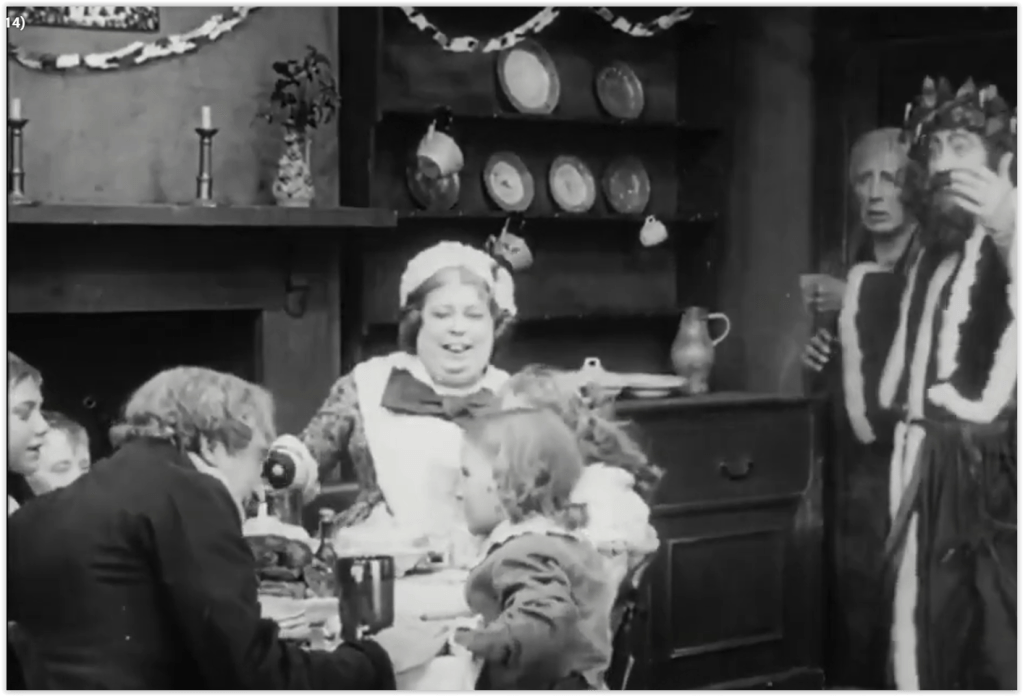
Much as the previous silent Scrooges interested me, I am fascinated by the 1914 version. It runs to 22 minutes (some cuts are abrupt enough to suggest something is missing) and although Charles Rock makes a lively Scrooge, this is decidedly a Cratchit movie.
We open with Bob Cratchit putting up holiday greenery in the office—just a little, perhaps hoping the boss won’t notice, and then puts coal on the fire just as Ebenezer Scrooge walks in. Scrooge berates Cratchit for wasting coal, and actually takes a lump of coal OUT of the fire Spotting the sprig of holly, he throws that down toward the fire, and Cratchit makes THAT face. (Though Charles Ogle uses a similar face in 1910 when reacting to his employer’s tantrums, George Bellamy is somehow channeling Marty Feldman: even his hair takes on a Feldmanesque cachet. Scrooge, meanwhile, comes across as something of a phase between the 1913 Seymour Hicks and the 1935 Seymour Hicks.)
Fred now arrives with his wife, who is so appalled at Uncle Scrooge’s response that she leaves at once. Fred makes his pitch for Christmas, and Cratchit applauds, for another scolding. After Fred departs, the charity solicitors appear: Bob tries to hand them two copper coins without the boss seeing. He is not very successful at this. He also grooves along with the carolers outside, whom Scrooge threatens with his ruler. At the end of the work day, Scrooge scolds Cratchit again about the coal, and walks off, when wished a Merry Christmas, to the tavern where, as Dickens noted, he takes his supper. Before sitting down, Ebenezer takes time to scold the other guests, who are drinking Christmas punch.
We now follow Bob from the office to the Cratchit house as a contrast to Scrooge’s lifestyle, and to remind us whose movie this really is. There are roughly four Cratchit children (the number seems to depend on how much room is available in the scene) and they are the smallest, youngest Cratchit children ever. Tiny Tim hides, rather than Martha. Once Tim wins the game of hide and seek, we go back to the tavern, where Scrooge pauses to growl again at the revelers on his way out into the snow. On the way home, Scrooge chases some children, knocks an apple from the hands of an apple seller, and marches on home, where a reasonably scary Marley takes up roughly a third of the front door.
Scrooge mounts the stairs to a rather flat apartment. We were shown the stairs because not long after, Marley starts up them as well, pausing to pull bell chains just as Scrooge is taking that bit of gruel. Reaching Scrooge, he delivers so few lines that it hardly seems worth his walking upstairs. Scrooge, shocked, staggers to bed.
A robed man carrying a Christmas tree enters and tells Scrooge to come along, touching Ebenezer’s hand to his heart to uphold him. But since Scrooge does not have a window, instead of flying, they walk out the door and around the corner into the past. Ebenezer is shown his younger self weeping at school (the lad is NOT rescued by his sister) and then goes to the Fezziwig party—nine people and a fiddler. The Scrooge of the present dances along a little, in a melancholy way, and is then walked back home to bed.
The Ghost of Christmas Present is not very tall, but is dressed in true Ghost of Christmas Present garb. He also walks Scrooge outside and around the corner. They arrive at Fred’s party in time for Blind Mans Buff, which Scrooge enjoys, after which Fred proposes a toast to his uncle. The Niece refuses to drink it but Fred talks her ‘round. (Is that painting hanging on the wall a portrait of Uncle Scrooge as a young man? Fred IS attached to family memories.) Scrooge is having such a good time he objects to being marched out, but it’s time to visit the Cratchits. THEY drink Bob’s toast to his boss without apparent objection. Again, Scrooge would like to stay but is taken home to bed.
He is now wakened by a chap in medieval cloak and cowl, and taken up an invisible flight of stairs to a gravestone WE can’t read. The title card obliges with “His Own Tombstone”. He pleads with the spirit, who points up in the air and rises with Scrooge back into Ebenezer’s bedroom. Scrooge pleads a little more and the spirit leaves.
Scrooge wakes in the morning, is for some reason amazed to see his bedcurtains, and feels his arms and face to make sure he is still solid. He thanks God on his knees, and then jumps up, making plans and getting dressed. (Doesn’t take long: he barely UNdressed the night before.) Outdoors, he calls out to some children, who back off, suspicious, until he hands them coins from a little pouch we clearly just saw him empty into his pocket (maybe he carries a LOT of money pouches) The charity solicitors nearly don’t see him, but he stops them and pledges a hundred pounds. He then goes to the poulterer’s shop and, in a bright, chipper mood, demands the best turkey in the joint. He has the delivery boy take it with a note “To Bob Cratchit from Mr. Scrooge.”
We return to the Cratchits’ place, where we are having a good time and then pause to despair over Tiny Tim’s health (since we have not mentioned this so far). Mrs. Cratchit strays under some mistletoe, and good spirits are restored. A boy arrives bearing a turkey and Bob is positive there’s been some mistake. Mrs. Cratchit swoons when she hears it is from Mr. Scrooge. Bob, eventually convinced the turkey is for him, hands the boy an apple from the table as a tip. Meanwhile Scrooge is making his way into Fred’s dining room, where the three of them (the Niece, as the titles call her, is not at all frightened) sit down to eat.
Scrooge hurries to the office early; he is thrilled that Bob is not in yet. Chilly, he bends down to inspect the fireplace and is grieved to find the holly he threw down on Christmas Eve, and has to wipe his eyes with a kerchief out of the tail pockets of his jacket. When Bob arrives, Ebenezer has a rough time keeping a straight face as he plays his little joke (again prefiguring the 1935 version). Cratchit recoils in horror on being told his salary will be doubled, and even after Scrooge has counted all the coins out of a little pouch (another?) and put them back in and put the pouch into Bob’s hand, grabs a ruler to strike down the madman. Ebenezer finds the threatened assault hilarious, and somehow gets Bob to drop the ruler and believe. We then “in the days after” see Ebenezer, with Fred and Niece, arriving at the Cratchit home, to be welcomed to the table, where Scrooge bounces Tiny Tim on his knee and BOB raises a mug to call out “God bless us, every one.”
Scrooge does his very best to hold our attention. The ghosts are not much competition, as usual in the silents, despite Marley’s awesome demeanor. But George Bellamy’s Cratchit steals the show whenever he appears, though he does have to compete with Mrs. Cratchit, played by Mary Brough (who has no other acting credits the Interwebs could find for me. Watching her makes me wish this had been a sound picture.)
“Welcome, oh seeker of knowledge, to the serene sanctuary of Madame Silsallabeth, whose eye sees all and whose mind…oh wow!”
“Yeah, I’m back.”
“Is that Patty?”
“The last time I was here I was Lucid Student Patricia.”
“The last time you were here you had two ears.”
“And ten fingers. But I still have both middle ones and I’ve saved ‘em both for you.”
“What happened?”
“You’re the one who sees all.”
“Don’t tell me you confronted Mr. Frederickson once I gave you that counterspell. I told you not to….”
“And I told you he lived in Pennsylvania. Even to watch him die, I couldn’t afford to go there.”
“You had no relief at all? That spell should at least have neutralized his control of the doll he made of you, and perhaps even reversed his curses.”
“The pains got better for a while and it didn’t take so long for my eyes to focus in the morning, but then things got way worse. Notice my hair?”
“You used to be a blonde. Did you dye it?”
“It got ripped out one day. One long day. This is a wig.”
“Perhaps he has a counterspell of his own Well, let me check the infinite. Can’t do these things without checking the infinite.”
“Oh, thank goodness you still have that big crystal ball.”
“Yes. With this, I shall seek….”
“I’ve been imagining where I’m going to shove it when I come around that table.”
“Violence is so seldom the answer, Lucid Student Patricia.”
“That crystal hasn’t been much use so far, either.”
“Ah! Mr. Frederickson felt the counterspell and knew who sent it. He hated you more than ever.”
“So he’s thought of new things to do to the doll.”
“He’s dead.”
“Many happy returns. So it’s got nothing to do with him and it’s got nothing to do with you, huh? Watch very carefully where I’m holding your crystal ball so you know which way to turn and what to open wide.”
“He gave orders to his heirs om how to continue torturing you.”
“So who are they and what are they doing?”
“They don’t come into your story. The only one who heard his orders was the nurse, and she assumed he was delirious. His son threw all his tools of mystic enlightenment away, calling them mumbo jumbo.”
“Imagine that. So we’re back to Frederickson is dead and has nothing to do with me any more, and me grabbing that crystal ball and putting it where mystic light don’t….”
“What’s happened, Patty, is that doll of you is still imbued with malevolent energy. But it wound up in a dump, where the rats have gotten hold of it. They’re trying to tear it into nesting material, but it is resisting them. So except for its hair, fingers and toes….”
“Ooo-Kay. So now you curse the rats?”
“Everyone curses rats. It never seems to do them any harm.”
“What, then?”
“You need to buy long, stiff gloves, and a mask.”
“Will that ward off the curse?”
“No. But it should hold off the rats while you’re fishing through dumps in Pennsylvania to find your doll.”
“Oh, all-seeing wizard, oh wise one, are you sure you’re seeing me in Pennsylvania and not standing right here about to do a couple of things I only just now thought of with that all-seeing crystal? YOU go fish through the ratholes.”
“You were always hasty, Lucid Student. Do you see that if I go to Pennsylvania, then I will be the one holding your doll?”
“Maybe you see us going to Pennsylvania together, oh insightful seer, so I can check in the crystal while we’re searching.”
“I would be the one looking in the….”
“Not where I’m going to put it.”
”Listen, for no additional charge, I can throw in this flute which will help you charm the rats.”
“I think it would be MUCH more charming to….”
“And once they have brought you your doll, you can instruct them to build a new den underneath a tombstone that says ‘FREDERICKSON’.”
“Gimme that. You’re sounding wise again all of a sudden. And I guess I can see you later and decide where to put that crystal.”
“You’ll need me to fully deactivate that doll.”
“And you’ll need to give me a good reason not to experiment with what rats will do when I tell them. See you then, oh fount of wisdom.”
“If you get back before I’ve packed, Lucid Student.”
Last week we went through a quick update on the large number of postcards new to my inventory concerned with dogs and their bladder relief. Today we will revisit another topic we have considered before: the ever-popular fishing postcard.
Sending a postcard JUST because you are on vacation is a phenomenon f only the last sixty years or thereabouts. But the basic custom of sending people word to say how your time off was progressing was established early on. AND if that respite from labor involved a fishing trip…. So there are several postcards featuring Victorian and Edwardian men, often in a summer straw hat, trying their luck.
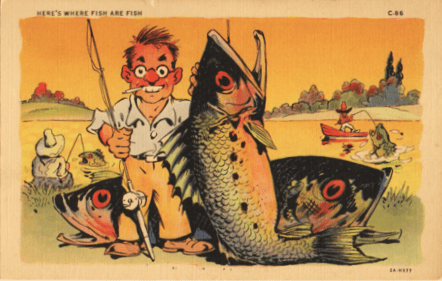
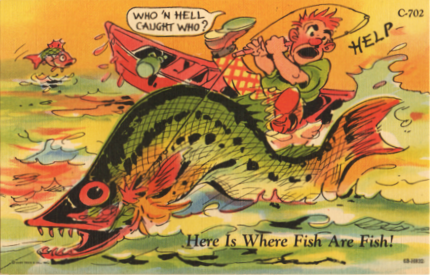
No one was better with a fishing postcard than Teich artist Ray Walters. His fishermen are very much of a type, but he shows his artistry (and love of fishing?) in is glorious, glorious fish, which appeared only in the dreams (or nightmares) of the dedicated angler.
What with one thing and another, I’ve never seen a postcard where the omnipresent icons of 1910s postcards, the Dutch kids went fishing. But they were ahead of their time, as usual, with an early postcard sneering at such tiny fish as could be had these days. (No, I haven’t had a bunch of the Dutch lids arrive in inventory, so we will not be revisiting them in this series of updates. This could change without notice, if you are weeping on your screen.)
If I didn’t expect to see the Dutch kids here, I also didn’t expect to find one of the inspirations for a major fishing movie in postcard form.
As always, we have the philosophers of fishing, who reflect on how the sport reflects the rest of life. Romance, as they would no doubt point out, has many angles.
And in romance as in fishing, either sex can be the hooked (or the hooker.)
The mishaps of fishing are the most popular theme of fishing postcards. Did I mention Ray Walters and his glorious, fearsome fish?
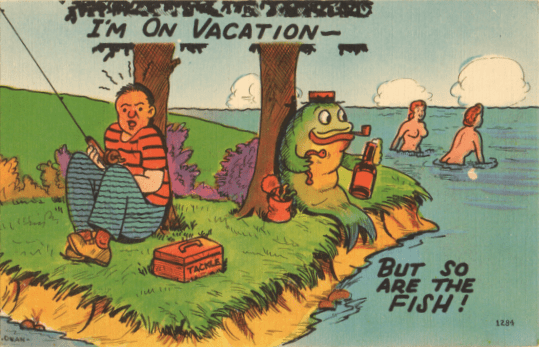
Not catching fish is a perennial topic, and the caption here is an equally perennial complaint of fisherman on their short break from the workaday world. THIS example also repeats the theme of the really dedicated fisherman, who is so intent on catching fish, he doesn’t even notice what the vacationing fish has come here to see.
This card concentrates on one theme only: that it IS possible to have a miserable time fishing.
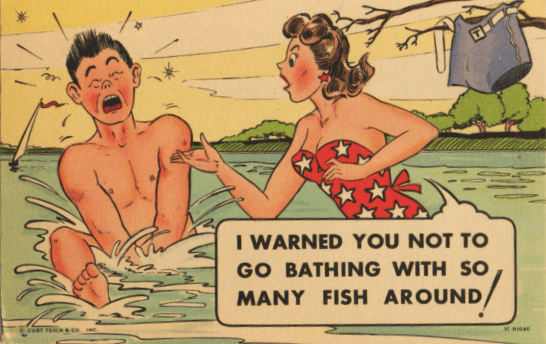
Of course, if you want to discuss miserable days, you can look over this card, which features a man who wasn’t even going fishing, but caught some anyway. (You DO see his trunks are hanging on that branch, right? Anyone who asks what he was using for bait has to stay after class and untangle fishline.)