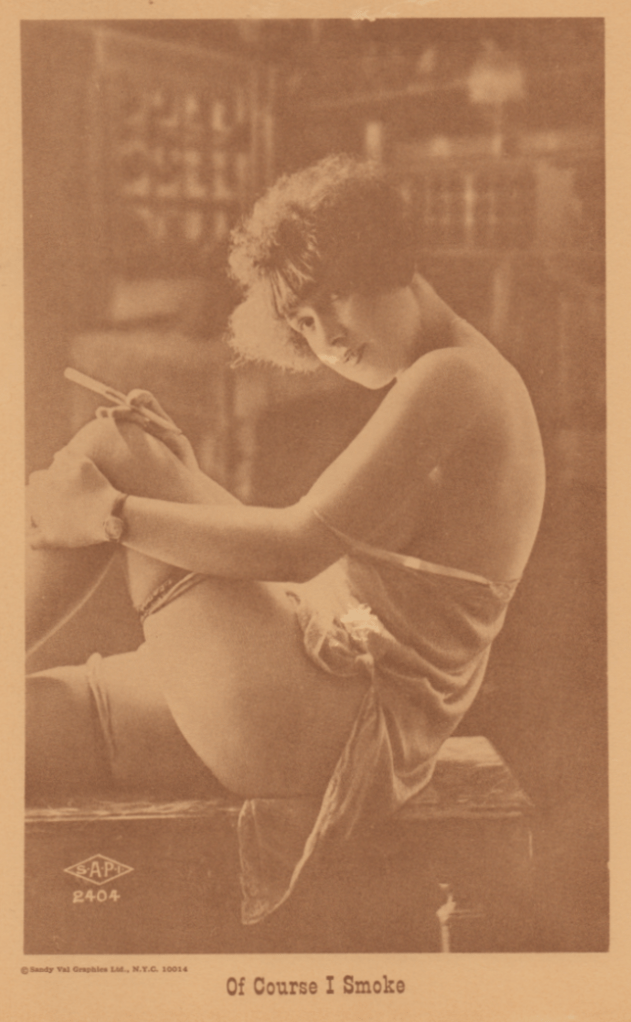
This Seventies poster showing off a postcard from the Nineteen Twenties shows one of the matters of social history made obvious when one watches mid-century television programs. Everybody smoked. This can be explained only partially by observing that many shows were sponsored by tobacco companies. Those same companies had worked hard to make their product essential to social interaction. Plenty of people declined the nicotine habit, of course, for reasons of religious prohibition or health concerns. (One bygone social commentator noted that people of his generation knew the health risks decades before the government took an interest: “Why do you think we called ‘em coffin nails?”)
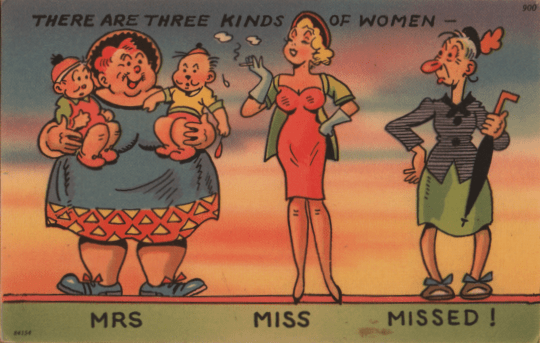
On the screen, though, heroes and villains, damsels and femme fatales were always lighting each other’s cigarettes. But postcard cartoons did not follow the trend. This was a matter of economy of energy: if it didn’t matter to the joke, you didn’t need to spend time drawing it. Smoking was limited, unless there was a joke to be made about ‘pipe dreams”, to drawing a character. SOME characters HAD to be smoking, or the audience would miss the joke.
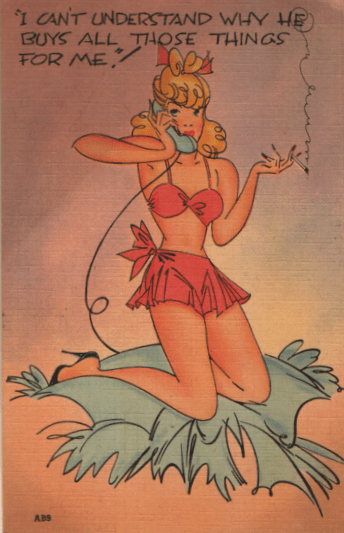
One common reason for a character enjoying a cigarette was to hint at that person’s sex life. (This was also popular onscreen. The morality code imposed on motion pictures in the U.S. in the 1930s, for example, had guidelines about exactly how a woman smoked, as doing it the wrong way would imply too much.)
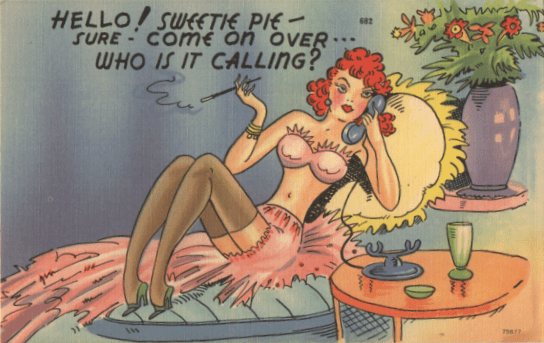
A woman with a cigarette in her mouth was not necessarily on the make: context mattered. However, once she had that cigarette in a holder, she was essentially hanging a red letter around her own neck.
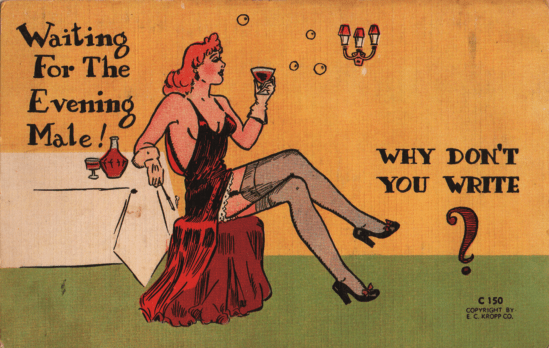
The gloves just make matters worse.
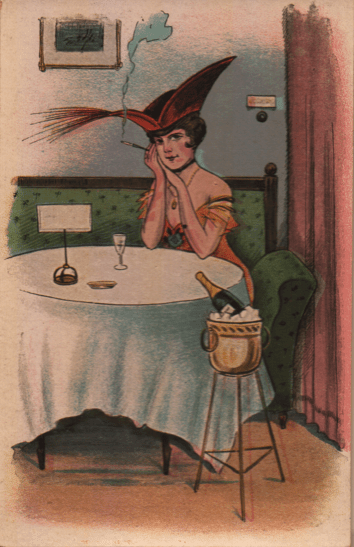
The combination of a cigarette in a holder with a bottle of something presumed intoxicating PLUS the latest fashions clearly indicated what our ancestors called, among other things, a vamp, a predatory female whose luxurious tastes in tobacco, alcohol, and clothing were satisfied by draining the bank accounts of her foolish victims.
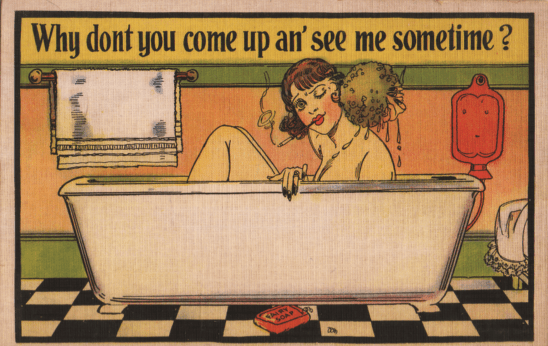
Of the three warning signs, the most essential was that cigarette holder. The rest could be dispensed with if her schedule was full.
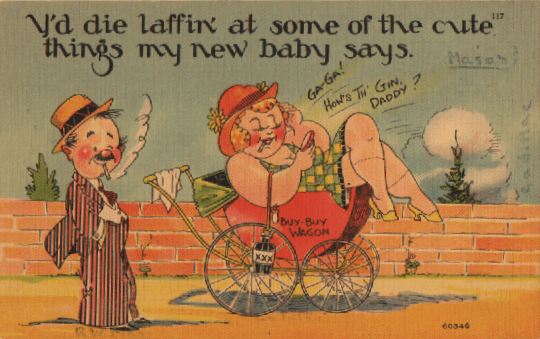
Now, here, we surely have no more than a joke about “baby”, not a scene reflective of what these two might get up to in their spare time. On the other hand, you will note that they EACH have a cigarette, which gives us permission to assume whatever we will.
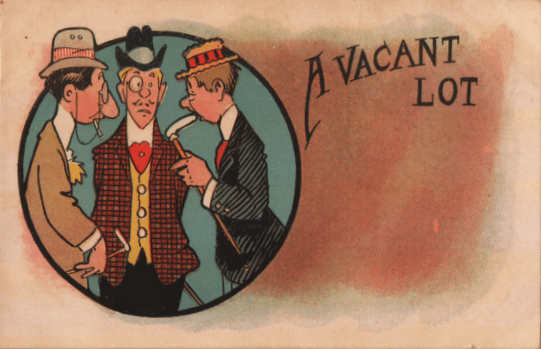
In fact, around the turn of the last century, the cigarette was considered primarily a woman’s smoke. Until World War I made it obvious that the cigarette was more convenient for soldiers on the battlefield, our ancestors regarded the sex lives of MEN who smoked anything but a pipe or cigar highly suspect. At least this chap’s not using a holder.
 Blogsy Babbles