Time Capsule’s Full?

    The metropolis in which I reside officially decreed, on June 11, that it was Over It.  That is, it reopened, declared Mission Accomplished on this latest pandemic, and freed its citizens to go back to the life they were living up through March, 2020.  (Except you can’t visit the businesses which closed its doors for good, and you WILL be expected to stay six feet from people if they prefer it, and you’ll have to wear a mask if you visit a hospital, a school, a prison, or if you use a cab or a bus or a train, or if you venture into a business which politely requests you to wear a mask.  Everything except that is okay.)

    Now, I am as excited as the next blogger to see life getting back to normal, but while we wait to see whether it’s the Old Normal or some New New Normal, I am aware that there are certain segments of our society which are going to be greatly inconvenienced by this declaration.  This of course includes all the businesses which spent hundreds of thousands of dollars on pandemic precautions, and cultural institutions which assumed this pandemic would go on for another year or so, and arranged a whole lot of Zoom events.  But I am especially concerned for the stores and businesses which strobe to supply us during the emergency.
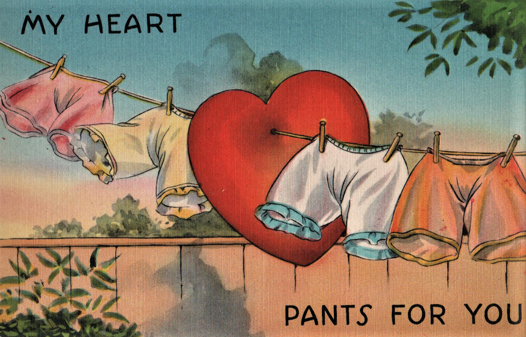
    In other words, what the heckfire are they supposed to do with these warehouses full of hand sanitizer, latex gloves, and facemasks?

    Well, your Uncle B,ogsy is perfectly available for consultation on these matters, and at a very low price, too.  (What did it cost you to open up this blog?  That’s what I thought.  I’ll work on that next week some time.)

    I am not SO worried about the latex glove surplus.  We kind of moved out of that phase months ago, and I assume these are already moving out through their Old Normal venues: cleaning companies, Book Fair volunteers with dusty books to process, food service workers, and so on.
    Hand sanitizers will probably sustain their vogue for a while (they took the place of singing to yourself to make sure you washed your hands long enough) and, in any case, they ARE supposed to be seventy percent alcohol.  It’s just a matter of finding the right mixer.

    But all those facemasks: homemade and commercial!  They became political flags for a while and then symbols of security and safety.  A goodly percentage of the population will go on wearing them for a while, and others will need one to carry, for admittance into certain places.  But there are millions awaiting users who may never come for them.  Can they be reurposed?

    All of your Uncle Blogsy’s remarks about their application as beachwear have been met with scowls and/or sneers, so I will not even MENTION that here (though some of the more decorative ones might still…no, no, put the pitchfork down.  I will desist.)

    I think there is much to be said for the suggestion of a reader of this blog that they would make excellent Hamster Hammocks.  The application is excellent but it must be admitted that there simply aren’t enough hamsters to go around, another problem of modern society which the government has not sufficiently addressed.  (Don’t blame the hamsters: they seem to be willing to work on the problem.  It’s one reason they could use a hammock or two.)

    We are well into the season for iced tea, or iced coffee, if you prefer.  Why not brew up a little something using those gourmet loose teas you got for your last birthday using these handy strainers?  I do NOT know how well they’d work in a coffee maker: check first and see whether there are wires or plastic support strings which might melt during the process (unless you’;re one of those microwave chefs who makes the mistake so often you’re used to the flavor of molten plastic in your grilled cheese.)

    You could get a bunch and decorate them as party favors.  Sketch a tuxedo and cummerbund on them and have a gathering where formal dress is required.  Or plaster slogans on them and have your group wear them at their next protest rally.  You could really come up with varieties to wear for Halloween, including, of course, sparing some for padding yourself to dress as Elvira, Mistress of the…okay, okay, I’ll put that away with the bikini suggestion.  Gosh, you people are particular about where you wear your masks.

Another Assessment

    I had no particular intention of revisiting the subject of Monday’s column.  It isn’t that I had exhausted the wordplay available with donkeys on postcards: I just felt I had rambled on long enough about the subject and ought to move to a subject where I could offer more substantive commentary.

    But the Interwebs is filled with substantive commentary and, anyhow, it was pointed out to me that I had skipped over an anatomical anomaly that was worthy of a mention.

    First, let us make it clear that the jovial insult was as popular then as now, and calling the recipient of your card a donkey was a very popular joke,  The following card comes from the era when the message, if any, was to be written on the front of the card.  So what was on the back?

    The name and address of the recipient, of course.  Other cards went to Shakespeare for inspiration.

    This particular joke was beloved by cartoonists, and several variants exist, but this one wins out because, just in case the recipient doesn’t immediately realize what you’re calling him (and yourself), the donkeys have their backsides pointed at the viewer.

    But it is not the backside of the donkey we are here to consider.  Our ancestors lived in a world before motorized transport, and though our pioneer ancestors tended to depend more on oxen than on the more expensive horse, it was the horse-drawn vehicle which ruled the day as postcards were coming into vogue.  Horses could be seen everywhere, with faces that were noble or lonely, legs which were strong or skinny, backs which were sturdy or bowed, and…say, did you know that once upon a time, the automobile was considered a CURE for transportation pollution?

    A mighty author referred to “the aroma inseparable from horses”, and postcard cartoonists were not going to let anything so obvious slip away without comment.  There were those who took the side of the horse, applying his troubles to those of us all.

    Others were content simply to remark on the phenomenon.

    And this, Cowslip Cocktail, is why a certain phrase was popular to apply to unpleasant, unsavory, or otherwise undesirable acquaintances.  I sometimes feel a hundred different cartoonists used this gag (which is nonetheless a true tale.)

    Other cartoonists went for something a little more subtle.

    Which brings us back around (pardon me while I try to visualize that) to the postcards which call the sender names instead of the recipient.  If you found this week’s theme in my columns tedious, well, I can only say

Grin and Bear

I hope what I wrote in Monday’s column could not be construed as suggesting the donkey (burro, jackass, etc.) served only one purpose in the postcard of midcentury vintage.  The donkey appeared regularly on postcards in many roles: at the beginning of the twentieth century he appeared as a sometimes patient, sometimes recalcitrant beast of burden, and throughout the century he was part of the scenery in the Wild West, often commenting on the generally miserable life to be led.  I did not even mention how often he is to he found carrying excessively fat women, muttering “Well, I Ain’t the only jackass to support a woman”.  I turned my attention to one use of the donkey, but this should not imply that he could not be burroed for others,  (I’ve told you not to make faces like that.)

    Similarly, the bear took a lot of jobs in postcards of yore,.  He was a presidential symbol, after all, for teddy Roosevelt, and the Roosevelt bears which spun off from that had a long life on cards, completely unrelated to a similar long career of the teddy bears.

    But like the jackass, the bear suggested certain uses which called out to be made, and made they were.  One, of course,  is seen above and below, in people letting you know they could not bear to be away from you.

    I’m not particularly sure what’s going on in this one, by the way.  That’s an awfully small bear and I can’t quite figure out where those stars are coming from.  But if I worry too much about that, we will barely have time to get to any other jokes.

    The bear here is no more than a catalyst to the punchline, which really turns on her running barely and saying she bearly…okay, you got that.  Did you notice the bear is there more as the cherry on top of the sundae, just adding in a bear among the bares?

    Well, I’m glad you caught that because you will then have no trouble at all with these bears, who do take part in the action.  This is one of the most common bear jokes in the postcard forest, and it is not new.  (I won a newspaper caption contest with the exact same joke in my boyhood: even then I was working on the excavation and display of archaeological specimens.)  It is shown here in simple, classic form: not a lot of plot to get in the way of the story, just a blend of the two expressions.

    This example, which has art that I like a little better, is nonetheless not quite as clear about the punchline.  You have to stop and think about it a bit.  (Okay, maybe you don’t, but I still think the joke would be too subtle for some readers.)

    This young lady, whose postcard predates the Coppertone Girl, removes the violence from the narrative and performs the joke merely as an act of cuteness.  Children’s bottoms were so often an object of artistic cuteness in the era of the postcard that someone could probably write a dissertation on the subject, provided they had a strong stomach, high security bookcases for the research material, and a good lawyer.

    This version restores the violence, but I am puzzled by both the art and the story here.  What, exactly, has this pair been up to, resulting in a bandage on the bear’s behind right in the same area where her suit is torn?  Is she unaware that bears can swim?  Maybe that’s the edge of a cliff, and the bear will simply be frightened by the drop.  Or maybe there’s a rescue party led by Ranger Smith from Jellystone Park, waiting to rescue her and take the bear into custody.  Or….

    Enough of this second-guessing of the cartoonists.  Here’s a scene of genuine potential violence, and someone in great trouble because of a bear behind, even if it doesn’t use the joke at all.  And we will the subject rest.

The Means, The Ends

    There are some jokes which appear over and over in the postcard world, and bits of wordplay that seemed to leap from cartoonist to cartoonist and company to company.  There is the amorous golfer (want to play a round?), the tourist in the ice cream parlor observing how broadening travel is, the little brown hen and the big red rooster.  I might, unless sent a sizeable bribe, consider some of these this week.  But the one which has turned up most often, at least among ther postcards which have been condemned to my inventory is a simple, easy connection between a word people could say and a word they couldn’t, but did.

    Exactly how and when the small equine mammal and a person’s seaterrumpus got associated isn’t known, but both uses of the word go back nearly a thousand years.  The fact that one could talk about the animal but not the anatomy created an assortment of comic possibilities.

    Of course, by the time the gag was really popular, people didn’t keep donkeys or burros around the house except in the wild west.  So travel formed the theme of many such cards.  This one, for example, is repeated by different artists for different state borders.

    The association with canyon and mountain travel was another frequent choice.

    Any kind of traveling could be exhausting

    But the assiduous traveler persevered.

    And sent a postcard to let people know you had arrived safely

    And were enjoying the sights of the local flora and fauna.

     A really popular travel card was this sort of insurance.  I’ve seen an assortment of designs and rewordings

     Meaning a LOT of people expected to be in this predicament.

    Not all of the possibilities involved travel.  Some assertions are simply generally observation on kindness to animals.

    Or an admiration of our fellow creatures.

    However, sometimes these innocent compliments could be misunderstood.  Sometimes a postcard company (Kropp, in this case) would assume a customer might be squeamish about such a simple tribute.

    So these companies would allow you to use some other synonym and still tell the tale.

Less Filling

    I have no desire to be regarded as a crank, which would suggest I should keep my mouth shut about certain topics about which I have opinions which are not in line with those of the majority.  Still, this is the Facebook Age, when social manners demand that you shout such things at the top of your lungs.

    And I wasn’t planning to turn this blog toward the subject of food again so soon.  I am not a culinary expert, and I would not qualify to play one on TV.

    Besides, it’s June, when, of you happen to be aged and gray, means certain foods are currently In Season.  This means very little at the store nowadays, but it does mean you will see certain things available on menus, especially at those places which like to brag they use locally sourced ingredients.  And certain ingredients feed my imagination as well as, I fear, my wrath.

    I like strawberries.  When I was a child, I encountered them primarily in frozen form.  A can of strawberries was opened and would be poured over vanilla ice cream and (occasionally) angel food cake.  I have not checked recently, but I suspect this food of the gods is no longer available, like a lot of the canned fruits I knew as a child.  I occasionally tan into strawberry shortcake, but this was, I am informed, MOCK strawberry shortcake, with strawberries poured over sponge cake.  Only when I was older did I experience strawberry shortcake made with shortcake, and I was convinced that shortcake is the natural habitat of strawberries.  (I know many, many ;people who live largely on strawberry jam, and I admit this is good, too.  There are plenty of strawberries, after all,)

    I grew up in a house where rhubarb regularly grew, and I have eaten rhubarb in many forms.  A sales clerk told me once that rhubarb is “a Midwestern thing”, but this is not so.  Rhubarb is enjoyed throughout the western world, especially in areas where fruit trees do not grow.  Rhubarb is technically a vegetable, but is regarded as a fruit by many, as it is known almost universally as The Pie Plant.  I have eaten many good rhubarb crisps and rhubarb sauces, but pie is the natural home of rhubarb.

    I hope I do not seem overly conservative, but I would like to state here and now that strawberries and rhubarb, excellent by themselves, should be enjoyed that way.  Make your strawberry pie if you must, or your rhubarb shortcake.  But if you serve me strawberry-rhubarb pie, I will make an annoying grimace before I give in and eat it.  See,. To me, strawberry-rhubarb pie tastes neither like strawberries nor like rhubarb.  It is a pleasant enough pie, but I think of it as a waste of good fruits, much as one of my muses, Will Cuppy, regarded pineapple pie.

   Yes, I KNOW rhubarb and strawberries are ready to eat in June.  This does not excuse mixing them together.  Do you make strawberry-asparagus pie, by any chance?  Then you see what IO…you, in the fourth row!  You are nodding.  Do you make…no, don’t tell me.  I don’t want to know.

    Do not foist your strawberry-rhubarb pie on me, thank you.  Save that lattice crust for cherry and blueberry pies, where it belongs.  And as long as I have doomed myself to ignominy already, I may as well admit that the most commonly encountered rhubarb pie, which is rather like an apple pie only with rhubarb and a lot more sugar, is not what I would choose either.  My mother served exclusively rhubarb meringue pie, in which the rhubarb is suspended in a sort of custard and which is fit for monarchs at the rank of emperor and above.  In an act of lunatic generosity, I made one once and took it with me to work, and was gratified to see it consumed in very little time.  (This did not happen when I tried my mother’s peach pie on the same crowd, but we’ll save that recipe for another time.)

    For those who have read this far, in mounting anger, yes, that is actually a postcard showing lemon meringue pie.  I figured I needed something to remind everyone that we write mainly about postcards here, and did not have any rhubarb postcards to show.  Doesn’t matter: the powerful strawberry-rhubarb forces will have this column deleted from the Interwebs at any moment now.

2-D Celebrities

    I thought today we might just glance at three celebrities who can be remembered by heir postcards.  Each was responsible for a lot more cultural baggage than that: bits of our language, tie-in merchandise, musical history, and all that.  But even at that, they are nowhere NEAR as big as once they were.

    E.F. Outcault was looking for fame: it helped make his case.  One of the first successful; cartoonists (The Yellow Kid, considered by many to be the first American comic strip, was his) and he was also the one of the first cartoonists to go to court to discuss whether the characters je created belonged to him or to the newspaper he worked for.  His plans did not involve a lot of sharing with the newspapers.

    When he had his next hit with Buster Brown, he went all out.  No one had really explored the paths into merchandising that he mapped: both Buster Brown and Tige, his dog, were seen on dozens of different products, of which the Buster Brown shoes were the longest lived.  Outcault was not blind to the appeal of postcards, either, and advertised his lectures with cards people would recognize even if they didn’t recognize his name.

    Buster Brown, though it may be difficult to see here, was considered wildly cute by dozens of readers, an everyday boy who, despite the advice of Tige, would get into trouble every day, and generally wind up getting spanked, finishing the strip off with a half-mock explanation of why he deserved the spanking.  He’d do things differently today.

    Also cute, and also constantly in trouble was F. Burr Opper’s happy Hooligan.  His antics made the word “hooligan” a part of the national lingo, and made him one of the first comic strips adapted to live action movies (though Charles “Bunny” Schulze’s Foxy Grandpa beat him to that). 

His outfit even made a popular Halloween costume, as seen here..

    Even his side characters got into the act, with Alphonse and Gaston and their odd insistence that the other go first, entered the language as well.  So did one of their other running gags, their habit of crying out “Oh, would that I had remained in dear old Ottawa, Illinois!” or “How I desire at once to be transported to that lovely old Dundee, Iowa!” when confronted by angry lions or pursuing police, or both.  This habit weas immortalized in the song “Oh, How I wish I was in Peoria!”

    Cuteness and mischief being key, there was no doubt that Bonzo would hit it big.  At first a character acter in the full-page cartoons of George Studdy, he branched out into animated cartoons (perhaps beating Feliz the Cat to the punch.”  From his debut around 1922, he provoked choruses of “Awwww!” from all who beheld him.

    Exactly what breed of dog Bonzo is remains a mystery, though both bull terrier and pug have been suggested.  Bonzo figurines, Bonzo Dog Food, and Bonzo place settings were available throughout the civilized world.

    He also inspired any number of cartoonists to produce Almost-Bit-Not-Quite Bonzo cartoons.  And anyone who remembers off-the-wall rock group The Bonzo Dog Doo=Dah band (“Urban Spaceman”) will know just how far cuteness will carry a character.

Sales of Yesteryear

    Maybe, Mincemeat Macaroon, I have been going about this the wrong way.  Maybe we can gently ease the conversation away from food and back to the world of postcards, taking baby steps.  So I thought I would fill a blog with a few things I learned about kitchen and household ways of the past through postcards *and one vintage blotter.)

    I saw a number of these business correspondence cards featuring something called Nine O’Clock Washing Tea and wondered what it was you were going to wash with tea.  This is easily explained: the product for sale is, in fact, laundry soap.  It got its name because the manufacturers advertised that this was a revolutionary new soap that would make the housewife’s life so much easier that by nine o’clock on Monday morning, the laundry would all be washed and hanging on the line, and she could stop for tea.  The product is remembered today not for the amazing qualities of the soap but because the company produced product tie-in clocks with the name of the product running along the outer rim of the face and the numbers farther in.

    Advertisers were looking for things that attracted attention, not things which followed logically with the product.  We are more scientific these days, and do not pull this kind of trick.  (Just occurred to me: what DO emus have to do with insurance?)  Swift Soap and Washing Powder introduces us to the little boy writing endorsements of the product, making hen scratches on the paper, so that his shadow…okay, you got the joke.  (Swift was one of the big meat-packing companies, by the way. A LOT of packing companies handled soap on the side; they were often careful to keep their name off of it, as the association of soap with animal fat does not sell soap.)

    I thought Uncle Ben had a monopoly as a dried rice product spokesman, but he actually had to share his own product with this little stick man…or rice man.  The little fellow, who doesn’t seem to have had a name, saluted you from the box for decades (symbolizing how the individual grains of rice could be seen, not becoming mushy, or something like that.)

   This gag is pretty obvious: the counter attendant is serving his wurst to the worst sort of customer.  The thing about the gag that interested me (though it made me gag) was the nickel’s worth of “Hot Liverwurst”.  Coming from a region where liverwurst is often called Braunschweiger (though in other parts of the world they are completely distinct) I am familiar only with liverwurst served cold.  This does seem to be how it is served through most of the world: either in thick slices on a plate with plenty of pickles or sliced on rye bread with plenty of onions (and/or pickles.)

    I never developed a taste for this (I think I am the only one in my immediate family with this phobia) simply because my parents tended to SPREAD it on bread, and spreadable meat struck me as something otherworldly.  But I think perhaps I would prefer that to eating it freshly steamed.  Yet, searching the Interwebs, I found a few brave souls who do eat their liverwurst hot, mainly serving it just as cold liverwurst is served.  One or two, though, actually chop it and fry it with potatoes.  In dread fear I went hunting for…but no, I could not find a liverwurst pizza or liverwurst burrito anywhere online.  Perhaps a few boundaries wait for other heroes to cross them.

   Oh, on the subject of spreadable meat, my mother declared frequently that tapioca meatloaf was properly done if you had to serve it in a mug and eat it through a straw.  No, I didn’t, to tell you the truth.  I’d wait until the next day, when the leftovers had congealed, and I could slice it onto a sandwich.

Vital Vittle Volumes

    Since you asked, I will answer, but we MUST get back to postcards one of these days.  But being a blogger and thus not shy about sharing my opinion, I will pass along some thoughts on Iconic American Cookbooks.  This is not a Top Ten because I haven’t got room for ten and, anyhow, I’d be bound to leave something out, as most of my own cooking is done by the Toss-Salt-On_=it-Put-It-In-The-Oven method.  I rely for these notes on what I learned selling books at the Book Fair, especially from listening to the Cookbook Lady, Penelope Bingham, who lectured the length and breadth of Illinopis (at least) speaking on what we can learn about our history from cookbooks.

    One of the things that fascinated the Cookbook Lady was expressed in a question guaranteed to start a conversation: What cookbook did YOUR mother cook out of?  She was fascinated to learn that once she got more than five miles out of urban Chicago, the hands=down winner of this was generally FARM JOURNAL’S COUNTRY COOKBOOK, a mssive volume (over 1,000 recipes is what it declared) first published in 1959.

    But in Jewish households, she found it was THE SETTLEMENT COOKBOOK.  This came out of the Settlement House, a center for the assistance of new immigrants in Milwaukee, who at the start of the last century were mainly either Jewish or Italian.  The cooking was robust and popular, but the Board of the institution jibbed at the price of printing a cookbook (it was 1901; the publisher wanted eighteen bucks) so its author had to sell it by subscription.  Within a few years, the Settlement House, now known as the Jewish Community Center, was heavily supported by proceeds from the book, which had become a basic reference for Jewish (though not fully Kosher) cooking.

   Irma S. Rombauer was 53 when her husband committed suicide.  Ger children suggested she write down her recipes and thoughts on cooking to deal with the trauma, and in 1931, the first edition of THE JOY OF COOKING was published.  For many people this is a basic reference, and it inspired thousands of sometimes surprising followers.  (The author of The Joy of Sex called it that because the first cookbook he queried turned him down.)  I was amazed, at the Book Fair, to run into people who detested The Joy of as time went on, the editors introduced the “Action Method” of writing recipes, in which each ingredient is introduced to the conversation when it is added to the recipe, instead of the Traditional Method, where you get a list of ingredients at the top and THEN are told what to do with them.  (I prefer Erma Bombeck’s more basic excuse for disliking it: everyone wanted to spell her name with an I instead of an E.)

    THE BOSTON COOKING SCHOOL COOKBOOK, also known as the Fannie farmer Cookbook was a follow-up to Mary Lincoln’s Mrs. Lincoln’s Boston Cookbook.  What set Fannie’s 1896 volume apart, and led to HER status as a basic reference was her insistence on measurements.  Before Fannie, a pinch of this or a handful of that might do, but it was Fannie who defined the level teaspoon, and asked that a certain number of ounces of butter (instead of “a lump of butter as big as a goose egg”) be used.

    Anybody out there need to be told anything about Julia Child, who had a more massive following than any television chef up to her time?  Didn’t think so.  Her MASTERING THE ART OF FRENCH COOKING is a massive set, even if you bought only the original volume (the sequel is just as big, and you really need both.), and the one I had the most comments on at the Book fair from people who had lent their copy to a friend or given it to a grandchild, and regretted it, wanting it back.

    Craig Claiborne revolutionized the art of writing about food for a newspaper; he was the first male ever to be put in charge of a major newspaper food section.  Along the way, he edited THE NEW YORK TIMES COOKBOOK, a new generation’s Joy of Cooking.  A customer came to me once at the Book fair with tears in her eyes.  She had never expected to find a copy of this book in her price range, and yet here it WAS.

    We are running out of space, and I have not mentioned James beard, or any of the Good Housekeeping cookbooks, or The Silver palate Cookbook, La Technique, The Victory Garden Cookbook, How To Cook Everything, The Cake Doctor, Vegetarian Cooking for Everyone, Dr. Garbee’s Wild Game Cookbook, and Mexico One Plate at a Time, all of which have their supporters online.  Then too, as I learned from a lady who begged me to find a particular issue of Gourmet, the most important cookbook in your home is always the one which has THAT recipe in it.

    For example, the Minute Tapioca cookbook is probably the source of the family Tapioca Meatloaf…oops, just out of space.

Crisp and Unclear

    We had apples at our house.  There were other fruits, though not as many as you may suspect, as this was back in the last century and no one had invented Star Fruit or Kiwi or such other modern contraptions.  My father had half a grapefruit with his breakfast, we ate enough bananas that our potassium levels must have been very healthy (though I don’t believe potassium was invented until I was in high school), and there were frequently oranges.  There was also canned fruit and even boxed fruit (raisins, mainly).  But there seem always to have been apples.

    We ate these as they came, often right off the tree (the man who built our house also planted an apple tree we had experimented with over the years, grafting on bits of other trees until it produced seven different varieties of apple.)  We also ate them in apple salad (Waldorf salad to you city types), apple pie, and apple crisp.  She never produced Apple Brown betty or Apple Pan Dowdy.  NOBODY in our neighborhood made either of those exotic dishes (we were a land of culinary conservatives, where my mother was considered a little suspect for putting cinnamon in her apple pie/  Fortunately, someone moved to town who used nutmeg, and the burden of stigma shifted to that innovator.)

    So when dealing with a number of postcards dealing with apples, I was moved to investigate these two strange and wonderful dishes and, because my life is not difficult enough, I looked around to find out the difference between apple cobbler and apple crisp.

    America’s interest in Apple Pan Dowdy arose in 1946, when Dinah Shore recorded the song “Soo-Fly Pie and Apple Pan Dowdy”, both of which dishes are associated with the Pennsylvania Dutch (who, like the Dutch children on vintage postcards, were originally German.)  the Interwebs experts do not exactly agree on what Apple pan Dowdy IS (and you can get into a fine fuss over whether it should be spelled Apple Pandowdy.)  Some make it as a sort of apple cobbler, while others produce an apple crisp.

    Apple cobbler seems to be the oldest of these recipes, produced, according to the Interwebs, by English colonists who were homesick for the puddings of their youth but unable to get all the ingredients or cook them the way they wanted on makeshift fires.  So they stewed up apples and sugar and put a biscuit type of crust on top.  Some, not all, of the writers go on to say this biscuit dough must be dropped onto the apples in circular globs, resulting in a top that looks like a cobblestone road.  Over the years, some people added a crust on the bottom, to, produced a sort of open-sided pie.

    Then came Apple Crumble.  Some of these recipes started to be called Apple Crisp around the era of World War I, but Apple Crumble came first.  I was informed by one online writer, with some severity, that if the crumbled topping (or streusel topping) on your apples contains nuts, it MUST be called Apple Crumble, though not all Apple Crumble recipes involve nuts.  But Apple Crisp NEVER does.

    If that streusel topping is primarily made of crumbled bread, particularly wheat bread, then what you are making is Apple brown Betty.  Some Apple Brown Betty recipes involve pouring boiling apple cider or boiling syrup over the apples before adding the streusel topping, but this also depends on how you were brought up  Apple dessert recipes are not as strict as, say, pizza, where a Chicago Pizza is not a New York Pizza is not a New Haven Pizza, etc.

     I was going to tell the story about an aunt of mine who was so suntanned when she started Kindergarten that the other kids called her Betty (for Apple brown Betty).  She told me with some satisfaction that “They only did THAT for one day.)  But I am running out of room, and I never did discuss the actual apple postcards (since this is a blog mainly about postcards.)  I will simply add that my mother’s recipe for Apple Crisp is as traditional as you please, coming from The Joy of Cooking, one of three or four cookbooks which MADE American cuisine in the twentieth century.  Um, if you look for it, you’ll need to look under Fruit Paradise, since the topping can be applied to any fruit you have handy (and is very good even on something like canned fruit cocktail, about which I feel I am going to have to consult the Interwebs again.  Stay tuned.)

Half-Baked Blogging

    No, we are not going to pause for any more food trivia.  We are going to discuss postcards again and not get bogged down in side missions involving this or that bit of culinary history.  Those of you who asked about the two Ms in M&Ms will just have to…oh, all right: it stands for mars and Murrie, Murrie being a Hershey executive who…no, we will NOT go into who first put them in cookies.  We’ll  just move from there to Baby Ruth (NOT named for Babe Ruth, by the way) and we will not be discussing postcards.  This is postcard only day: no food history.

    Of course, you can’t have cute little ethnic stereotypes on your postcards without occasionally making fun of a group’s food.  Here is another of the highly popular Dutch children sending his love by comparing his affection for you with his affection for his national foodstuffs.  The line between the Dutch and the Germans (Deutsch) is stretched a little thin here, as sausage was frequently associated with the Germans, generally with sauerkraut.  But coffeecake?

    Well, see, coffee cake is called that because the Germans (or, to be more accurate, probably the Austrians, but people who didn’t bother with the difference between the Deutch and the Deitsch were not going to worry about that) had something they called kaffeekuchen, which pretty much translates as Coffee Cake.  There was no particular recipe for it: it was any kind of cake you ate with your coffee.  It apparently remained something of an exotic novelty in some parts of the country./;  In any case, Frederick S. Dellenbaugh, an explorer who went as a young man on the second trip Major John Powell made down the Colorado River through the Grand Canyon, recalled a coffee cake adventure during that trip.

    It was Dellenbaugh’s turn to cook while the other men were out exploring, so he decided to surprise everyone by varying their diet with coffeecake.  He had no notion what it was, but he’d heard about it, and figured he could fake a pretty decent one by combining a dozen eggs with a pound of sugar and a pound of flour AND a pound of coffee, and baking the result.  Not only were the guys not especially thrilled by the result, but they also had the nerve to complain about the waste of so many of their supplies on a failed experiment.  You’d think people who go traveling through the Grand Canyon would have more of a spirit of adventure.

    This was one of a large series of very popular postcards telling people about things they didn’t need to do, mainly in some sort of romantic situation.  Among the many there were admonitions that Uneedn’t Worry, Uneedn’t Gamble, Uneedn’t Say yes to Everyone, and so on.  It loses a little of its humor due to the disappearance of one of the greatest all-time American brand names.

    Crackers were an omnipresent food product, used as a bread substitute, or something to break up in soup, or something to spread butter on for a quick snack or something to crumble up in a bowl with milk for a breakfast or a food for someone with a queasy stomach.  Every bakery made crackers, and you would, in the days of unbranded foods, just go to the store with a bag and fill it up with crackers from the cracker barrel.  In the late nineteenth century, Nabisco decided to change all that, less for sanitary reasons than because there was money in them thar barrels.  They came up with a kind of waxed paper sleeve which would hold a row of biscuits and decided to give it a name people would remember.  And the Uneeda Biscuit was born.  No, they did not make them in Oneida or anything like that.  The name meant just what it looks like it means, as they made clear in their slogan “We say it yet lest you forget: Uneeda Biscuit!”  (Why biscuit and not cracker?  The use of words like cookie, biscuit, and bun is a whole nother blog.)

    The first packaged cracker in America, and the first made by Nabisco, it survived world wars, the Depression, the postwar world, and even the merger wars of the 1990s, but finally in 2008 succumbed to the absorption of Nabisco by Kraft, which decided you might need a cracker, but you didn’t need a Uneeda Biscuit.  Although Amazon still lists them, they have been “currently unavailable” for some time now.

    There!  It was nice to get back to postcards, wasn’t it?