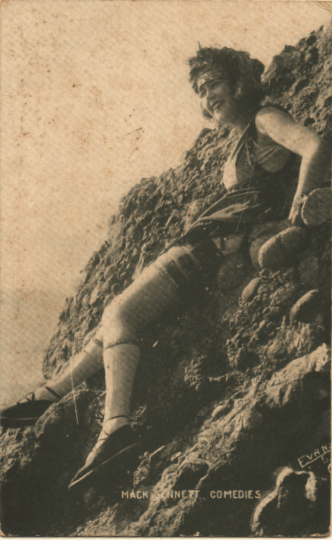
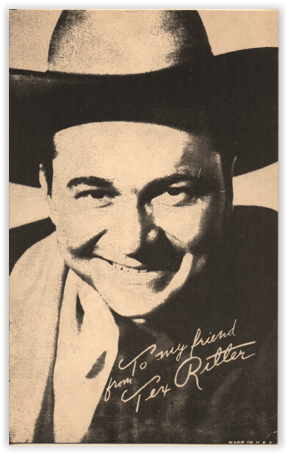
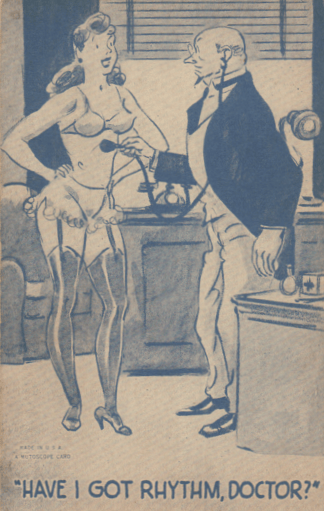
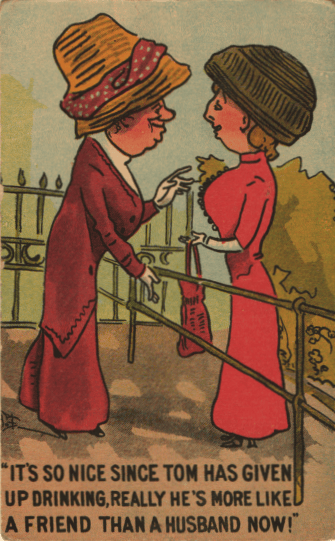
All I wanted to do was write something about arcade cards, those postcard-shaped collectibles that were once available in vending machines found in penny arcades (this is where the name… oh, you got that.) And what rabbit hole opened before me when I tried to do the research? A deep and melancholy tunnel through the erosion of pop culture by the passage of time.
I have complained about this before. With some exceptions, collectibles go through several lives. They are hot and collectible when issued, but after a brief fever, the fad fades. Beanie Babies, a high-quality low-price toy, had a massive wave of popularity, but are now talked about as those things people bought as an unwise investment. (Fortunately, they are subject to A. Edward Newton’s rule about investing in books: buy something you like and you can enjoy them even if the market doesn’t cooperate.) I have observed this about recordings of classic radio shows, which not only lost their main audience to advancing age but ALSO can now be enjoyed only by people with operational phonographs or cassette players.
See, when looking up the history of the penny arcade, I found that about seventy percent of the material dealt with that bygone venue, the Video Game Arcade. That something came before was noted by only a few, and THOSE were unsure of themselves. The penny arcade of ancient history depended on the invention of coin-operated machines, which in modern times came to have begun after the Civil War with that arcade staple, the fortune-telling machine. Grip-testing machines and electric shock machines followed, and somewhere along there, chewing gum dispensers.
The arcade really took off with what nowadays we refer to as jukeboxes and peep shows. (Looking up ‘nickelodeon’ gets you into the decline and fall of cable television.) Those little movie machines, whose inner working resembled a high-tech Rolodex (go ask Grandpa) were what really made the arcade spring up through America. A penny to play a cylinder on a phonograph or a whole nickel to watch a short movie pulled in the crowds. And the machines that dispensed collectibles came along right after them.
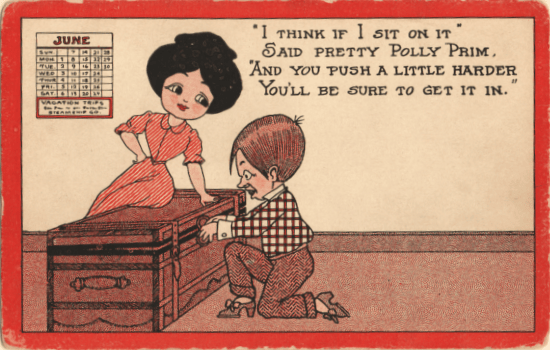
The arcade card was another invention from Chicago, where the first card machines were produced around 1901. Cards were simple to produce, and, if the card stock was sturdy enough, easy to dispense. AND the world was going through a postcard collecting craze so ardent that it completely knocked Trade Card collecting out of the market. In fact, until 1910 or thereabouts, all arcade cards had postcard backs, to increase their audience. Why the postcard backs disappeared is not clear. It was cheaper to print just one side or arcade card collectors bought enough that the companies didn’t need to depend on postcard collectors or some of the jokes were too naughty to go through the mail: you can choose one of those or devise your own theory.
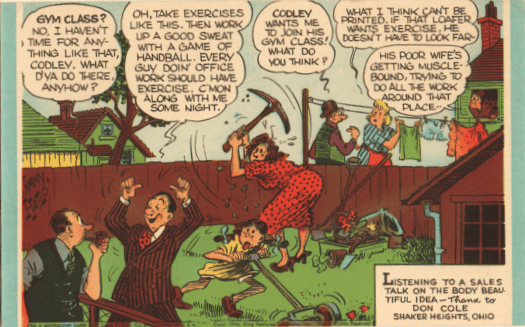
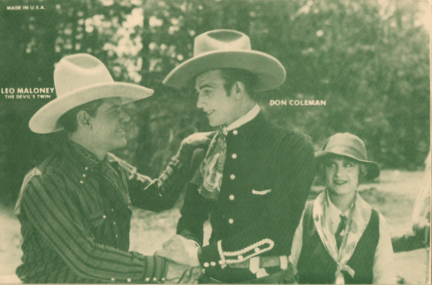
The penny arcade multiplied, especially in vacation venues, and though they early on got a reputation for being thoroughly trashy (part of the fun), they became such a part of leisure time that the assortment of entertainments was standardized. There HAD to be a robot fortune teller, a love meter, an electric shock machine, and so forth. Whole lines of specific cards were made: your future spouse, your horoscope, your favorite cowboy actors. Prices went up, naturally: penny machines very gradually gave way to nickel machines, and then….
Pinball machines started as part of the show, but manufacturers started producing such an exciting variety of these that rows of them started elbowing out less addictive machines. Dime after dime, quarter after quarter, the players KNEW they’d master the game this next time. And so the stage was set for video game cabinets, which, unlike the arcade card machines, didn’t mean buying new stock every month or so. At the same time, in those dark distant 1970s and 1980s, the postcard was losing its popularity, and the less popular cousins, arcade cards, ceased their fearless roar.
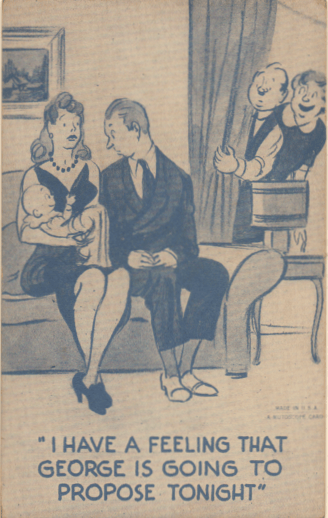
Now, of course, people DO still collect arcade cards, just as they still collect postcards, trade cards, Beanie Abies, and Christmas plates. In fact, Beanies and plates and postcards are still being produced. (The last arcade card company stopped printing in 1979.) But the fever has passed; no one runs to the store every Tuesday afternoon to see if new ones are in, and what they are, and how they’ll fit into the collection. Maybe we need to buy another album, or add another wing to the house.
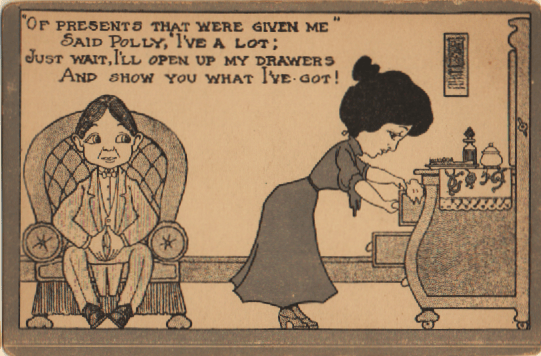
And just like the postcards and Beanie Babies, they can be enjoyed by non-collectors. We can still giggle and snort and nod as once we did and, if we are smart enough NOT to do historical research on them, do so without murmuring “Into the night go one and all.”

