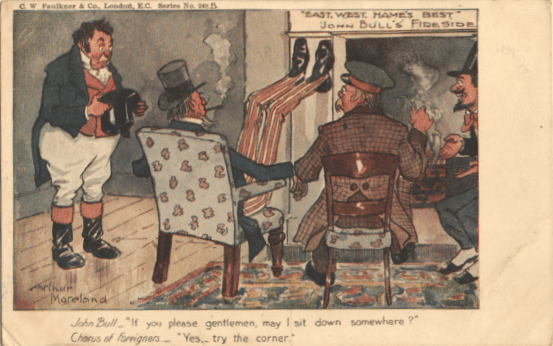
Keep reminding yourself, as we move into the fifth episode of a series on smokers on postcards which began with a statement that there AREN’T that many, that entire books can be written on smoking in the movies and on television. So there. Some postcard smokers were celebrities who needed tobacco to complete their look. Uncle Sam here is enjoying a smoke by the fireside (and using his legs to block the symbol of England from the British hearth.)
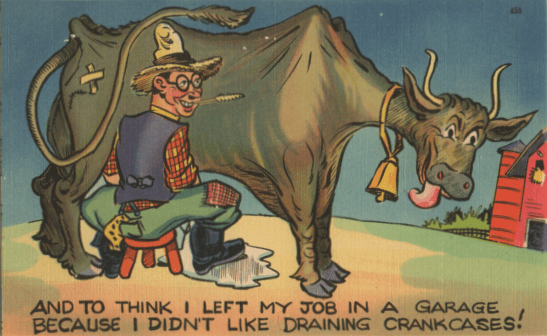
Comedian Bobby Clark’s cigarette holder was as much a part of his act as those (painted on) glasses of his. He appears without warning, AND without identification, on a number of unrelated postcards. We may investigate this in some future nother blog.
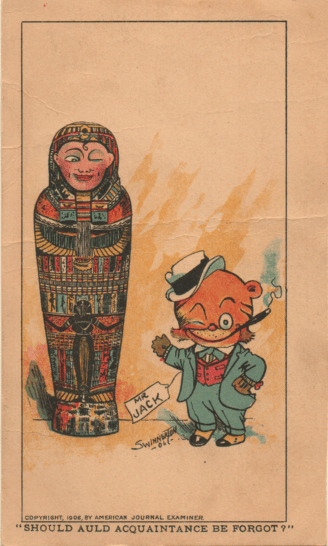
Mister Jack, another bygone comic staple, was a roue in late middle age who would have been lost without a cigar (or a comely female, even one his own age.)
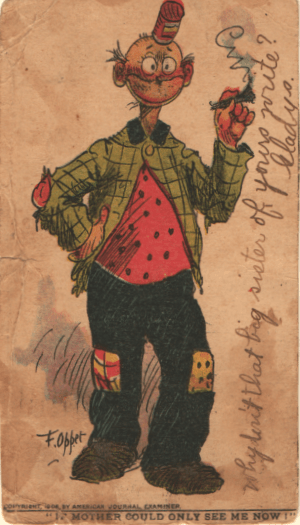
Happy Hooligan was not always in the money enough to afford a cigar, but he WAS a tramp. And as noted hereintofore, such men were heavily associated with thick, solid stogies.
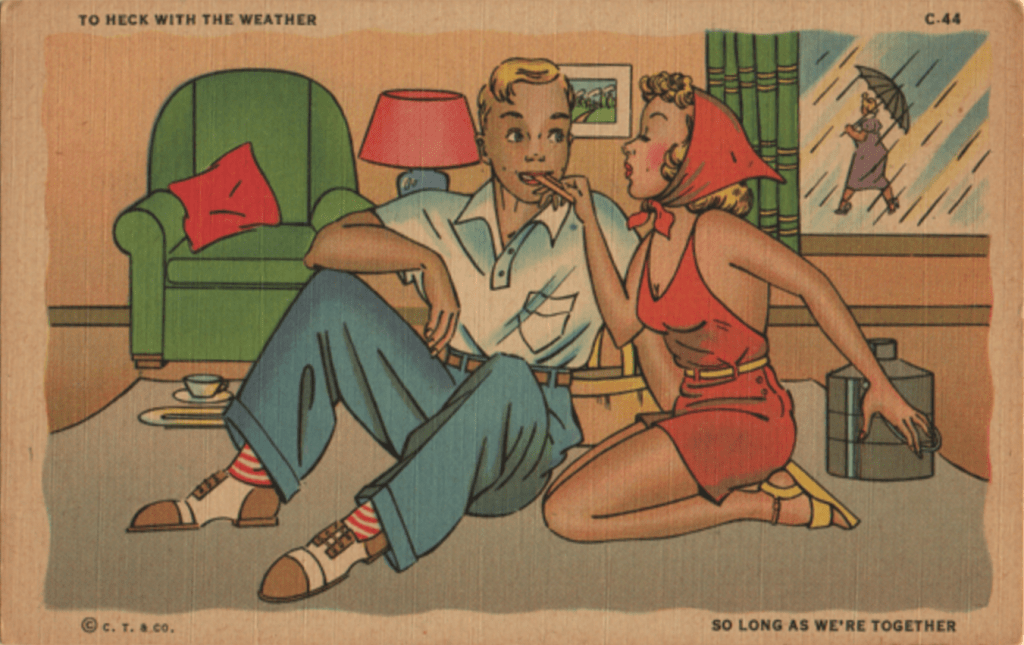
All of this, I think, supports our original point: that the cartoonists bothered to draw in a pipe, cigar, or cigarette only if it was important to the gag. But they took it for granted that just about everyone smoked.
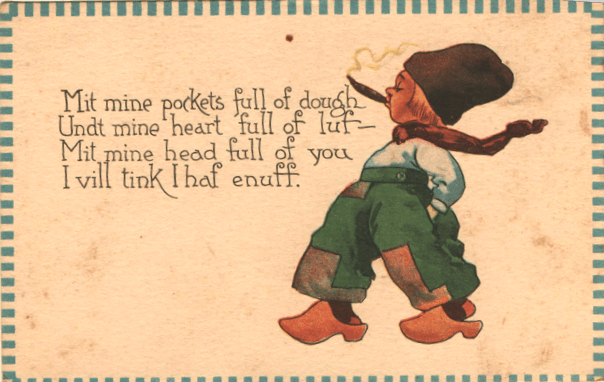
Even, as seen in our last thrilling episode, young boys. This is related to the postcard convention that having a kid make a joke was funnier or less confrontational than the same remark might have been from an adult.
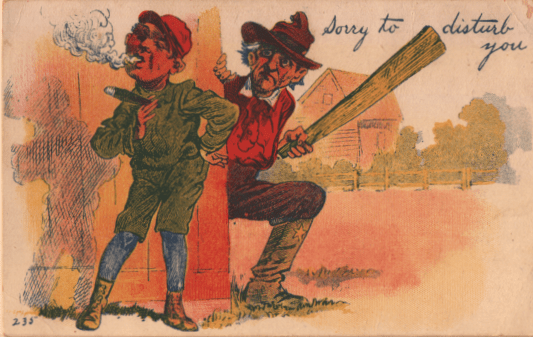
When the young man who is smoking is understood to be genuinely underage, reaction can be swift and violent. (The gentleman creeping up is a truant officer, and our hero is in trouble NOT because he is smoking but because he is playing hooky. Our ancestors were convinced anyone who skipped school was doing it to pursue forbidden, and thus more interesting, pursuits. Remind me to show you the one where the two boys are eating stolen raw eggs just because it’s forbidden.)
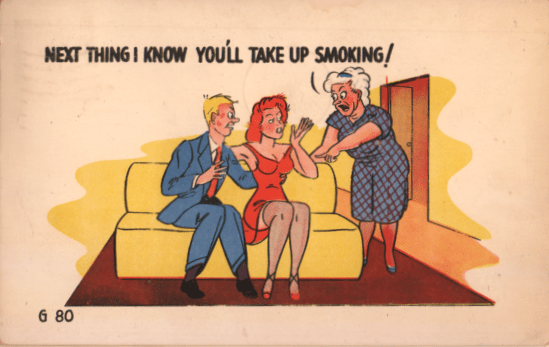
Parents regarded smoking as a definite step on the road to perdition. No one knew what might come next. Drinking coffee? Memorizing jokes from Cap’n Billy’s Whiz-Bang?
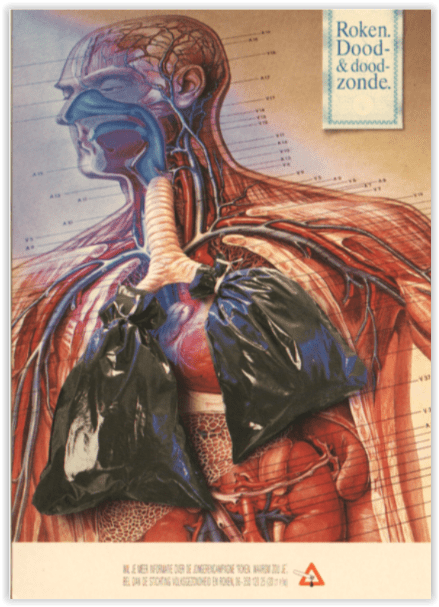
Cartoons that were blatantly opposed to smoking, however, are largely limited to recent postcards. There were occasional anti-vice postcards for earlier generations, but these tended to be deadly serious, like this Dutch example from the free rack postcard tradition, “Death and Deadly Sins”, which labels the parts of the body tar and nicotine will attack.
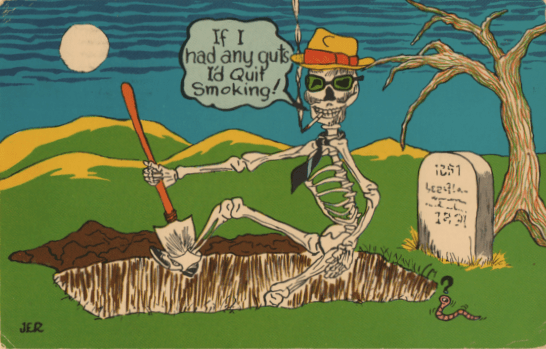
. Because how many people would mail a Dangers of Smoking cartoon to a buddy? (Well, yes, there are such people, but the rising price of postage has pushed them more into the realm of texts and forwarded videos. Another drawback of advanced technology.)

