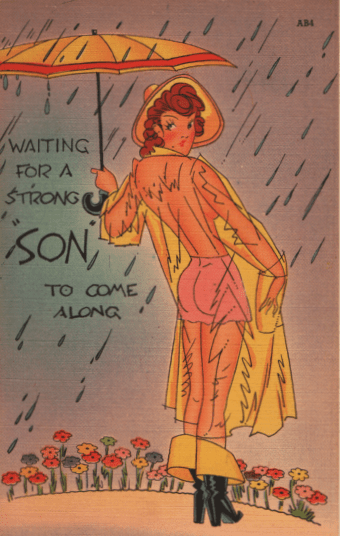
No, we’re not quite done with our discussion of wardrobe malfunction gags on vintage postcards. We have not even addressed transparency, and THAT, I know, is an up-to-date atter for discussion and debate. I check those articles on transparency in business for useful photos, but maybe I’m missing something. Anyway, this first postcard doesn’t count, since that is INTENTIONAL transparency. (We mentioned hereintofore the delicate lines that were drawn in to assure any post office censors that the model is NOT naked under that sheer raincoat. Hose shorts are nearly as magical as the raincoat, but they ARE there.)
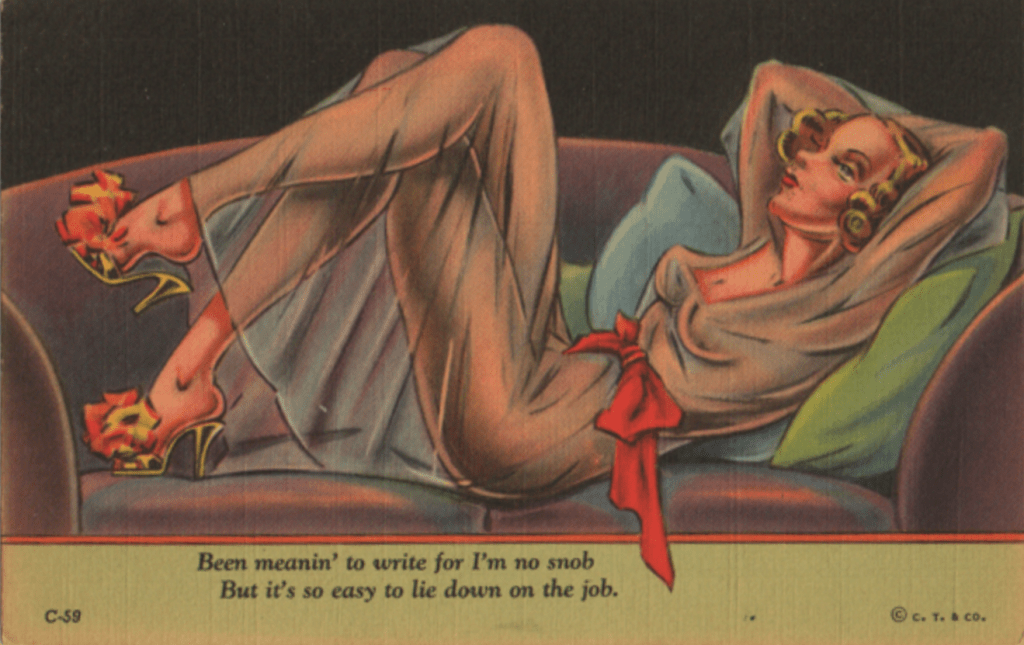
The intentionally transparent garment has been a subject of discussion for centuries, going back to whichever sage defined silk as an expression of a woman’s desire to be clothed and naked at the same time. That, of course, was merely a matter of something that was so form-fitting as to SEEM transparent, like the custom ladies in Regency England had of wetting down their already somewhat scanty garments so that they would be tight and nearly transparent if the British climate was not damp enough.
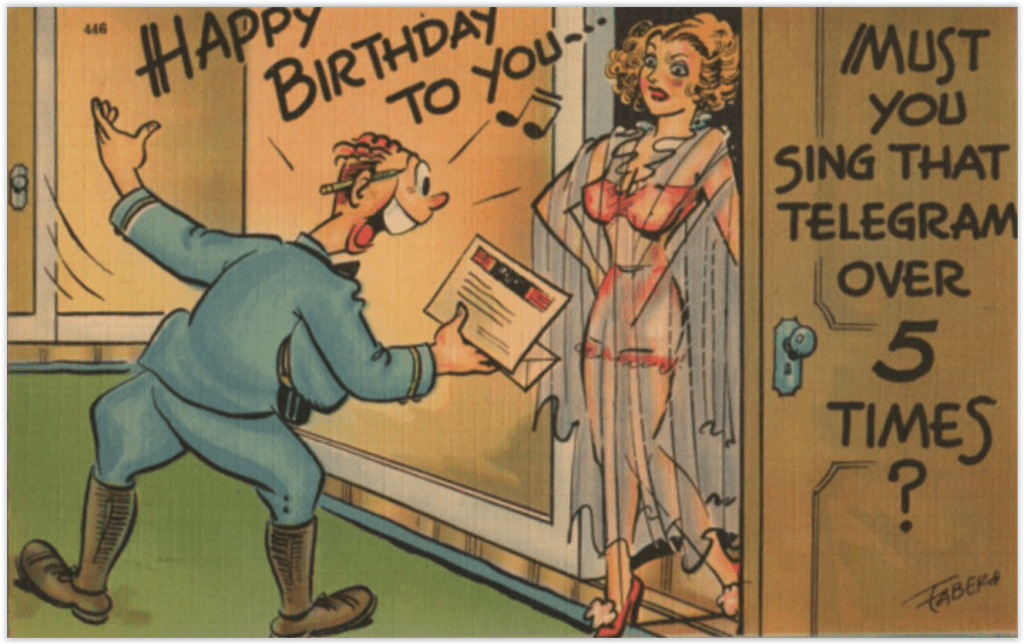
What we need for wardrobe malfunction is at least a transparent garment that the wearer did not expect to be viewed in, at least not by random visitors.
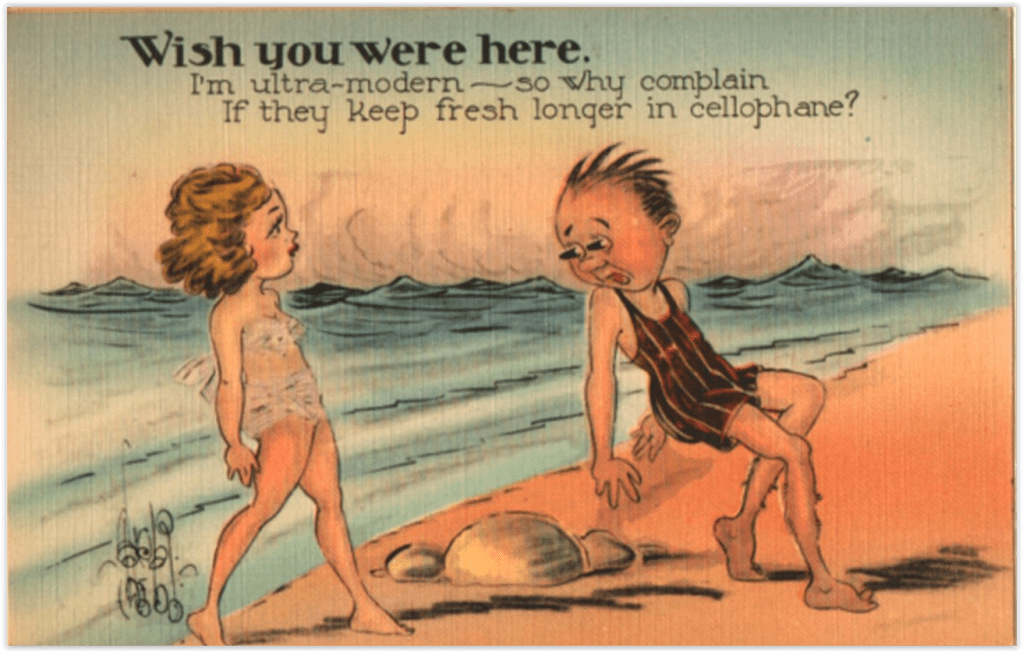
Or possibly some new-fangled garment which the wearer may or may not realize is thoroughly transparent. Artist Walter Wellman would never let a phenomenon like that pass him by. (Art students may note here that he is exhibiting the habit, more common in animated cartoons than postcard ones, eyeballs had of bouncing out of the face when shocked.)
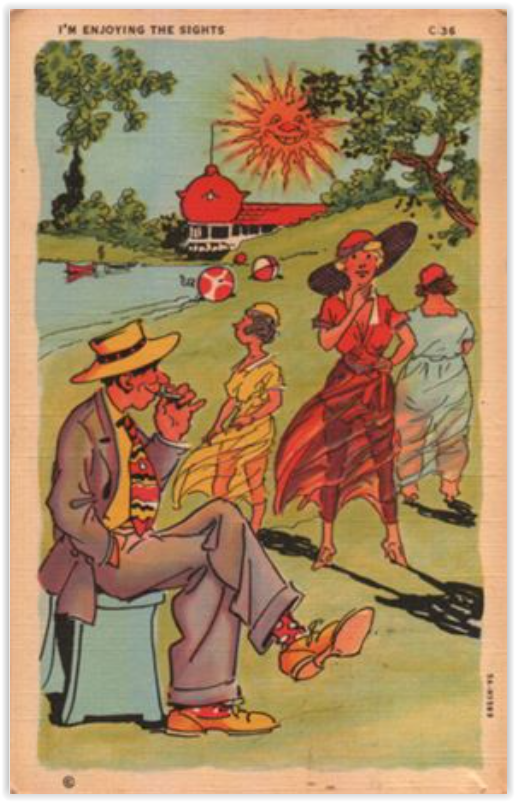
For thorough wardrobe malfunction quality, though, we need garments which are transparent only under certain circumstances, of which the model may be completely unaware. No need to come up with an excuse for the model to climb a tree or get too close to a barbed wire fence.
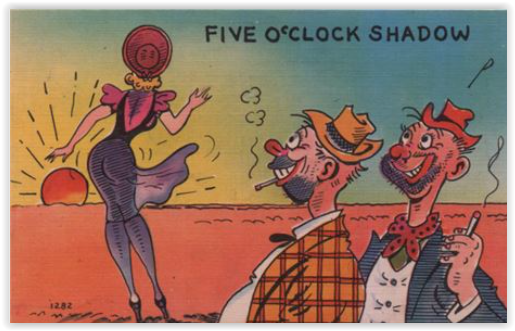
Sunlight is the cartoonist’s accomplice in these gags. (I don’t believe this is REALLY what we mean when we say “sun dress”.)
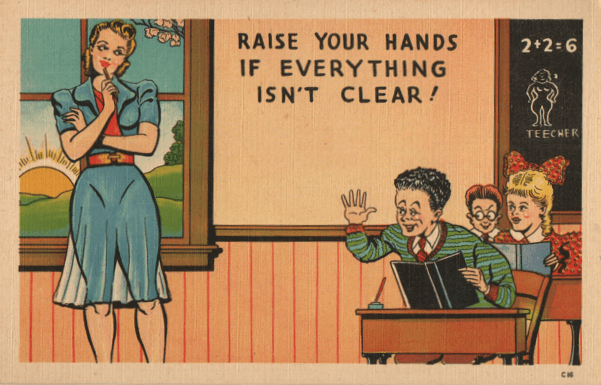
For one thing, this means the accidental nudity is largely a matter of silhouette, whereas real transparency would have meant details the mailman was forbidden to deliver. (There’s a lot going on in the details here. You can see that the female student looks angry—was the cartoonist implying sympathy or jealousy?—and the blackboard shows that she teaches anatomy more efficiently than she does spelling.)
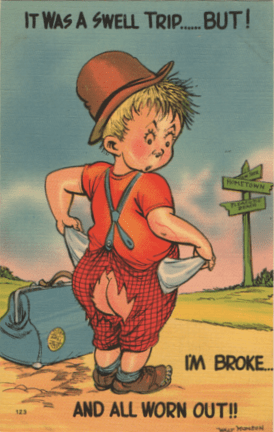
As usual, the male counterparts in this area are far behind: this is not precisely accidental transparency, but as male nudes were policed even more fiercely than female ones, this was the best a cartoonist could really do. (Even with his back to us, the suggestion that a male model’s swimsuit was transparent would have been too shocking for the general public…no matter what they might have seen in the flesh at the local beach.)

