
A few months gone, we discussed in this space the concept of the trade card, a Victorian sales device issued by stores who realized that if people started collecting these, they would come to the store to see if a new one was ready. Getting someone into the store was half the battle, after all, so companies vied to produce attractive series of cards. Then the postcard came along, and just knocked the trade card right off the collectibles map, as postcards could be swapped with friends at a distance, with the addition of a simple postage stamp.
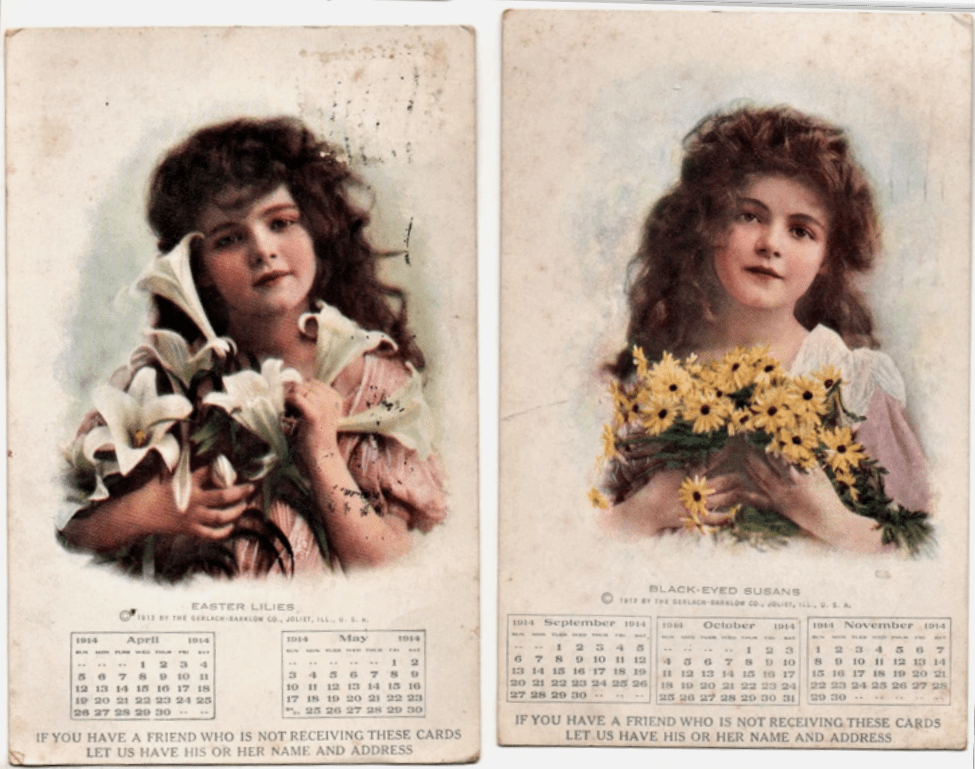
And yet, as seen here, some companies did try to carry on the tradition. Bour Quality Coffee and Royal Garden Teas brought out a series of fashionable young ladies as trade cards which could also be mailed as postcards. This dates from 1908 or thereabouts, and features a plain postcard back, without any product information. Of course, you’d check out your local grocer to see if there was a new one in the series. The HM & R Shoe Company, on the other hand, mailed out these calendar/pretty girl/flower cards to potential shoe buyers.
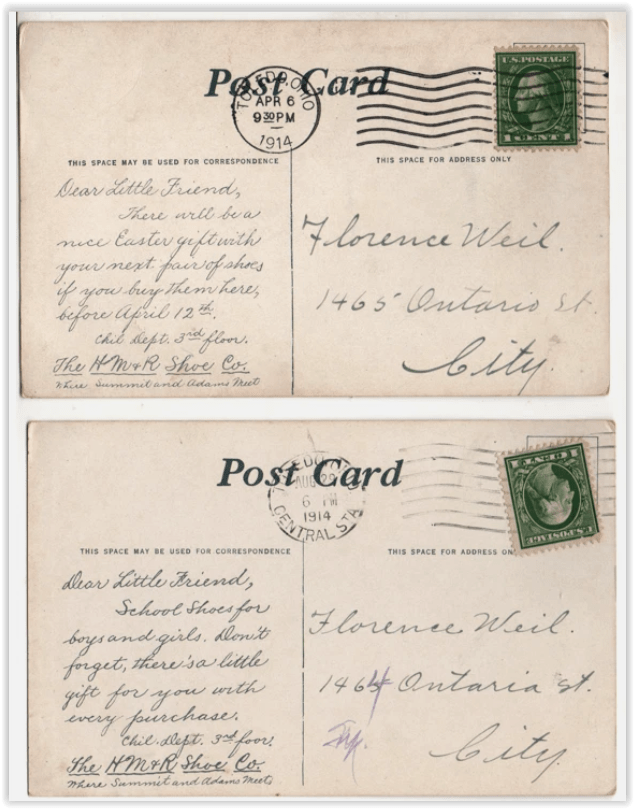
These were NOT cards you could put a message on and send to your friends (despite the card telling you to inform any friends of yours unfortunate enough not to be getting them) because the shoe company put its own message on each, corresponding to whatever shoes you might be looking for in the months involved. (I’m sorry I don’t have a complete set, so I’d know what months are prime shoe months.)
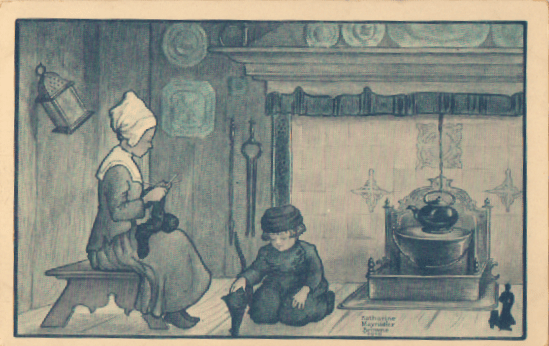
About this same time, the world was going through a craze for postcards with Dutch kids on them. Advertisers were quick to make up postcard trade cards for this hot market.
Why you would pick kids who wore wooden shoes to advertise YOUR shoes is not clear to me, but a collectible is a collectible.
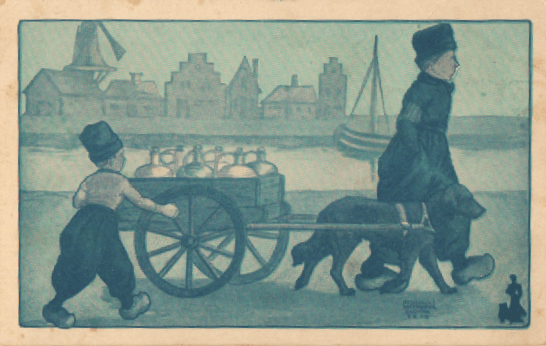
You will note that this comes from the “picturesque” school of Dutch kids postcard. The blue tint is supposed to remind you of the coloring of the Dutch tiles used in home decoration for generations.
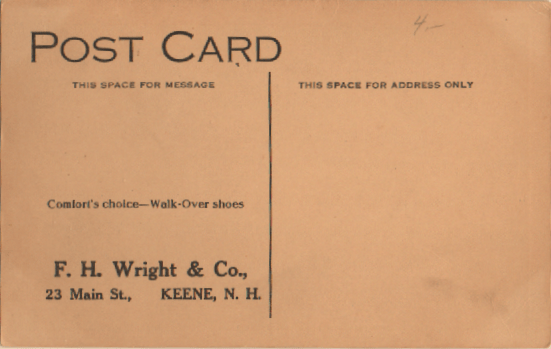
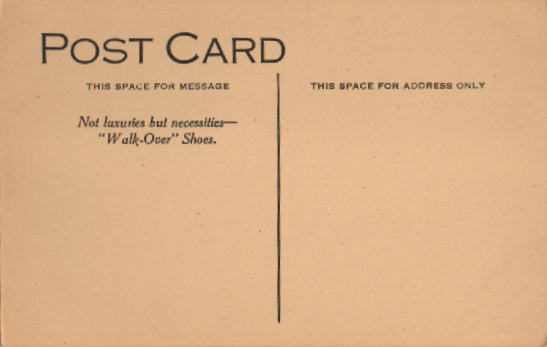
Like the HM & R cards, the messages change from card to card, to keep up your interest. (Adding a specific retailer’s location was possible, as you see. You can also see how it limits the usefulness of the postcard as a postcard. But it’s a Collectible, remember.)
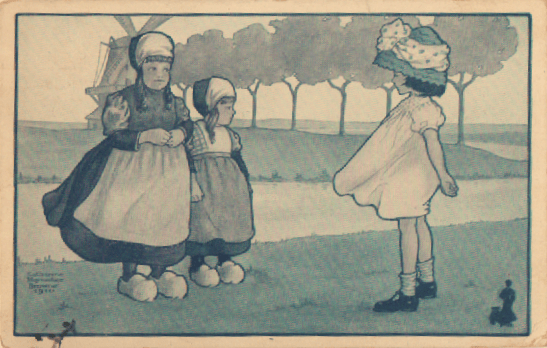
Maybe they did gradually realize that maybe showing the actual shoes they sold would be plus.
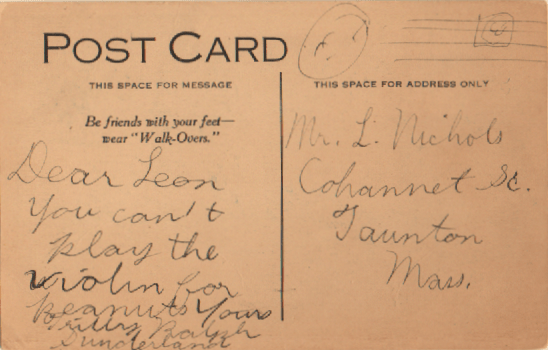
And, if you want evidence that people DID actually use these as postcards, here is a message for Leon (along with predictable advice about shoes which may have been more palatable.)
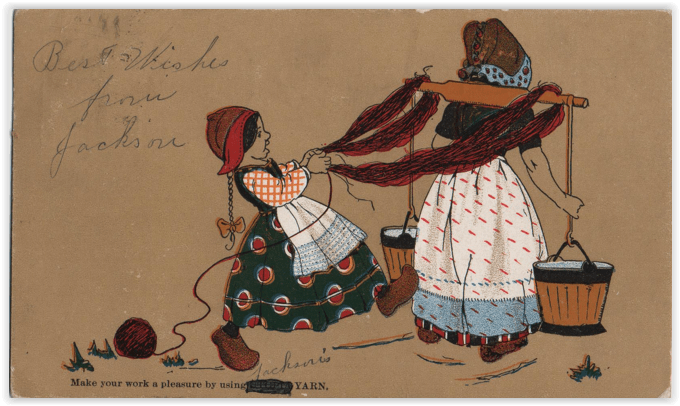
In fact, as mentioned hereintofore, the earliest Dutch kids postcard I have seen was a card advertising Utica Yarn.
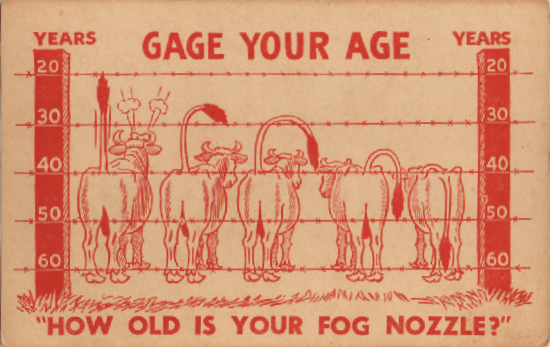
But though the world keeps turning around, we never quite gave up on the trade card. THIS old joke, for example, was simply another postcard, not especially rare. I did wonder, when I picked it up, what a fog nozzle is, really, and what it had to do with this old joke.
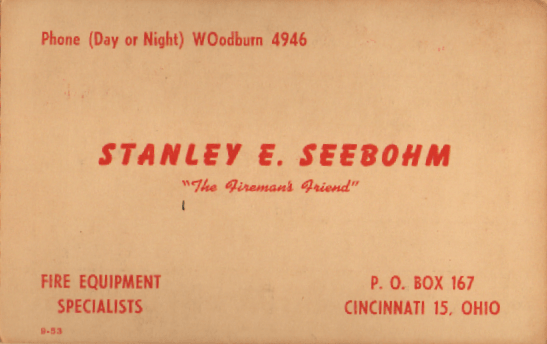
Why, lo and behold, THIS one was no longer a postcard at all, but had been adapted as a trade card for firefighting supplies. This came some forty years after any of the other cards shown above. The more things change, the more things (and jokes) stay the same.
 Blogsy Babbles