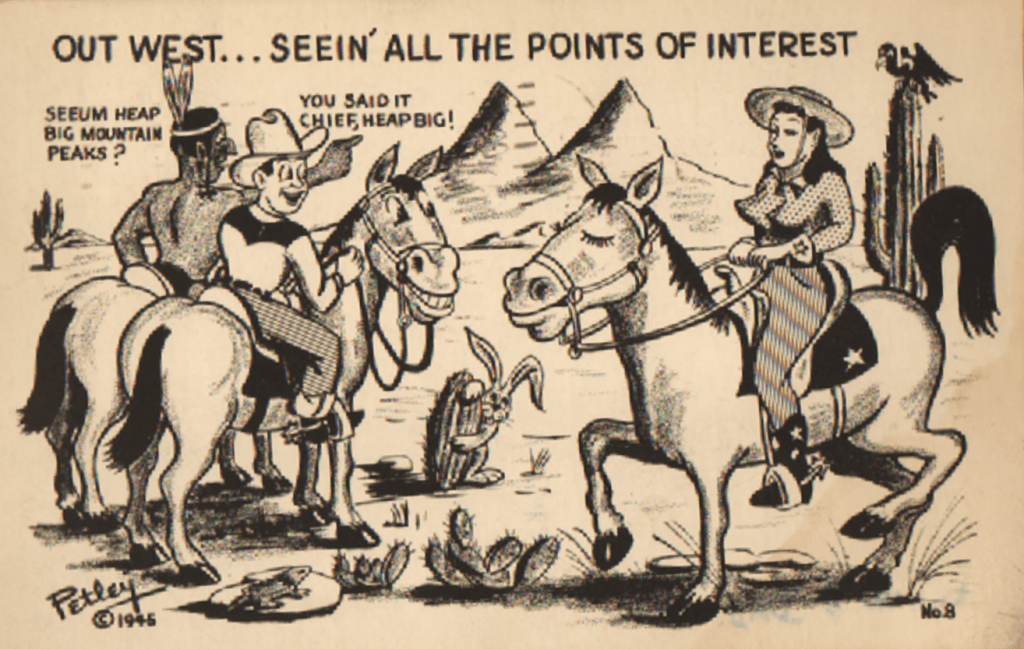
This column frequently touts the work of postcard cartoonists Walter Wellman and Ray Walters, with occasional salutes to other people whose work is now easiest to find on fossilized tweets from the past. But the collections coming in to inventory over the past month or so have included the work of several artists we haven’t blathered about, so settle back for a quick glance at three who came into view.
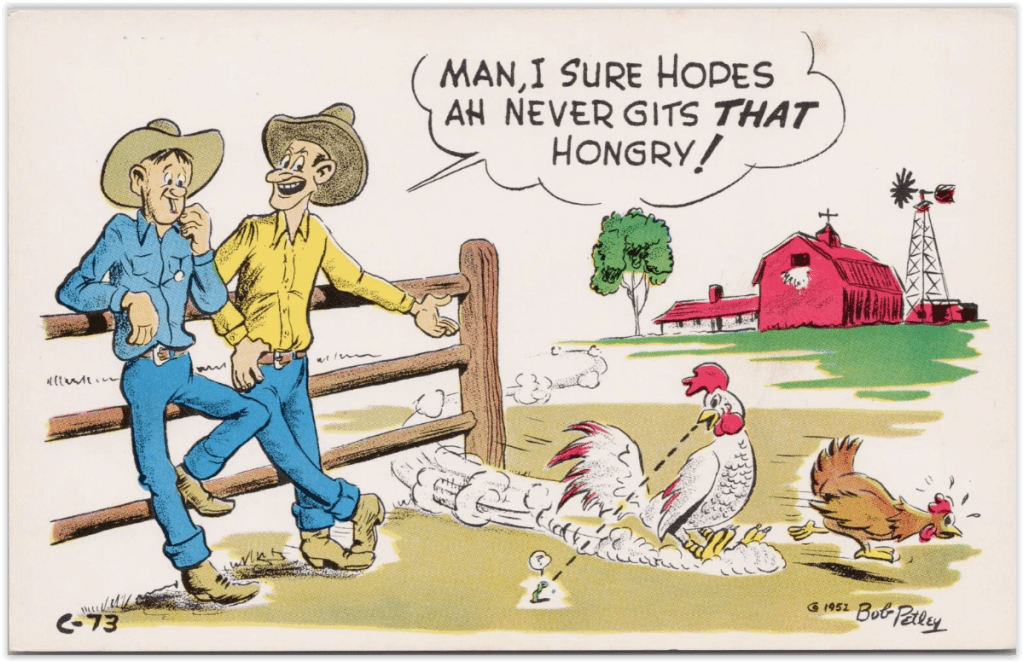
Bob Petley, seen above, is one of the easiest to find on the online marketplace. The “cowboy cartoonist” was also promoted by the company he founded as “king of the postcards”; it was claimed that some 40 million Petley postcards sold during the years of his glory. The company was founded in 1943, after Petley worked as a candy salesman, layout artist, and illustrator of maintenance manuals for the B-29. He published his own cartoons and photographs, traveling through Arizona in a car to shoot wildlife and scenery (and, after he took out the back seat and replaced it with postcard racks, hawk his wares.) He did so well that he could buy work from other artists and photographers (including his photography advisor, Barry Goldwater.) He analyzed his customers well, noting that women bought the sunsets and roadrunners while men bought the cartoons. He also found that people MAILED the sunsets but kept the cartoons at home for personal reference. He died in 2006, at the age of 94.
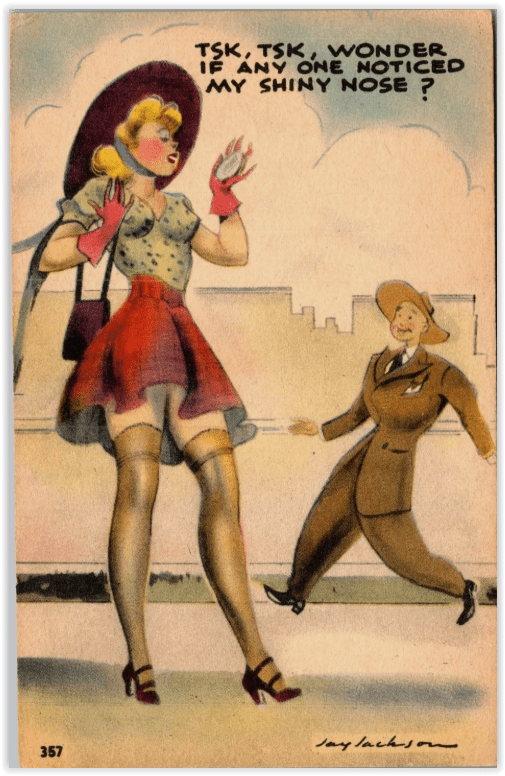
Jay Jackson wrote a very brief autobiography in the 1940s which showed he ALSO held a number of jobs before turning to postcards, but of the three men listed here never considered postcards a major source of income. After dropping out of high school he swung an eleven pound hammer for a railroad, worked in a steel mill, and then tried a year of college. He started selling cartoons in the 1920s, and these brought him his primary paychecks. By 1934 he was chief of cartoons and comic strips at the Chicago Defender, but continued to supplement his income with pinup postcards for Colourpictures, and, famously, science fiction and fantasy illustration for Amazing Stories, and other magazines in the Ziff-Davis line.
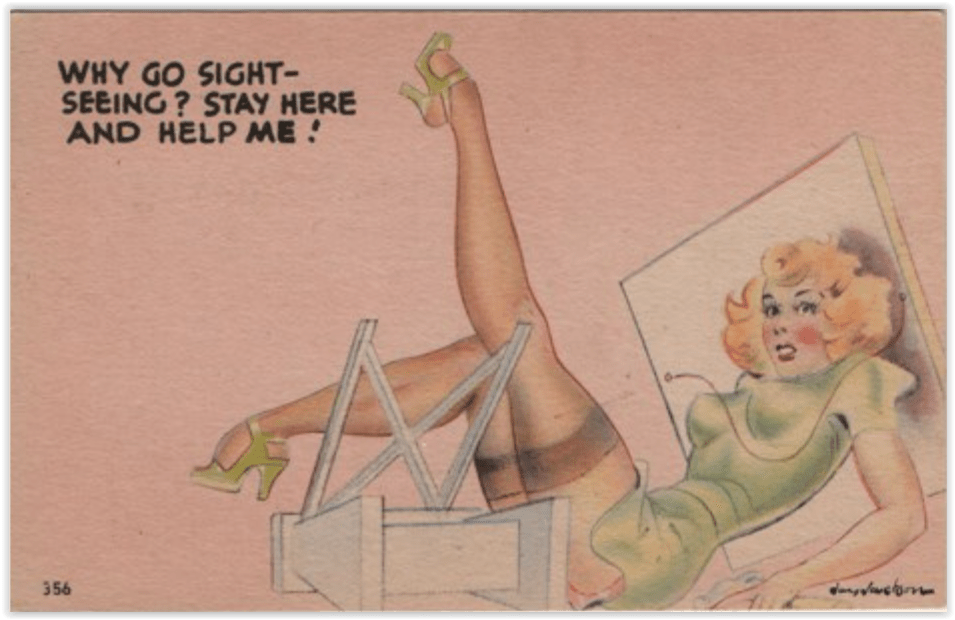
He seems to have done only one pulp magazine cover, and a collector who has compiled a bibliography of his illustration work notes that he seems to have avoided the standard motifs: only one spaceship and never a single robot or BEM (Bug-Eyed Monster). His comic strips in the Defender started taking a science fiction turn at this time, and he experimented with Black superheroes and secret agents. Eventually, he was lured to Los Angeles, where he worked on some so far unidentified early TV cartoons before dying of a heart attack in 1954.
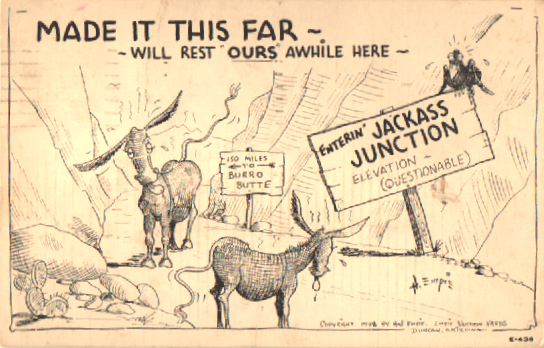
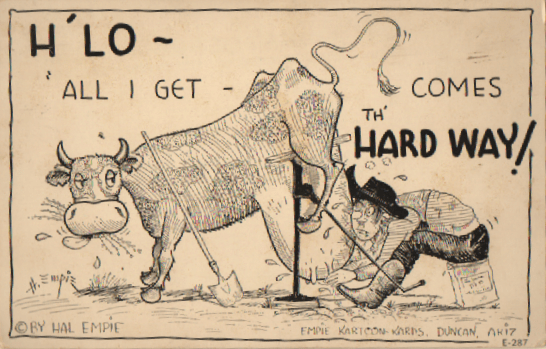
Please do not try to buy any postcards by Hal Empie from me. They do not stay in stock, as he is certainly the most avidly collected of the artists mentioned. Postcards were sort of a third line of income for him, as he was a pharmacist by trade (and a talented one; he was the youngest person licensed to practice pharmacy in the history of Arizona.) To while away his time between filling prescriptions, he painted Arizona scenery (from memory; he refused to paint from photographs, so Heaven knows what he’d say about AI artistry.) And in his spare time from those usually 12 x 16 inch paintings, he did cartoons of the west as he saw it, a world of hapless cows and even more hapless cowboys. He eventually started his own postcard company as well, and sold his Empie Kartoon-Kards from his own drugstore, as well as providing them to other retailers. He lived from Mar. 26, 1909 until March 26, 2002, the interwebs informs me.
So those are three of the artists whose work has come into the catalog around here. If I ever get down to the deeper rabbit holes (Bob Petley, by the way, has some claim to having invented the Jackalope postcard, and almost always included a long-eared bunny in his cartoons) I will see what I can uncover about, say, Elmer, or Tony Luna, or Steamboat Larry.
 Blogsy Babbles