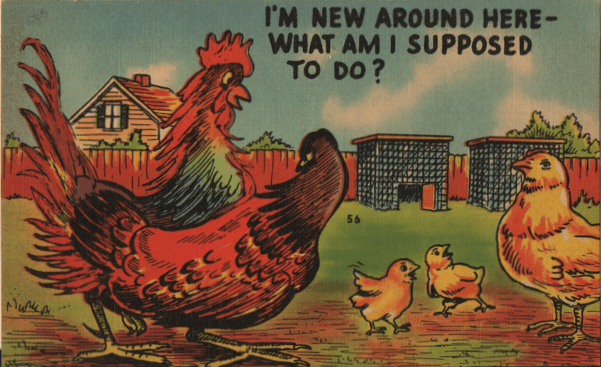
Not so long ago in this space, we considered the jokes swapped between residents of the rural parts of the world and those who lived in the city. This town vs. country debate is ancient and widespread, and COULD be considered part of the basic human belief that the people who live the way I live are the best and the rest are wrong, dirty, and evil. But a kinder, gentler notion sees it as simple part of the “fish out of water” comic tradition.
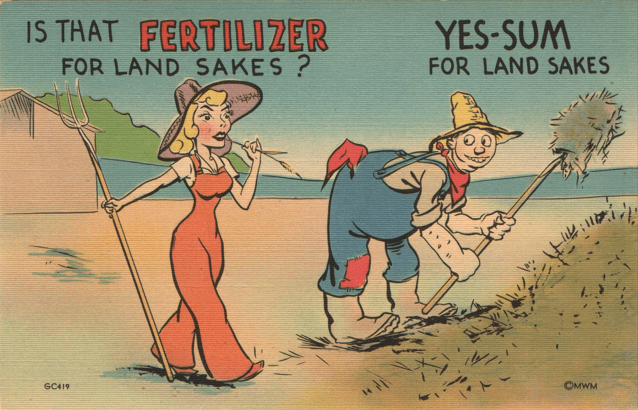
Another facet of this, often seen on bygone postcards, is the comedy of the newbie. These gags make fun at someone who is new to the job or situation, and sometimes even too young to quite understand what’s going on. Some of the same basic situations apply to both types of humor, of course/
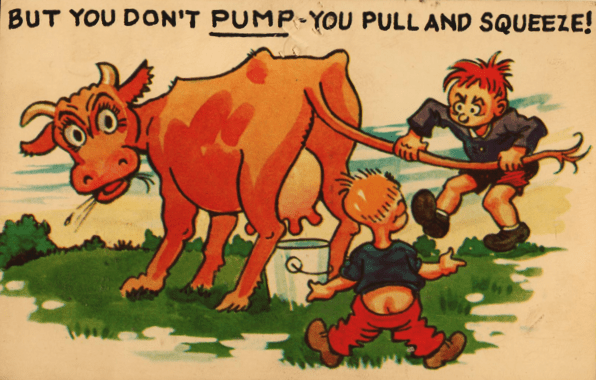
But this is broader than just the town mouse not understanding the country mouse and vice versa. The reader gets the same sense of superiority as in the town/country jokes, seeing where the novice is going wrong. The laugh is mixed with a little sympathy, though. because we’ve all had to start somewhere and had the more experienced workers sending us for that left-handed monkey wrench or bottle of toenail polish.
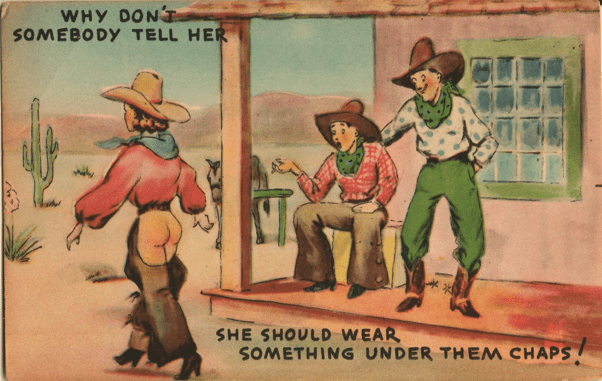
It can, um, apply to something as simple as suiting up for work. (This joke is repeated on scads of postcards. And some of us can feel superior twice, as occasionally it is obvious the artist doesn’t know what chaps look like, unlike this chap, who gets it right.)

World War II saw dozens of gags which depended on the thousands of recruits who showed up to serve in the war effort without knowing a whole lot about how this military service worked. (To some degree, these descend from bestseller ‘Dere Mable’, a World War I classic, which had ancestors during the Civil War and continued through No Time for Sergeants, Gomer Pyle USMC, Private Benjamin, and so forth.)
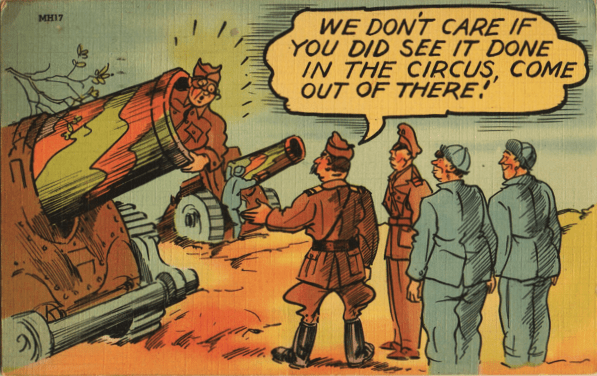
It’s a perennial source of humor in societies where it is admitted that even soldiers can make mistakes.
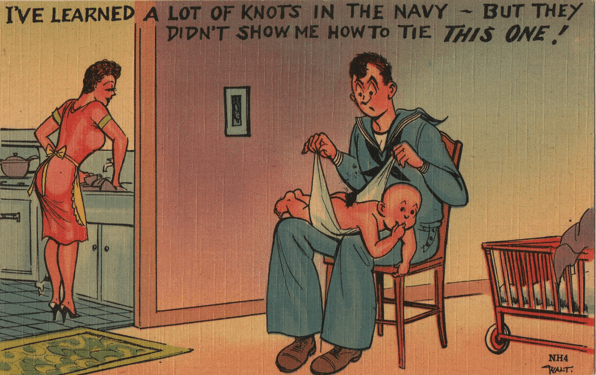
The Baby Boom, which coexisted with World War II, drew on another ancient comic trope: the man who is new to what were considered female domestic chores.

Children, both before and after that particular boom, were another rich source of “I’m new around here” humor. They had an obvious excuse for their lack of experience and knowledge about the adult world and its chores. This kept no one from laughing about it.

Back in the adult world, even one’s experiences outside work were grist for the mill. Leisure time activities often took people into new places and new situations where they could not conceal their newbieness.
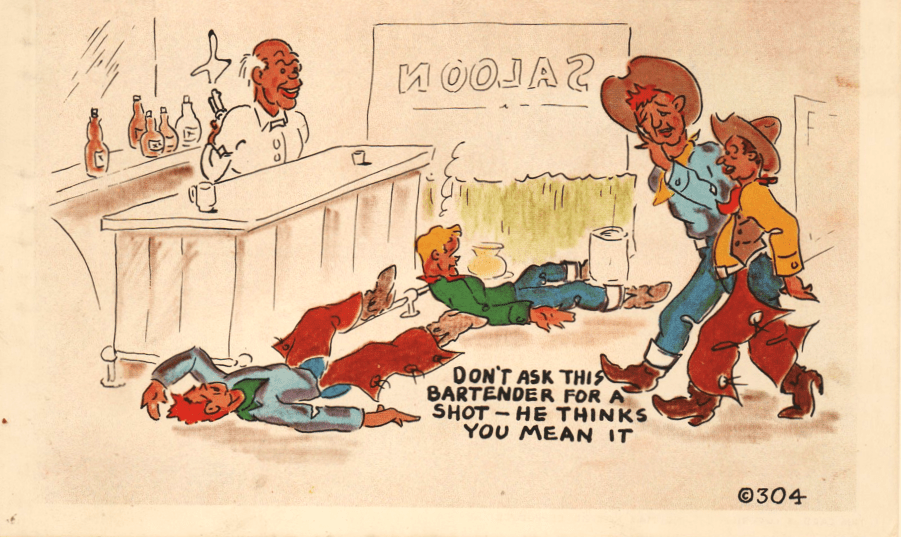
The world may forgive you for not being from around here, but forgiveness never includes not laughing at you for making a misstep in a new place.

As we have seen hereintofore in this blog, the mistakes of novices are sometimes attributed to being the wrong sex for the specific activity (as in the sailor seen above trying to change a diaper.) Is it that this fishing partner is female, or just because she’s new to this fishing business that she has made a rookie mistake?

Because, and you will find this in literature as well as on postcards, our sympathy for both sides of the question can lead us to cheer for the rookie who surprises everyone by winning the game, breaking the sales record, or, like the boy from the country who marked the side of the boat in the old folktale, having a few tricks up one sleeve.
 Blogsy Babbles