
We continue our hunt for the conspiracy theories which bedeviled the Presidents of the United States, following the same rules as before. These have to be contemporary conspiracy theories accusing the Presidents of nefarious plans, not something made up by me or the Interwebs later, and they must be conspiracies which Mainstream Historians, by and large, dismiss (which, on the Interwebs, is tantamount to proof that the theory must be True Fact.)
MARTIN VAN BUREN was hit with just about every conspiracy theory possible during his main two presidential campaigns (he made sure the party knew he was available until the day he died, and actively ran four times.) In 1836, he was the main candidate for his party against three heavy hitters on the other side (the Whigs didn’t really have their act together yet, and apparently decided if they ran three candidates, this would at least deny Van Buren a majority, so Whigs in Congress could pick a winner.). One of the most fascinating was that this son of a Dutch bar owner and lifelong attendant at Dutch Reformed services was secretly a Catholic following the orders of Pope Gregory XVI to overturn America’s independence. Keep this one in mind; it will come back into the story in future episodes.
WILLIAM HENRY HARRISON, speaking of recurrent conspiracy theories, was accused of being too old and senile (he was 67) to be president. More damaging (to his opponents) was the story spread around that he was a backwoods hick who owed his rise in politics to a military career, and was not competent to know how to run a country. (Unlike his opponent, Harrison actually came of wealthy parents.) Some writer said he should just be given a pension and a barrel of hard cider and sent home to his log cabin. Harrison’s folks grabbed hold of this, played on the “log cabin and hard cider” slogan and absolutely stomped Van Buren in the election. (For the record, Harrison actually DID live in a log cabin when he headed west to find his fortune.)
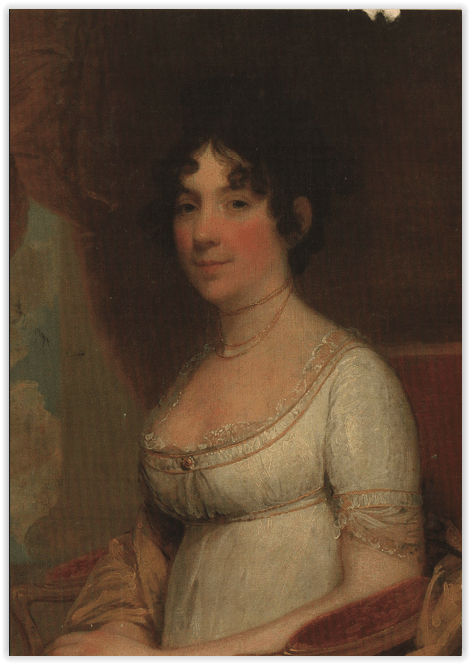
When William Henry Harrison was elected president, his running mate, JOHN TYLER, went back home to the farm, expecting he wouldn’t be needed for much of anything. When told Harrison was very ill and unlikely to live much longer, Tyler stayed home, feeling it would look opportunistic to go running up to Washington. Does this SOUND like someone who was plotting to overthrow the Party that nominated him? His opponents, within and without the Whigs, threw this one at him a lot during the campaign, and much more thereafter. . Nonetheless, Tyler, who had left the Democrats to join the Whigs, was now getting tired of the Whigs as well. As the first Vice President to be vaulted into the Presidency by the death of his predecessor, Tyler found a hostile Congress and Harrison’s Cabinet all trying to declare him “Vice President Acting President” instead of President. The Cabinet told him he should just ask them to vote on policies and do whatever a majority of them decided. Tyler politely and forcefully declined and was named President. Was “His Accidency” a closet Democrat seeking to overthrow the Whigs all along? Historians believe he was actually just a maverick who wanted to do things his own way. (Nonetheless, he lived into the era of the Civil War, and served in the Confederate Congress.)
JAMES K. POLK won a vicious race which is still the only election where two former Speakers of the House ran against each other, and every past President of the U.S. (plus Dolley Madison) was either a candidate as well, or telling the candidates what to do. After the election, Whig supporters of Henry Clay published an interview with a man who claimed to have transported out-of-state voters into Louisiana to steal the election, and swore that Polk had actually gotten more votes in some parishes than there were voters. Mainstream Historians are dubious about this, pointing out that even if Louisiana did go the wrong way it would not have changed the outcome. At the time, the Whigs countered such middling objections by saying flatly that if part of Louisiana’s vote was fraudulent, then Polk had obviously cheated in every other district where he won. (Um, this one will come back in another episode as well.)
 Blogsy Babbles