
They tell me freckles are now high fashion. People who once tried to bleach their skin or laser away their sunkisses are now drawing extra freckles on their cheeks, or pressing broccoli hard against the skin, and even having freckles tattooed into place.

The change started in the 1960s, apparently. Model/actress Twiggy is noted as someone who declined to cover her freckles, and I suppose the Sixties, with their emphasis on healthy outdoor lifestyles and natural looks, contributed to this. There’s a social component as well. Historically, the fashionable have been those who do no useful work. (This is why VERY fashionable shoes are impossible to walk in.) For centuries, the workforce was generally outdoors, getting tanned and freckled. Then the urban migrations of the twentieth century brought in a workforce penned into offices, and the fashionable were those who had the leisure time to go out and get some sun.
Then, too, even as soap manufacturers and cosmetic companies were pushing CURES for freckles, pop culture had a prejudice toward the freckled. Pippi Longstocking and Anne of Green Gables (who hated her freckles) were active heroines, girls who DID things, while a Tom Sawyer or Huckleberry Finn without freckles would be regarded with suspicion. For over a hundred years, the comic strip Freckles and His Friends starred a spotted adventurer.
In fact, the popular image of an active, healthy, mischievous child was a freckle-faced troublemaker, usually with red hair. (Freckles are not restrained by race or ethnic origin. Those of us of pale skin and red hair are just more susceptible to the freckle-causing effects of sunlight AND more obvious when the spots appear.)

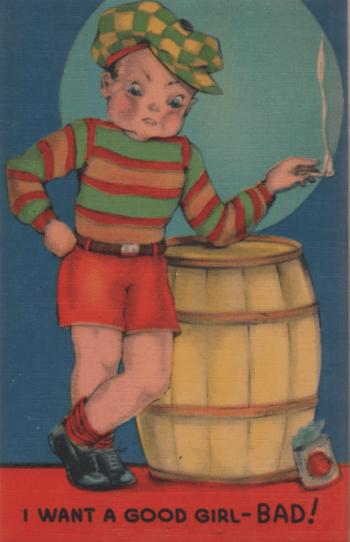
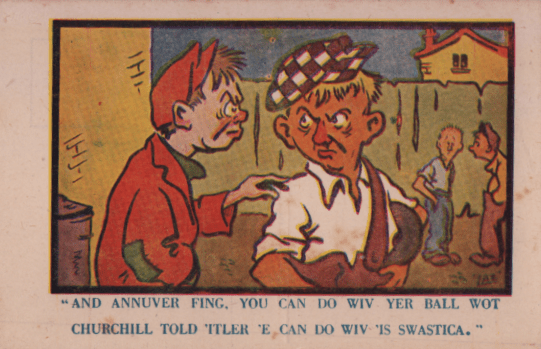
So why don’t the kids on postcards—as mischievous and active as any children designed for comic purposes—seem to have ‘em?

It could be a matter of having to answer to company art directors, who liked nice, empty spaces. It could be that artists didn’t quite trust the printing presses their companies paid for, as a slip in the press could turn an attractive display of freckles into a blot, or a swarm of mosquitoes just to the right of the cheeks intended. (This is why, for example, comic book companies banned writers from using the word “flick”, since dialogue was printed in all caps and a simple speck in the wrong place would cause massive letters from outraged civic officials.)

So on faces where we might look for freckles, they seem to have compromised by giving their leading lads and ladies bright red cheeks. Ruddy cheeks were supposed to be a sign of glowing health anyhow, and didn’t require the addition of spots. They had nothing AGAINST freckles; they just wanted something cheap and easy.
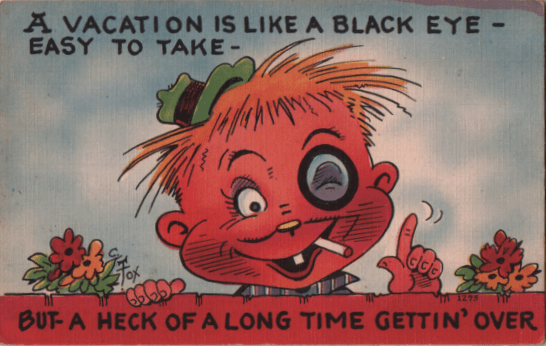
And in closeup, this made sure you didn’t suspect the tough kid needed a shave.
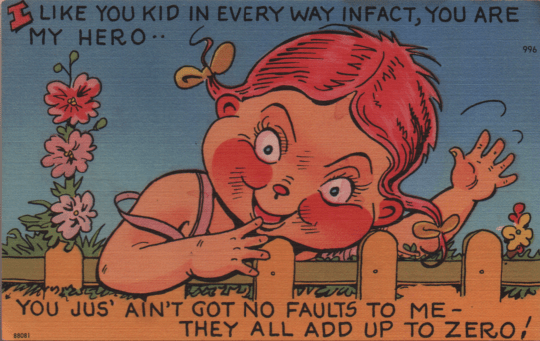
OR that some endearing moppet wasn’t coming at you with measles. That’s the problem with all art, of course: the artist relies on the viewer to figure it out. MUCH safer to go with a rosy blush.
 Blogsy Babbles