
We have, in this space, discussed what the postcard artists of days gone by thought of dogs or cats or chickens generally, but many parts of the animal world have sub-categories which had their own themes and jokes. Among the many jokes about, say, Scottish terriers or bloodhounds, we have a significant number of postcards dedicated to the dachshund. This is a dog breed so popular among all manner of cartoonists that people who don’t go out much may wonder if any real animal actually looks like that.

Yeah, they do.

The breed was brought about centuries past to hunt badgers, and was intended to be muscular but low to the ground, with big floppy ears that would keep insects or plant debris from getting into the ears, and a curled tail that would make them easier to spot in the grass. Dachshund (PLEASE don’t pronounce it dash-hound) was, as the name suggests, native to Germany, a country so fond of its doxies (or Dackel, in German) that entire series of books have been published just to reprint vintage drawings of the long little doggy.

We have mentioned the German custom of sending postcards with pigs to wish people good luck at the onset of the New Year. A goodly number of these find dachshunds joining in the celebration, apparently simply because dachshunds love a good party. (This one is in French, but there was an export market, y’know.)
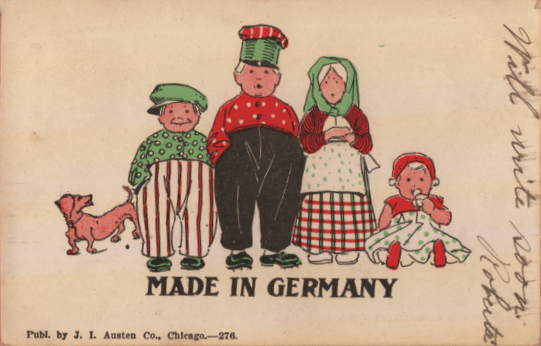
Outside Germany, the dachshund was sometimes used to indicate and sometimes to mock Germans, along with references to sausage and or sauerkraut. (And, as sauerkraut had to be relabelled Liberty Cabbage during World War I, so the dachshund became, temporarily, the Liberty Hound in the United States. This was about the same time that German shepherds became Alsatians. But we will consider freedom fries and other such monikers in a whole nother blog.)
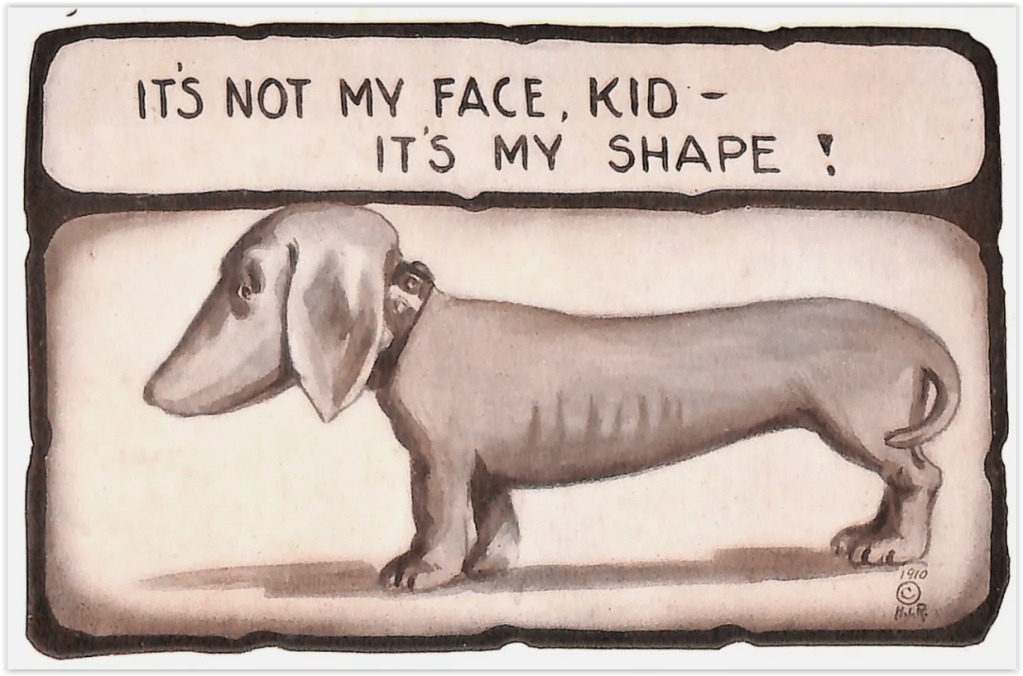
The cartoonist, however, was generally less concerned with family history than with that animal which as “half a dog high by a dog and a half long.” Function was going to follow form here.

Whenever a cartoonist wanted to refer to length, a doxie was a very handy animal to be able to draw. Everybody knew the drawing was realistic: dachshunds were long.
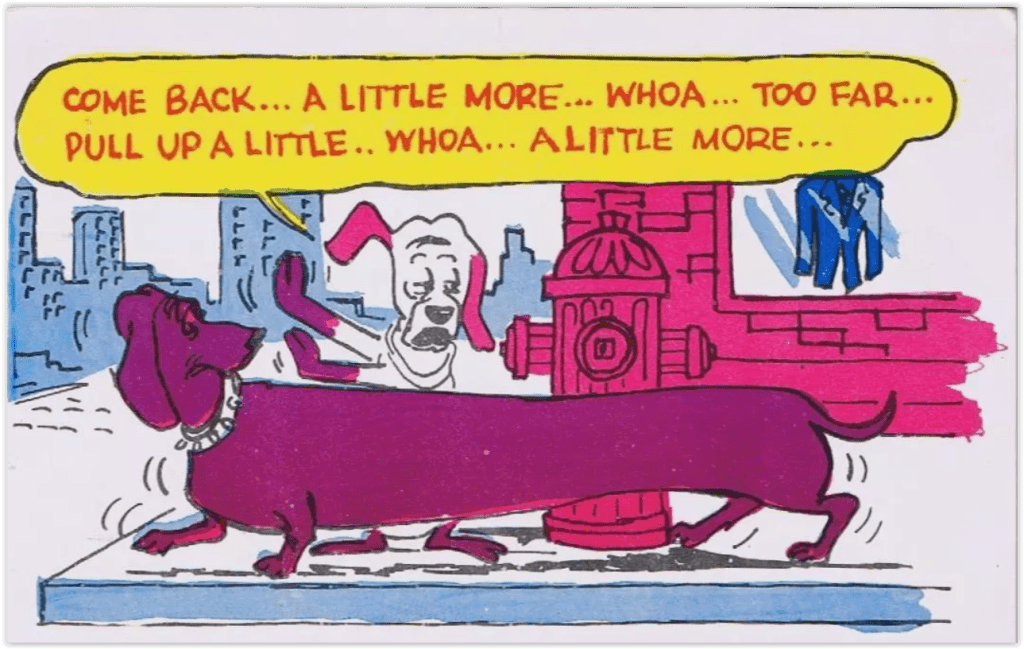
Sometimes very, very long. Which raises the question of whether this becomes a tall tale or just a long story.
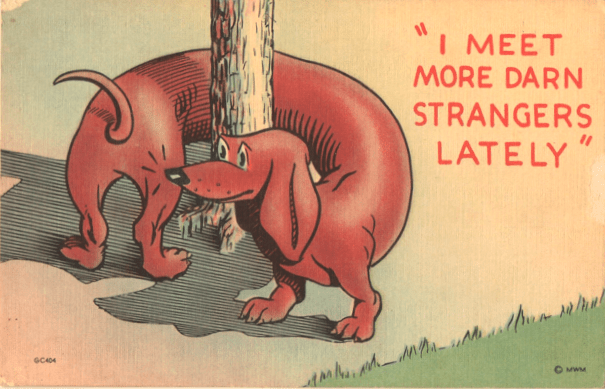
Postcard dachshunds were generally very limber, too.

If that last picture suggested a particular phrase to you, be assured that cartoonists noticed it as well.

And a truly fine old joke can be repeated throughout the generations.

We have not so far discussed how the shape of the dachshund also led to it being known as the “Wiener Dog”, or “Sausage Dog”. Since both sausages and dachshunds were associated with Germans, there are plenty of postcards set in German cafes where the inevitable occurs.

This, um, brings up another theme which relies on a base slander often leveled against German sausage makers or sausage makers generally. But we have gone on long enough for one blog, so we will save the often grisly story of postcard sausages for some other time.
 Blogsy Babbles