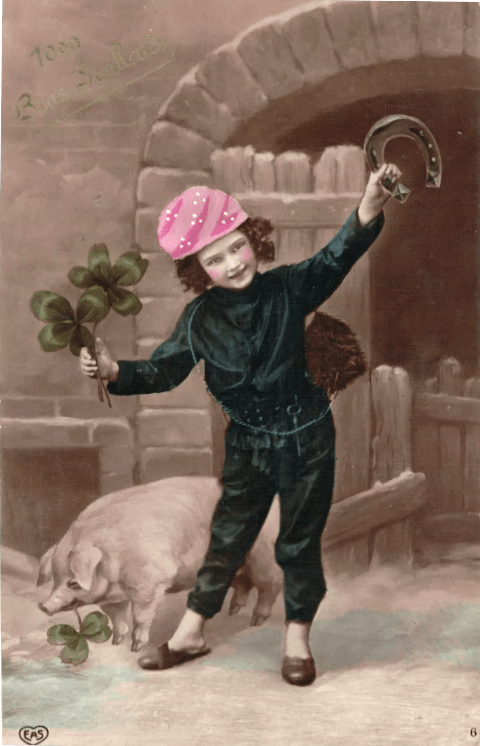
We have spoken, hereintofore, of the custom of our ancestors to send New Tear cards. We don’t know that a lot nowadays. Nice custom, really, but when people look over what they’ve spent on Christmas cards and the like in December, the impulse no longer exists. We have also spoken of the prevalence of pigs on such cards. (By the way, a number of the cards in this article are NOT things I currently have for sale, but come from the collection of one of my clients, who fell in love with New Year pigs on postcards. She would also like to know what became of all the papier-mache pigs you see in these cards, so if you know where a genuine vintage pig exists let me know. It might bring us all good luck.)

The whole package was designed to wish the recipient luck. A pig around the house meant you would never lack for company and, come the right time of year, sausage. These pigs are often accompanied by other signs of good luck, or prosperity, especially money bags, four leaf clovers, horseshoes, and…chimney sweeps.
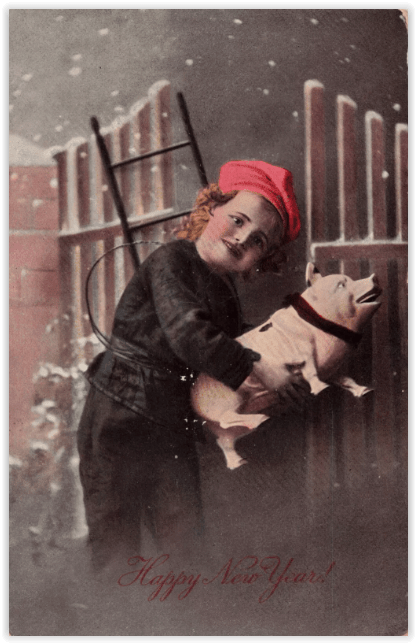
The chimney sweep starts to appear in western literature around the early modern period, when people started to gather in cities in cottages and shops and houses hastily constructed without use of architects. Civic authorities realized that many patched-together chimneys around wooden houses were a danger, and the sweeping of chimneys became an important part of being a homeowner. But how did the sweep become a symbol of good luck? (A sweep was also a symbol of something exceptionally dirty, but there’s no mystery about that.)

Right up until today, among the British, it is considered good luck for the bride to see a sweep on her wedding day, leading to a nice side income among those of the chimney professions. (There still are such people. They say the work soots them. You knew it was coming, so don’t make that face.) Was it because they were so obviously alien, a creature from another world with their mysterious equipment and darkened garments? Does the custom of, say rubbing your buttons when a sweep passes come from a darker tradition of averting demons (frequently identified in folktales as someone of the wrong color)?
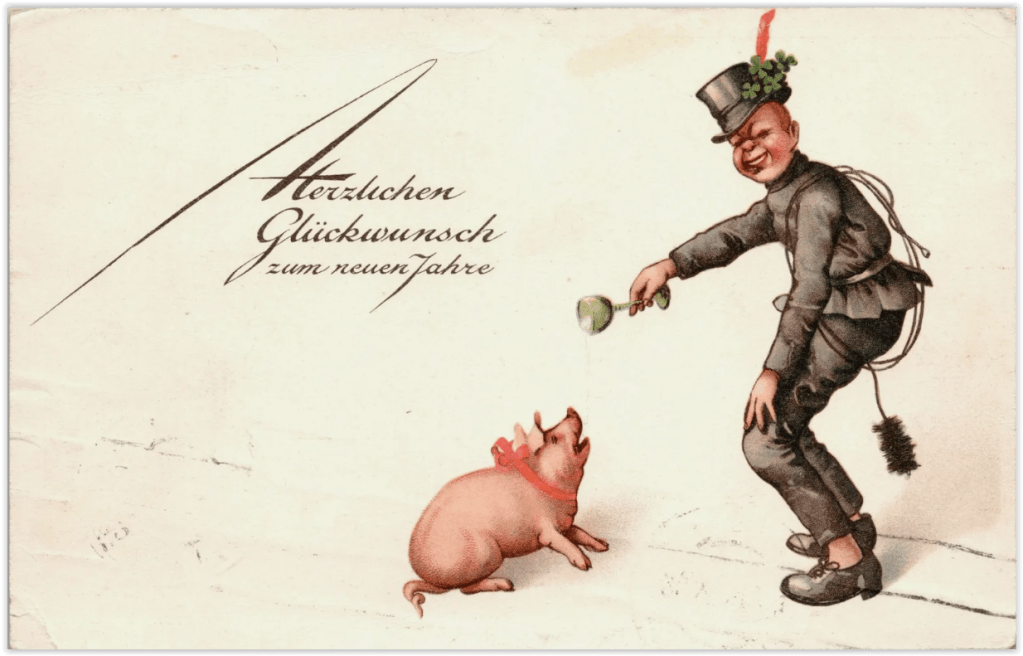
In Germany, the Interwebs informs me, the sweep is still associated with New Year’s Day lucky wishes: with toy sweeps attached to bouquets, or candy sweeps included in New Year’s gifts.
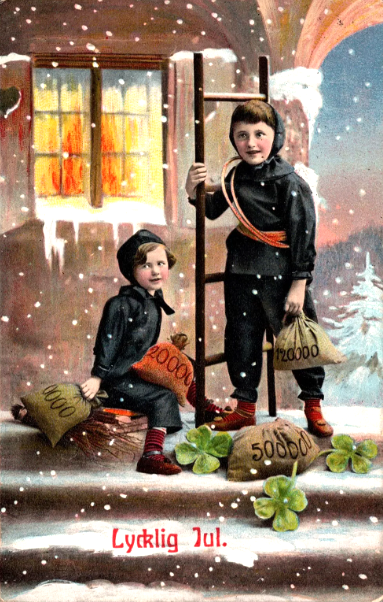
They don’t even have to appear with pigs for the charm to work. They can come with any sort of benevolent wishes for the new year, again, primarily those signifying prosperity.

Or impending spring, which may explain the prevalence of birch twigs (which some scholars say have meant spring as these were the first trees to come back after the Ice Age; I think they’re reaching) and the amanita muscaria or fly agaric mushroom (although some of the same online anthropologists trace this to the poisonous and/or hallucinogenic properties of the fungus, others insist it turns up so often in art because it’s pretty. That’s why Smurfs live in them.)

Maybe the sweep is also a symbol of prosperity, since you need money to hire one, or good luck, since having your chimney cleaned keeps your house from burning down. In any case, the sweep is always appearing on New Year postcards to wish you luck.

ALTHOUGH sweeps also symbolized other things to the population at large. THIS New Year card makes reference to the long-standing stereotype of sweeps romancing the maids in the houses they served. (Here, obviously, an upstairs maid.)

It was a running gag on postcards, not unlike the frequently expressed belief that your cook was spending her time (and YOUR money) entertaining policemen on their beat. This may have happened as often as it does on postcards, or it may simply have been because the evidence (a floury handprint in the case of the cook, a sooty e on the part of a sweep) was so easy to illustrate.
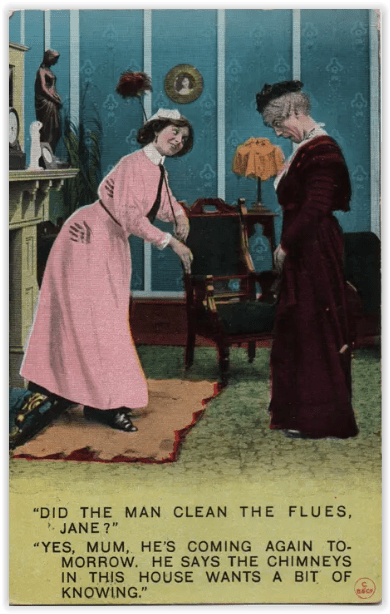
Sherlock Holmes is not required to understand why this sweep didn’t finish his job the first time around. Anyway, it sort of fits in with the jolly, lucky attitude of the sweep.

None of this covers the dark side of chimney sweep history, with its tales of climbing boys bullied into cleaning tiny chimneys, or the number of books in which the sweep is the villain (consider Charles Kingsley’s Water Babies.) There ARE one or two postcards which suggests running into a sweep might NOT be grand good luck. But it’s the way of the world. These are the people who probably don’t want pigs in the yard.
 Blogsy Babbles