
Once upon a time, Chicago decided to retool the Loop. State Street, in those days a bustling shopping district, was redesigned with bigger sidewalks and smaller streets. Motor vehicles were banned except for cabs and buses, and the whole area was renamed the “State Street That Great Street Mall”. Vast sidewalks would give people more room to walk, combining a stroll down the boulevard with leisurely shopping and lunching. Public sculptures were added to enhance the idea of a place to see and be seen, and enjoy an afternoon on the town.

The experiment went badly. Now, if you visit State Street, you will find little evidence of the mall ideal. Streets were widened again and sidewalks put back the way they were. One explanation for the failure was that it was the fault of an odd species known as “People”. People, it was said, find it hard to believe they’re enjoying themselves without a bit of bustle, a hint of inconvenience.
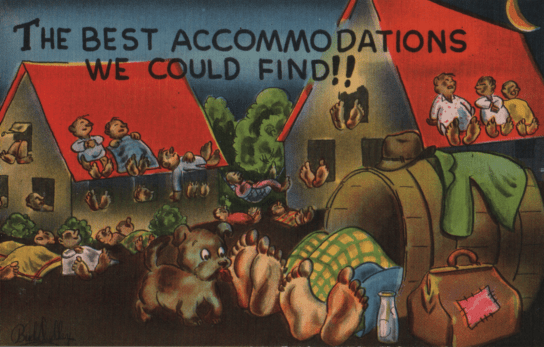
In short, said the Powers That Were, people won’t believe it’s exciting without a crowd. How do you know things are fun if you aren’t being elbowed by other people trying to have fun?

This could explain why so many postcards stress the crowded nature of the places they celebrate. Traffic is shown to be a sign that something fun is going on. Didn’t you ever get into a line without knowing what it was for, just because this many people had to know something you didn’t?

So postcards brag about traffic congestion, as if to call out “See how important and attractive we are? Better join the crowd or you’ll miss the big show!”
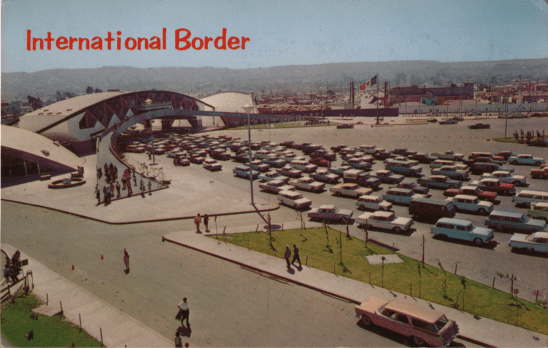
Oh sure. In the golden age of postcards, there was a hint about how much more interesting streets filled with cars are than the dirt roads in YOUR community, where you may see one horseless carriage a week. And yet, the aesthetic survived into an age during which a stream of cars bumper to bumper was no longer a novelty, and a vast parking lot more of an inconvenience than a celebration of the automotive industry and its production.
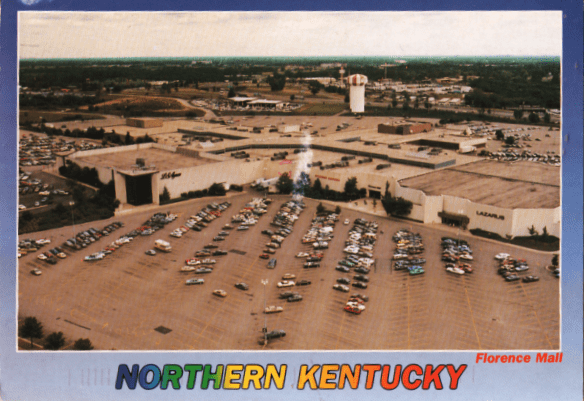
We reached a point at which the empty space in a mall parking lot was more exciting than a packed acre of pavement. (Yes, this is one of a series of postcards promoting the beauties of Northern Kentucky. Makes you want to jump in the car and rush right out.)

The phenomenon goes on without cars, of course. What fun is a quiet little beach where you just sit and look at the water and the sand and the sunlight? YOU want to know there’ll be masses of people visiting at the same time. A crowded beach MUST be a quality beach.
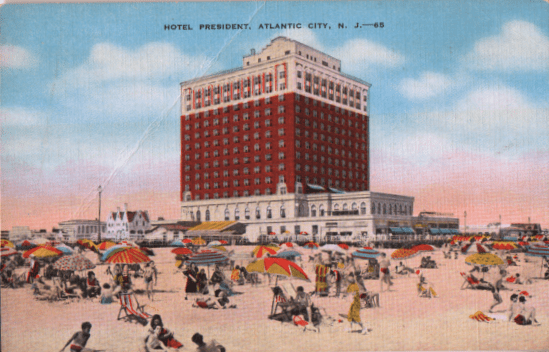
After all, this enhances the possibilities that you’ll see people who look worse in their bathing suits than YOU do. This is easily worth the minor inconvenience of having people trip over your beach blanket or spill their beer on your toes while you’re napping in the sun. (In fact, having people to block the sunshine will help prevent sunburn. So there’s that.)

If you don’t have to duck and sidle to get past a dozen different beachgoer encampments to see the water, if there’s no chance for your kids to get lost, why did you drive eight hours to get here?

Postcard companies knew you wanted to be able to tell people you were HERE, braving the crowds and finding the last eight inches of space unclaimed by other tourists. These scenes established your credentials as a vacationer ready to fight for fun.

A street market or street festival is hardly something to brag about if you could move at speeds of more than twenty feet per hour. Those authentic ceramics you brought home mean so much more to the people you show them to if they’ve already seen a postcard of the crowds you had to push through to find them. (Do NOT mention how long it took to get those Made In China stickers off your Mexican pottery.)
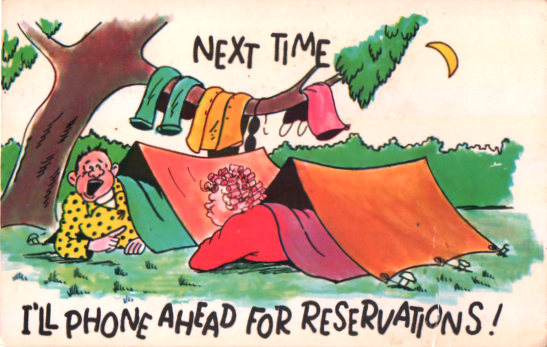
It just seems to be one of our criteria for a Real Experience. If a thousand or so people weren’t trying to occupy the same space and do the same things at the same time you were there, you didn’t have a good time.
 Blogsy Babbles