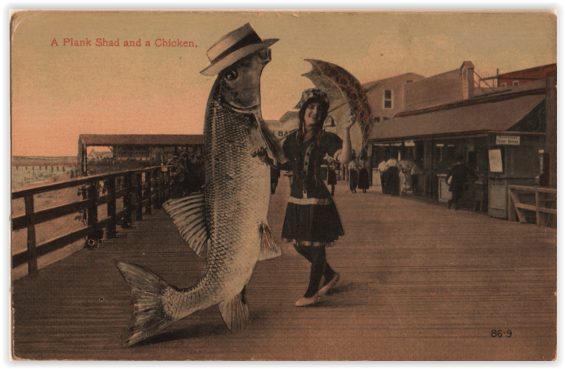
Ah, the Interwebs are a wonderful place to spend an afternoon. You think you are looking up something, and find you have gone down another rabbit hole. This, of course, can happen in any style of research: print, audio, video, or digital. But out here in the Interwebs it is not only possible but even common, to find you are coming up out of an entirely different rabbit hole than the one you THOUGHT you were exploring.
Maybe I should have used the phrase “fishing hole” instead, since I was actually trying to find out where and when people say “tunafish” instead of merely “tuna”. And while I was at it I would find out why one of my favorite authors declined to use either term, preferring “tunny” instead.
But that hardly became even a shallow rabbit hole. Some people, not all of them, refer to “tuna” when it is swimming or when it is hauled aboard a boat, and use “tunafish” ONLY for tuna which comes out of a can. Hence you will find tunafish sandwiches and tunafish salad (if you hang out with those sorts of people) but never see a tunafish swimming in the wild. Tunny, it seems, is used mainly to refer to a specific species of tuna which is used primarily for oil instead of food. Why my hero insisted on using it may simply reflect his upbringing.
But as long as I was involved in fishy pursuits, I thought I’d just check on why some people say “anchovy” and some people say “anchuvvy”. This, too, was hardly even a detour. The online experts say the first is the American pronunciation and the second is the British. No puzzle, really. Then I thought I’d inquire why anchovies are used mainly on pizzas and sardines are seen in sandwiches, if at all. Are they really the same thing, like tangerines and Mandarin oranges?
NOW I was stepping into an area where dozens of experts want to explain your error. Before I knew it, I was swimming in a sea of anchovies, sardines, pilchards, and sprats. I had failed to mention before I went in that I objected to being seated in the sprat section, and there I was.
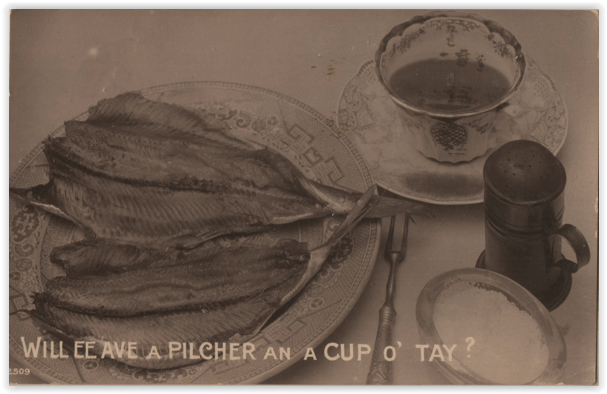
But it was a learning experience, especially for someone who has eaten anchovies exactly once, and has never even been offered sardines, pilchards, or sprats. With all of these, we are dealing with small oily species of herring. But assuming all herring are alike is like going to Chicago assuming everyone is a Cubs fan (good luck getting out of certain bars in one piece if you make THAT mistake.)
One website insisted that sardines are from the Mediterranean Sea while sardines come from the Atlantic Ocean. Another was just as determined to tell me that sardines come from the EASTERN Atlantic and anchovies from the WESTERN Atlantic. (They may have been mixing up their anchovies and pilchards.) A third website seemed to be on firmer ground (water?) by explaining that sardines are a lighter color: especially after they are canned, anchovies are much darker. But then they spoiled it by explaining to me about “white anchovies”, which throws off the whole explanation. Anyhow they also pointed out that sardines are usually canned in one piece, while anchovies are sliced into filets (though how the fishermen tell which is which, then, eludes me.)
Pursuing that line, however, several experts pointed out that the sardine has a more delicate, complex flavor, somewhat buttery, while anchovies are saltier and fishier. Several cooking sites suggested we CAN substitute anchovies for sardines in a recipe as long as we know to use fewer anchovies, But one epicure insisted this will NOT do, and suggested tuna (or tunafish, if you have to open a can) as a substitute for sardines.

If you are interested, they went on to say that pilchards are much fishier and saltier than sardines, and went on to explain the difference between the two species by pointing out that pilchards average about three centimeters longer than sardines, and are known by the scientific names “Sardina pilchardis”, while sardines are known by the scientific name “Sardina pilchardis” (yeah, I’m still working that one out. Beats having to take a ruler into the kitchen and measure fish.) I think the fact that you can go online and buy cans of “pilchard sardines” kind of gives the game away.
Anyhow, they ARE unanimous that anchovies and sardines are distant cousins, not twins, and that the Interwebs sees them primarily as SALAD ingredients rather than something for snacks, sandwiches, or pizza toppings. On the way, I also picked up the incredible information that “The lard sandwich is a popular dish in many regions of the United States and it is a favorite among people who enjoy eating lard.” Ours is a world filled with wonders.
 Blogsy Babbles