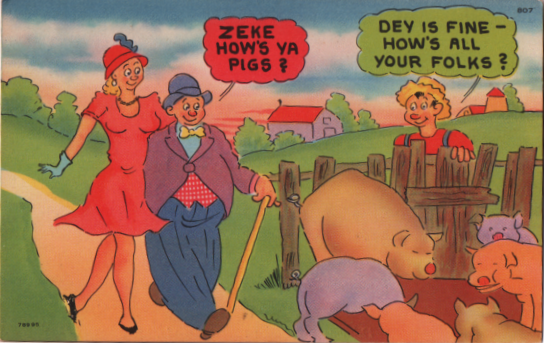
Pigs are apparently nearly inextricable from Human society. One author says you can find them in more settlements than you find dogs, which confirmed his suspicions about humanity. One conspiracy theorist connected all the dots a few decades ago, and endorsed a ban on eating pork: he declared this a form of cannibalism. (See, the clues are that story about Circe turning Odysseus’s crew into pigs, and in the dietary laws of…never mind. The Interwebs will tell you all about it, along with notes about which current politicians are to blame for it.)

We have covered pigs before in this space, but largely in conjunction with the bygone habit of sending postcards with pigs on them as a New Year’s wish for prosperity. (This is ripe for study in thesis or dissertation: a geographic determination of which countries sent cards with pigs for that, which sent cards with fish—also discussed hereintofore—and which sent both, just to be sure.)

As with other animals in the postcard universe, pigs have their lives reduced to only a couple of traits useful to cartoonists. And for a majority of cartoonists, pigs had two basic habits: they ate a lot and they fed a lot.
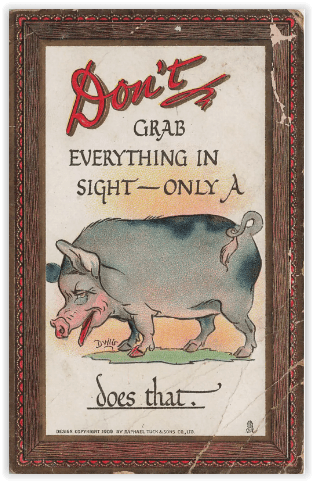
There were outliers, of course—a few postcard pigs made loud nises, and some were simply there to be fat without considering their dining habits—but by and large, pigs were what the educational community once called “eager eaters” (as opposed to picky eaters.) Eager eating was encouraged among small children, despite all the postcards which warned them not to be a pig.
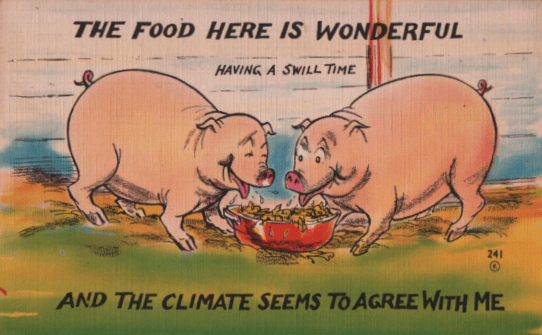
But for those (of us, admit it) who go on vacations simply to seek out the best all-you-can-eat buffets, this was a Good Thing (or a SWILL thing, if you HAVE to.)
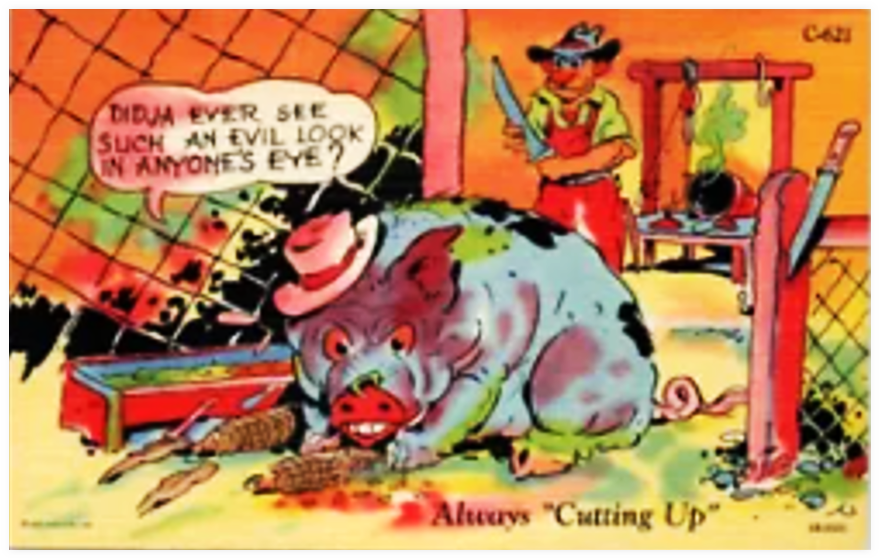
There are a few postcards dealing with butchers and such realities of a pig’s life, this was NOT the sort of feeding that tickled the cartoonists’ pens.

But the observation of a pig’s dining style (see the pop song “Would You Like To Swing On a Star”), what really amused the postcard artists was the way pigs fed others, especially their children.)
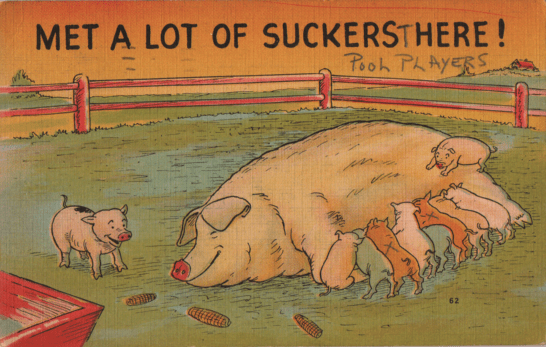
It’s not as if the pig is the only animal that nurses its young lying down, nor even that it refuses to do this any other way. It’s just the sheer resemblance the classic nursing pig has to tourists like me at that all you can eat buffet.
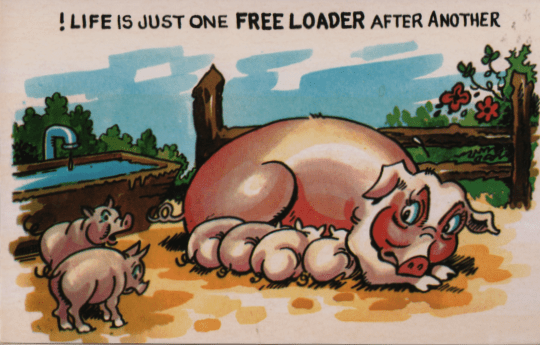
The sow (or Mama Pig) has six nipples, see, so she can efficiently handle half a dozen offspring at once. And we humans find this fabulously funny, providing us with dozens of punchlines.
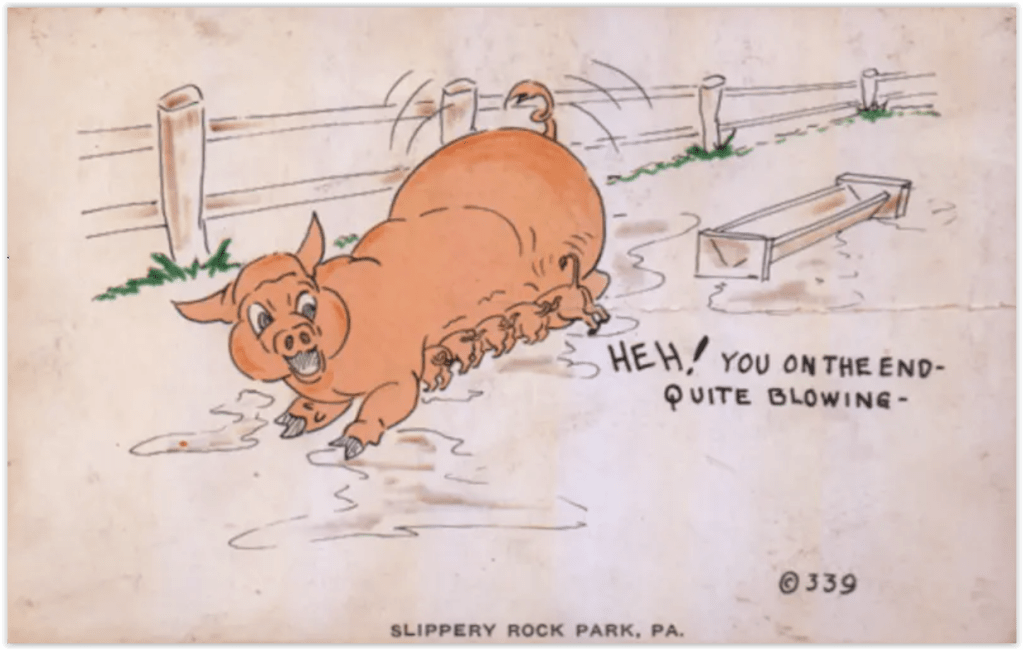
We COULD have had a blog dealing just with the hungry piglets and demands made on Mom. But my inventory is low on these since, for some reason, they proliferated in the second half of the twentieth century, not the first. (Was the first half of the century more squeamish, or the second half more removed from the realities of livestock? There: another dissertation topic. I keep pitchin’ ‘em and you keep whackin’ ‘em over the backstop.)
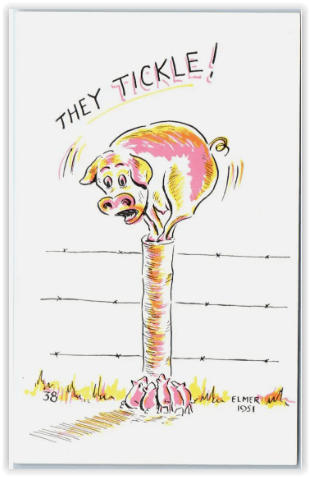
The tickling gag and this one seem to be the most popular, with four or five cartoonists each trying a hand at them. For reasons not known to me, the gag about “Mom, can Eustace stay for lunch?” is covered only on cow postcards. Similarly, the joke about other animals, including pigs, coming over for a drink applies mainly to Mama Cow. Perhaps Mama Pig lying down takes away some opportunities for free mil delivery.

Maybe it’s just a matter of pigs being easy to draw (One big fat oval, a circle, and a snout) or that little piggies are so cute, that make for so many mama-and-piglets postcards. Or perhaps, like the conspiracy theorists, we just see our own plight in the life of the pig. (Note on vocabulary: I did grow up in pork producing territory, where the word ‘hog’ was everywhere and ‘pig’ was used only when referring to Porky, on TV. Postcard artists, as well as other comic creators, just seem to think ‘pig’ is the funnier word, so I have followed suit. I need all the help I can get.)
 Blogsy Babbles