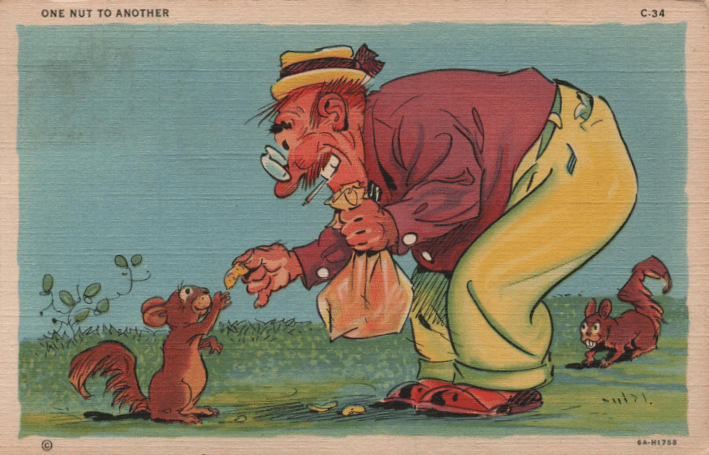
This is January, and this is NOT a food blog. Nonetheless, we are going to discuss a Christmas-related food experience. Those who are bothered by this may run out and buy Valentines.
Nuts in the shell were always included in Christmas stockings at our hose, resulting in the appearance of the family nutcracker and nutpicks in its little red box. I do not recall any of us getting into mischief with these nutpicks, which is unusual for our clan. I had no interest in nutpcisk: having gotten a small toolkit in my stocking one year, I learned with glee how well the screwdrivers opened walnuts. Pecans and almonds were more of a challenge, and hazelnuts resisted my efforts. But the Brazil nut was the hardest nut to crack.
It is sad, then, that shortly after I learned an easy way to open them, Brazil nuts seem to have slipped from our Christmas tradition. (You leave the Brazil nut in the freezer for a day and then throw it as hard as you can on the floor. This method MAY have something to do with Santa leaving them out of the stocking mix.)
In 2023, during another Brazil-free holiday, I started to wonder. I DO recall Carmen Miranda being “from Brazil, where the NUTS come from” but wondered if, like Russian dressing or French toast….
Nope, it’s for real. Even in Brazil, they call ‘em “chestnuts from Brazil”. The nuts grow in rainforests, and only in undisturbed ones, since lumbering operations and other clearances chase away the bees needed to pollinate the plants. If, like a younger me, you ever wondered why the Brazil nut in its shell looks like a fossil orange segment, this is because Brazils grow together in an orange-lake cluster, inside a coconut-shaped fruit. These are nibbled in the wild by the agouti, which is a warning to us all to avoid angering an agouti. If those teeth can nibble through a Brazil nut shell…dibs on making the horror movie Night of the Agouti.
The debate online is, like most online agreements, pretty fierce over whether Brazil nuts are good for us. They are rich in selenium, whatever that does for you, but the shell contains a carcinogen (so don’t eat the shell.) These shells are often ground up to make a polishing agent for jewelry, and Brazil nut oil, I am informed, is used to lubricate clocks.
Besides appearing in big displays of mixed nuts in the shell (this existed back in MY day. Things may be different since Andrew Jackson was elected) there are plenty of fruitcake recipes which require slivers of the coconut-like delicacy. But for my money, if you aren’t freezing them and throwing them on the kitchen floor, you need your Brazil nuts covered in chocolate.
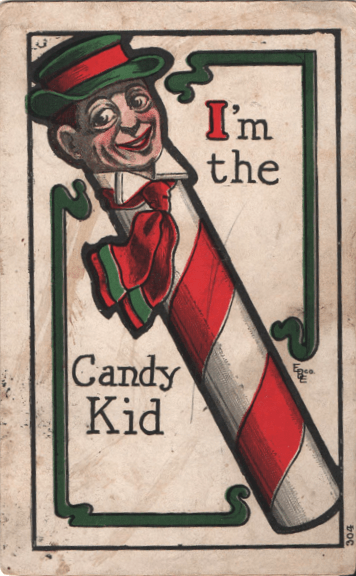
The nut is a staple in “bridge mix”, an assortment of nuts, creams, and other goodies robed in milk and dark chocolate. It has been around since the 1930s, when America was going through a bridge-playing craze, and there is a possibility that the stuff became popular as a snack at tournaments (easy to grab without getting up from the card table, see.) That’s too easy for many people, who prefer a story that the original bridge mix was made of candy which fell off the conveyor belts (bridges) at Hershey, and were tossed into a barrel so workers could have a free snack. According to this tale, a new manager decided having workers eat candy which had been on the floor FOR FREE was disgusting, and decided to package it and sell it to the public. A rather more believable story says the “bridge” was a quality control conveyor belt: imperfect chocolates were taken from that and put into a barrel for free consumption and THEN a new manager, etc. etc. “Bridge Mix”, “Bridge Mixture”, and other variations are all kind of trademarked by individual companies, each of which uses its own mix of fillings. (If you have eaten, and I hope you have, the Brach’s version, those jelly centers are officially “orange marmalade jellies” and “cherry marmalade jellies”.) Brazil nuts appear in virtually every assortment, and are immediately recognizable (avoided by most children) as the biggest lumps in the mix.
Another place Brazil nuts could be found in a chocolate coating was the old “Seven-Up”, discontinued after some forty years or so of the candy company and the beverage company arguing about the name. This was a candy bar which tried to be a box of chocolates in bar form, comprising seven chocolate shells (“pillows”), each with a different filling. In my day, that middle pillow was always a Brazil nut, but the confection was unpredictable: apparently over the years, there were fifteen different possible centers, some of which varied in flavor because of the unreliability of flavor suppliers. There was even a dark chocolate version of the bar which survived for only a few months before the whole line was given up in 1979.
Necco, your friends who invented those wafers, as well as conversation hearts (tell the people who left the room) does make a similar item called the SkyBar, but as no Brazil nuts are involved, it falls outside the scope of this discussion, along with all the other multi-flavor candy bars that once existed, which might be stretched to include the ORIGINAL Three Musketeers bar, and…..
Sorry. Forgot. This is NOT a food blog.
 Blogsy Babbles