The Interwebs, when it is not shooting me news stories it knows will upset me enough to open them, has been tossing seasonal trivia my way: what you don’t know about Thanksgiving turkeys, what you don’t know about Christmas trees, what you don’t know about A Christmas Carol. They are apparently unaware that I am a blogger and know almost everything.

One of the things I didn’t know was that, besides being a box office bust, the movie “It’s a Wonderful Life” got a lot of complaints because it violated the rules about morality in Hollywood movies. These rules were starting to come apart a little when George Bailey had his crisis, but they were still there. And it had clearly violated one of the longstanding rules of morality imposed on Hollywood productions: the rule that anyone who commits a crime in the movie MUST be punished.
See, when Old Man Potter (some people’s very favorite Holiday Scrooge) hangs onto the money Uncle Billy accidentally gives him, he is committing an illegal act. And yet, when last seen in the picture, he is the same cheerfully hateful curmudgeon, glowing in the belief that he has brought ruin to the hero. And this was taboo. (I think Frank Capra got it right: not only would giving the banker his comeuppance have introduced a lot of distracting business to the ending, it would have meant the cop, Bert, wouldn’t have been able to go arrest George and thus attend the Christmas party.)
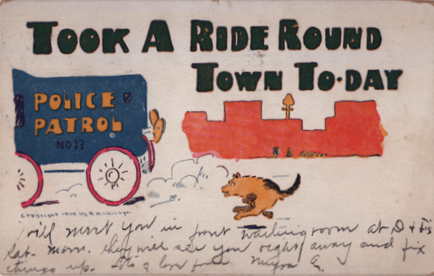
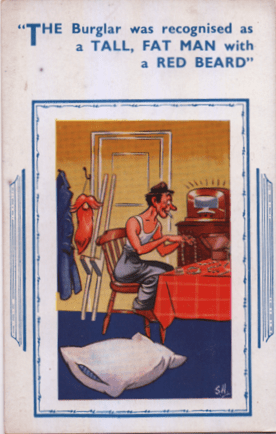
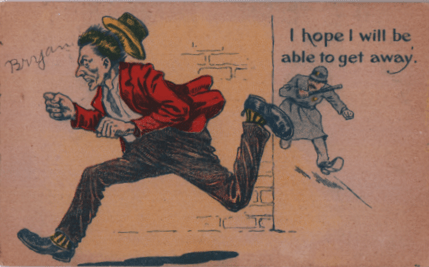
So, in the name of bygone conventions, I felt we should cover the aftermath of the crimes committed by heroes of postcards in our last column.
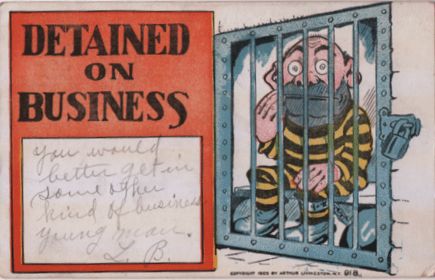
See, punishment was regarded as humorous by our cartoonists as well as the original crimes. (Must do that spanking blog one of these days, to show how some of them REALLY got into it.) So the wild, macho types who are holding guns on citified wimps in some postcards wind up with their heads shaved and their legs weighed down by chains and heavy iron spheres.
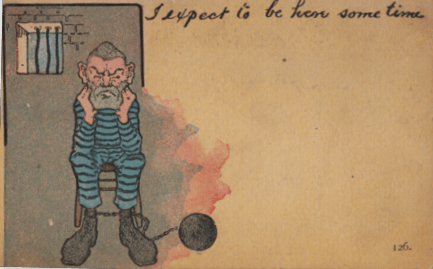
The ball and chain would seem to be essential to the gag, which generally involves a message that the sender is going to be a little later than expected. A barred window also helps show the protagonist’s plight, thus enhancing the definite nature of the sender’s difficulties.
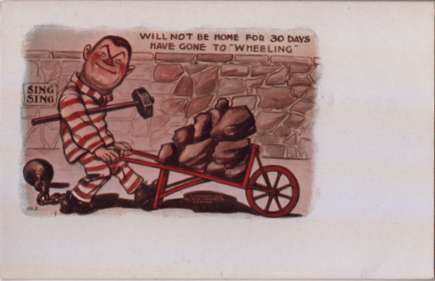
The cliché of breaking big rocks into little rocks doesn’t turn up all that often here, but the business did exist. And you will observe that Wheeling, West Virginia, a city blessed by comedians for generations, was also present for the busy cartoonist.
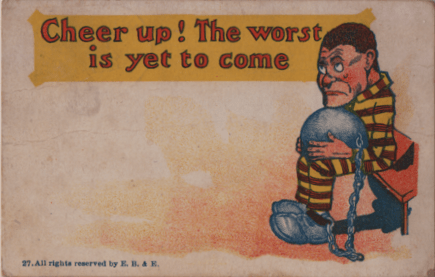
You may also notice that, just like the postcards in the last column, we are somehow made to feel sympathy for the crook here. Life in prison, though it might be funny, was not especially fun. And as OUR lives are not always a basket of victories, we understand the prisoner’s emotions.
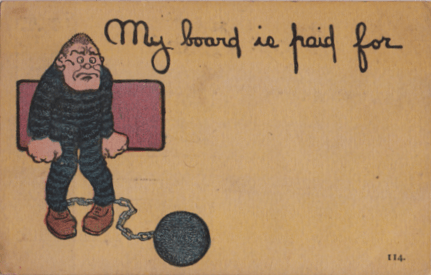
Laughing at them at the same time.

After all, as we were told in those days and continue to be told today, we have to make the best of things, and accept our lot. Those who grumble at what has come their way will never stop grumbling, we are told, and we must always look on the bright side, laughing at our troubles and enjoying the little benefits which come our way.

Or not.
 Blogsy Babbles