
I have been fighting my way through a book I have tried to read several times before. It was a bestseller in its day, and was still touted as a classic of its genre when I was in school and trying to read every book in the humor sections of my school libraries and the public library. (AND the ones we had at home: we valued a good laugh.)
Maybe this book will be reviewed in this space at some future time (people misunderstand me when I say something like “Well, it has its points if you have the strength to put up with it”. They think that’s a negative review when, really…well, some nother blog.) But I did rear my head at one point and say “Whuh?”
The book deals heavily with the reminiscences of the author about being a kid somewhere around 1913. Some time is spent comparing HIS childhood and “Kids Today”. And in a section where he discusses how much time he was allowed for doing nothing, he describes the things he did when he was doing nothing. One of these things was watching other people, and among the people he watched were his older sisters, who, being that kind of teen, spent THEIR time on craft projects, including, he notes, bead-making and something called “tie-dyeing”, which he recalls produced handkerchiefs of amazing ugliness.
This is where my eyes lifted from the page. “Tie-dyeing”? Isn’t he about fifty-five years too early? I had recently been shocked by someone’s revelation that they had done a lot of tie-dyeing during the pandemic. You mean tie-dyeing wasn’t limited to Sixties communes and Seventies grade schools?
The Interwebs, as usual, was a fund of way too much information, all about the origins of tie-dyeing and the masterworks which have been produced in countries where the art was developed until masterpieces now found only in museums of African, Asian, and Middle Eastern art are preserved. But when did it hit the American craft worker?
Two authors in America wrote articles about tie-dyeing in 1909, and though the article by Charles Pellew (Columbia chemistry professor who became the Seventh Viscount of Exmouth: long story) was the more informed and respectful, the article by Amelia Beard in Harper’s Bazar, claiming this was an unskilled trade requiring only dye and cloth and string, was probably responsible for our author’s sisters getting involved in the tradition. Tie-dyeing apparently starts over every couple of decades, the artcles say, due to boredom (the pandemic), a dye shortage (in wartime; how does that help, by the way?), or a reaction to severe discipline (the Sixties; the “severe discipline” of the Fifties touted in this article, by the way, is related to the lax discipline of the Fifties our author was complaining about. But he was looking at it from another direction.)
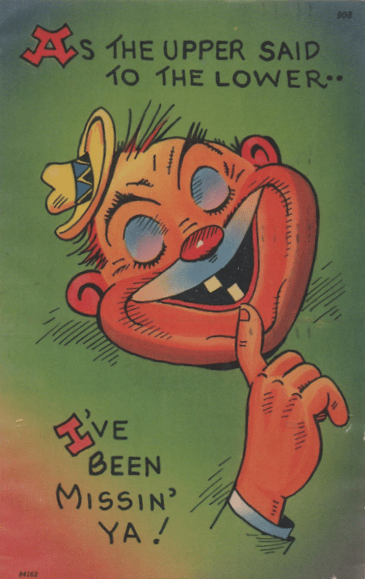
In the hopes of further clarification in modern history, I have been working on two other historical projects. I find that toothpaste was first put into tubes in 1880, when a Dr. Sheffield noticed painters squeezing paint from tubes. The original toothpaste tubes were made of a metal easy to squeeze (lead) and so on and so forth. I have not yet learned what I want to know: who was the first person to squeeze the tube from the wrong end? I suspect the answer may lie among those distant French painters who inspired Washington Sheffield.

Similarly, I can learn everywhere that toilet paper started being sold on rolls around cardboard tubes in 1890 by the Scott brothers, and that by 1930, toilet paper was advertised as “splinter free”. But I can NOT learn who was the first person to put a roll on the spindle the wrong way round. Several authorities have gone to the original patent, which shows the paper hanging with the loose end out, toward the user, but no one goes into the identity and motivations of the pioneer who spindled it the other way round.
But I will persevere: in my research and in trying to finish that book I mentioned earlier (it’s only 96 pages, for crying out loud.) And, in the vein of the author of that book, I will state here and now that I squeeze the toothpaste from the middle, hang the toilet paper whichever way I happen to pick it up out of the package, and have never knowingly tie-dyed ANYTHING.
There. At least it didn’t take 96 pages.
 Blogsy Babbles