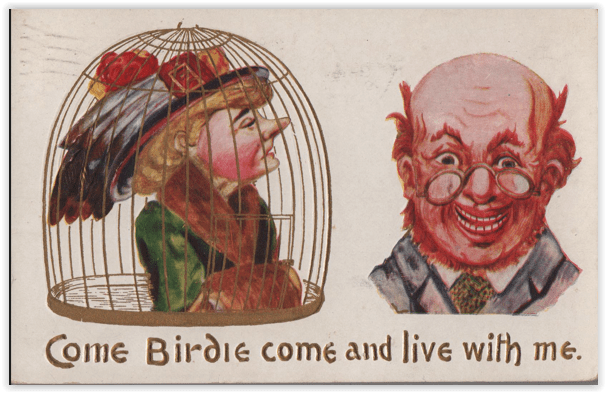
Whilst checking through my inventory for postcards showing monocles, I observed that there have been several ways of holding lenses up to one’s face. Ordinary glasses or spectacles spread the burden between ears and nose, while the monocle is held in place with the muscles of the face. But there have been other alternatives.
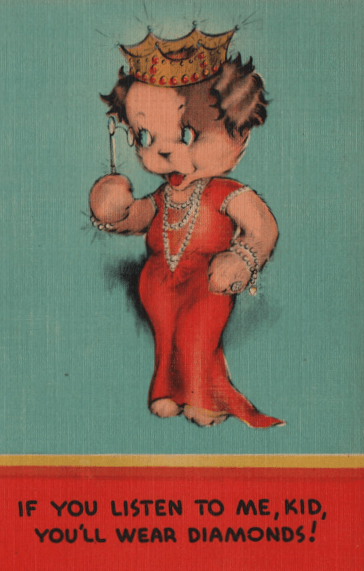
The lorgnette allows you to hold the lenses up with a handle. This device came about somewhere around 1700, and got its name from another word, though experts disagree whether it comes from a word for peeking at someone sideways, for squinting, or for using a ship’s telescope. It seems to have been intended primarily for women, who were not supposed to wear spectacles in public. A nice lorgnette was the answer. It quickly became a device of the upper classes, either for opera going or just for peering at fellow creatures on whom one was going to pass judgement.
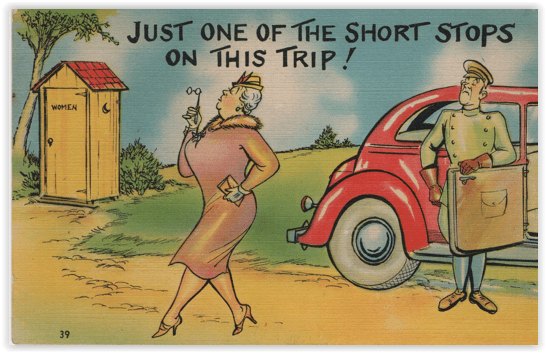
And so the lorgnette became a sign that the bearer was rich and probably snooty. This is possibly the single most popular image of a lorgnette in the history of postcards.
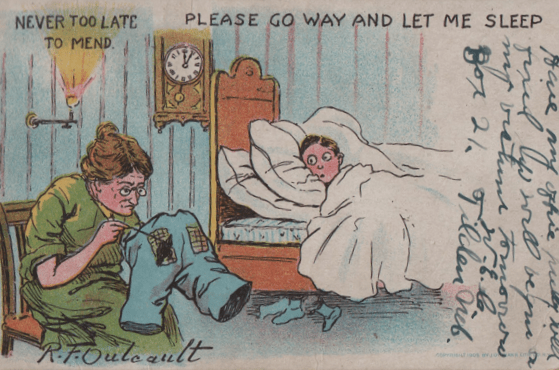
The pince-nez, or pinch nose, style has its own space in cultural history. It may be the oldest type of eyeglasses, and is also the hardest to hold in place. It served both men and women, and may have been related to the social trends which felt it was rather antisocial for anyone to wear glasses when out in public. These could be removed when you didn’t especially need them to see where you were going, and be donned for close work.
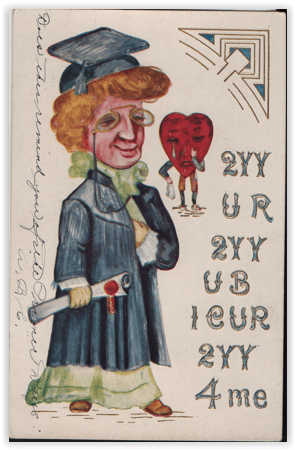
They became associated with people who did a lot of reading: university students, say.
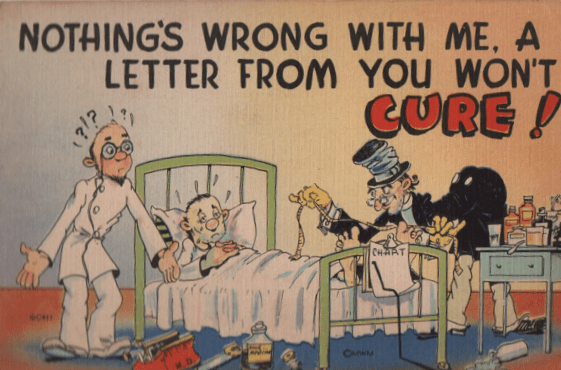
This also meant people who went to school for a long time might wear a pince-nez. Doctors were frequently shown wearing them.
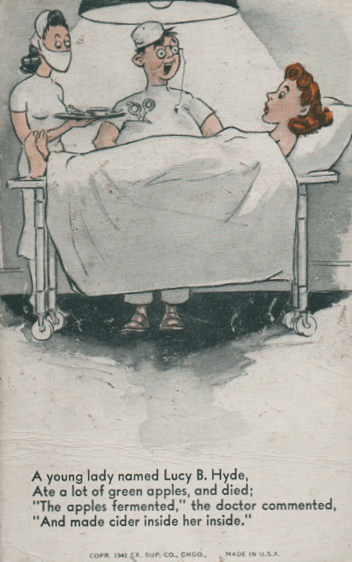
Even in the operating room. (That string, often a silk ribbon, hanging from one end was to make sure they didn’t go too far when falling off the face…kind of a good idea when doing surgery.)
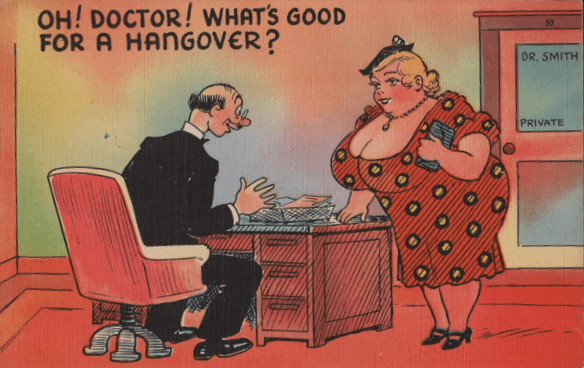
A pince nez could be removed and waved around in the hand while speaking to a patient, for dramatic impact, or used to tap a report on the desk.
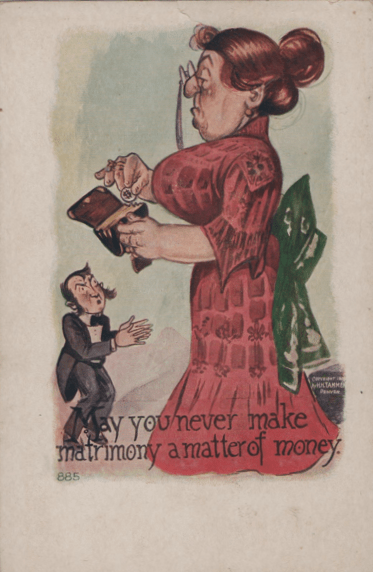
Anyone with authority, like a doctor or lawyer, was associated with the pince nez. It became another accessory of the moneyed classes, of those in authority.
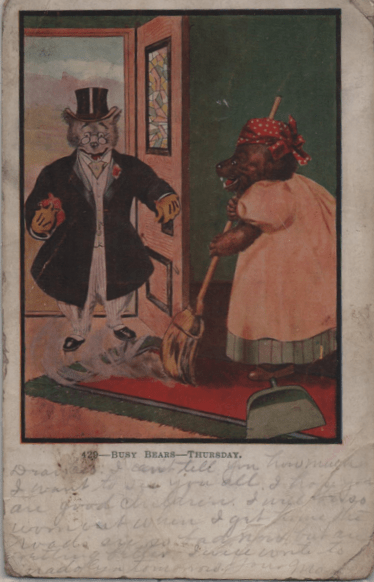
The master of the household wore them.
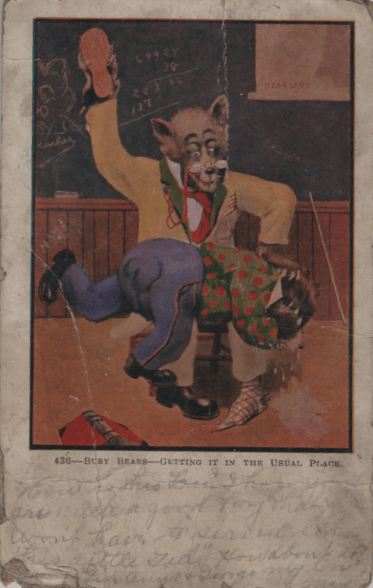
A schoolteacher was a candidate both through authority AND heavy reading.
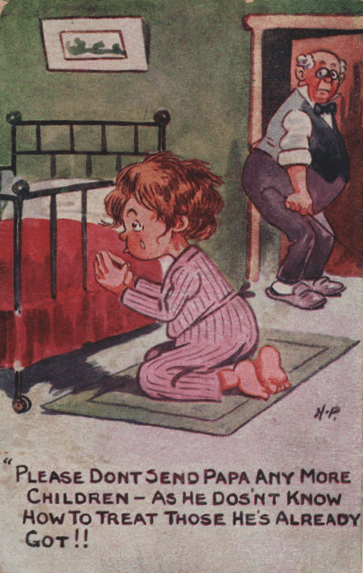
Dear old dad’s pince nez gave him that same air of authority.
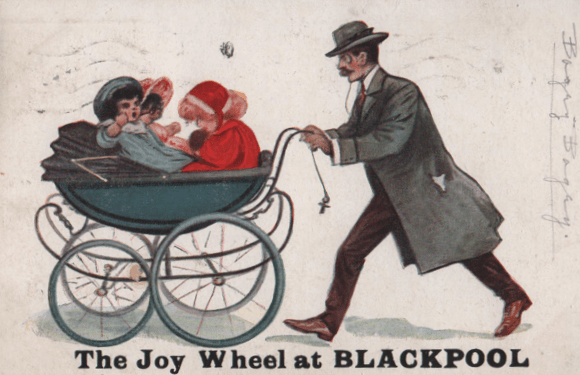
Even if all he was in charge of was the driving.
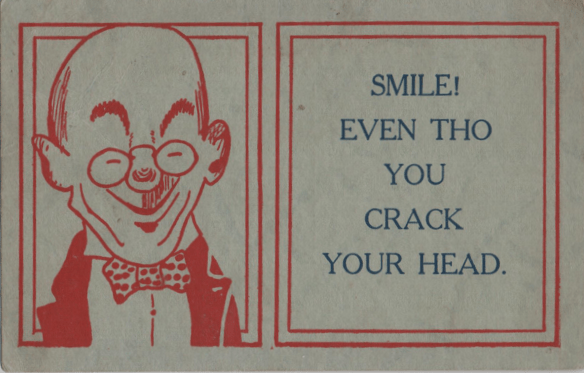
And of course when you want a bit of philosophy to make your life run more smoothly, it sounds better if that comes from someone with a pince nez. Shows he’s a man of vision.
 Blogsy Babbles