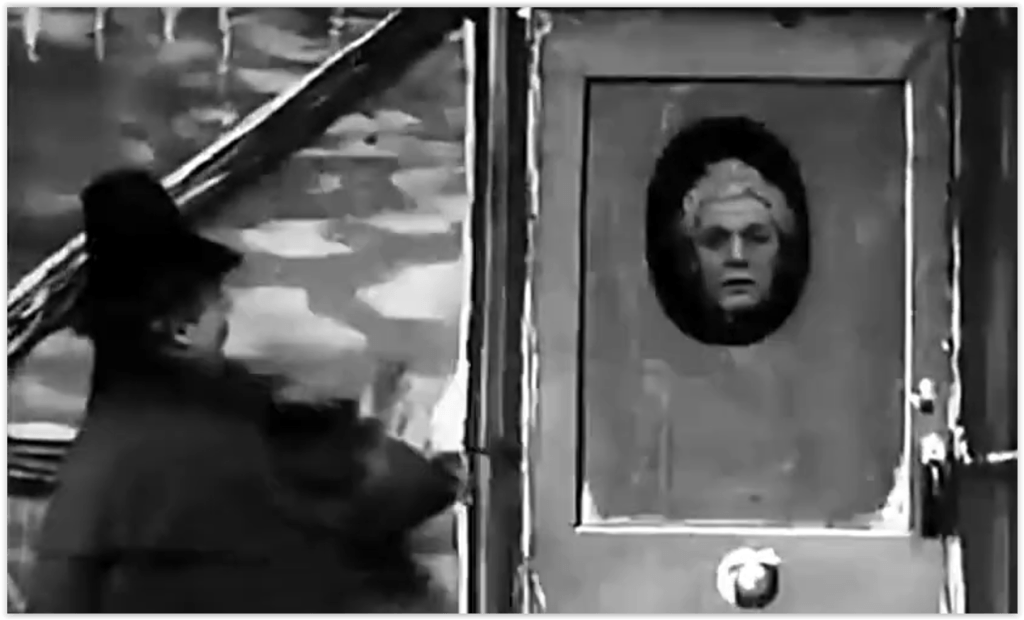
A sorry spot in serializing some of my non-fiction works in this space is a nagging refrain of “Remember how hard this was to research? Sure woulda been easier with the Interwebs”. Take, for example, my comparison of screen versions of “A Christmas Carol”, serialized herein not so long ago. It would easily have grown to at least double the size, with all the different versions of the movies which can now be found online, one or two of which were presumed lost when I was writing.
No, I am not tempted to go back and start over. Once was more than enough for the world, to judge by the rejections I had at the time and the wild excitement which did not greet each installment in this space. HOWEVER….
One thing that would have intrigued me very much at the time and which was almost inaccessible in my VHS days is the silent version of the Dickens tale. Not all of these survive, but enough do exist to fill a little space between now and my deciding what manuscript will come next n Mondays. (I wrote a sequel to The Sound and the Furry, for example, which apparently never went out to ANY publisher. I was waiting for all the royalties from the first book to be deposited, I guess.)
For example, when I was doing my original research, around 1999, only about fifteen seconds remained of “Scrooge, or Marley’s Ghost”, the earliest known example of a film version of the story. It appeared in 1901, and gets its title because Jacob Marley is easily at least the second most important character in the show. It was one of the first films to have intertitles, pages of words between scenes to tell us where we are in the story. This comes back into OUR story later.

Footage is still missing at the beginning and end of the film, and what is left starts at the close of the first segment, with Bob Cratchit ushering someone (probably nephew Fred) out of the office of an angry Scrooge. Bob is one of the Cratchitiest Cratchits whoever Cratchitted, perfectly meek and gormless as Scrooge orders him around. (Scrooge is nowadays identified as Daniel Smith, after some fans, without a film to watch, thought it was Sir Seymour Hicks, star of the 1935 movie, who had started appearing on the stage as Scrooge in 1901.) After Cratchit departs for Christmas revels, Scrooge exclaims in shock about Bob leaving a candle burning and then puts on one of the most ridiculous hats ever worn by an Ebenezer to head home himself.
Scrooge’s house, obviously painted on a backdrop, and architecturally unlike any other Scrooge abode, is the setting for the one snippet available when I wrote my book: we watch as Scrooge pulls out his key, and a cutout appears over the doorknocker showing Jacob Marley’s face.
Now we can follow as Scrooge steps away in horror, the face disappears, and the miser opens the flimsy door to go inside. After jumping back in fear from his own curtains, he dons his bathrobe and cap and shuts the curtains, which are black so special effects can happen. Jacob Marley is mildly impressive when transparent against these. (Later, when he is shown solid, he looks like a man with a sheet over his head.) Marley is in charge of the visions of Christmas Past—young Scrooge being rescued from boarding school by his sister and then breaking things off with his fiancée–and, in part three of the film, visions of Christmas Present.
This is primarily the Cratchit Christmas, without much of a goose or plum pudding, but with a suitably limp Tiny Tim and a nice performance by Martha, whom her brothers and sisters hide UNDER THE TABLE until Bob gets home. ‘GOD BLESS US EVERY ONE” is on a banner over the door, but after a general genial toast to Ebenezer Scrooge, Tiny Tim does propose the blessing, to Scrooge’s despair. There is a very brief Fred party scene, and then we march outside to “The Christmas That Might Be”, the final chapter in the film as it now exists.

The now solid Marley shows Scrooge a wholly unconvincing gravestone right next to the sidewalk (putting the grave scene first in Yet To Come seems unique) and the briefest snippet of another scene: thanks to the intertitle card, we know this would have been at the Cratchits’ for the death of Tiny Tim. The film breaks off, so we do not get to see the next morning, Scrooge’s conversion, and so forth.
This movie gets a LOT of the story into what must have been a run time of about ten minutes (the longest version now online lasts about six.) The acting is perfectly reasonable, the special effects effective enough (producer and director alike were fascinated by such things , and the work of producer Robert W. Paul was cutting edge at the time), and withal, a credible effort, though it works a LOT better for people who have read the book and already know what’s going on. Scrooge spends most of his screen time simply reacting with hand wringing and fist pumping, but it’s not really fair to judge him without access to the big scenes at the beginning and end. And if Scrooge’s house and gravestone don’t convince, well, there are weirder sets in talkies two generations younger.
In our next thrilling episode, we’ll consider more silent versions which can be watched today, and a couple which can’t (and why that MIGHT be a sad thing.)

 Blogsy Babbles