
He sat very close to his father’s side, upon his little stool. Bob held his withered little hand in his, as if he loved the child, and wished to keep him by his side, and dreaded that he might be taken from him.
“Spirit,” said Scrooge, with an interest he had never felt before, “tell me if Tiny Tim will live.”
“I see a vacant seat,” replied the Ghost, “in the poor chimney corner, and a crutch without an owner, carefully preserved. If these shadows remain unaltered by the future, the child will die.”
“No, no,” said Scrooge. “Oh no, kind Spirit! Say he will be spared.”
“If these shadows remain unaltered by the Future, none other of my race,” returned the Ghost, “will find him here. What then? If he be like to die, he had better do it, and decrease the surplus population.”
Scrooge hung his head to hear his own words quoted by the Spirit, and was overcome with penitence and grief.
“Man,” said the Ghost, “if man you be in heart, not adamant, forbear that wicked cant until you have discovered What the surplus is, and Where it is. Will you decide what men shall live, what men shall die? It may be, that in the light of Heaven, you are more worthless and less fit to live than millions like this poor man’s child. Oh God! to hear the insect on the leaf pronouncing on the too much life among his hungry brothers in the dust!”
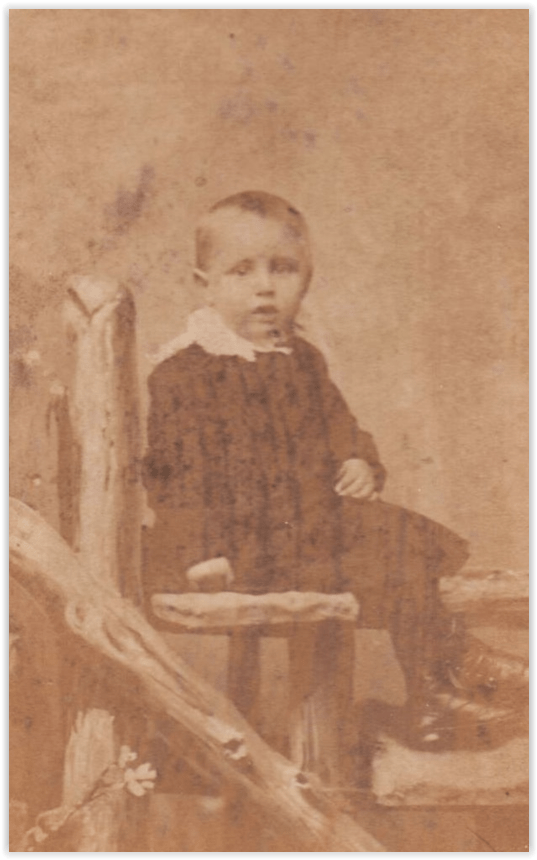
And here we smack Scrooge right between the eyes. In most versions, the Ghost doesn’t come right out and give the message as “You don’t care what happens to other people; this is what ha[p[pens to other people. Of you hadn’t been obsessed by on taking care of yourself, this odd and thoughtful child might not be near death.” In some versions, to be sure, we give another twist of the knife by making Tim the only one aside from Bob to stick up for Scrooge during the Toast. (To do that, of course, they have to put the next segment before this one.)
Hicks watches Tim lean on the crutch, looking up at Bob. “Spirit, tell me that Tiny Tim will live.” The conversation continues much as written; when Scrooge recognizes the quote, he murmurs “Me own words.” The Spirit goes on with that magnificent final speech, but leaves out the insect on the leaf image.
Owen puts this scene before dinner. He asks about Tim, is answered, and says “No, no: surely he’ll be spared.” “With the kind of care that money could buy, who could tell? But Bob Cratchit has no money. Not even a position, I’ve heard. If all this remains unaltered by the future, next Christmas will not find Tiny Tim here.” Scrooge then hears himself being quoted, and turns to stare at the Spirit.
Sim I puts this all between church and dinner, presenting it much as written, except that the Spirit does not repeats the line about shadows being unaltered, as he does in the text. He merely asks, “Why? If he be like to die, he’d better do it, and decrease the surplus population.” Scrooge’s head jerks on recognizing this remark.
March has to nag to get an answer. “Will Tiny Tim live?” “My life on this globe is very brief; it ends tonight.” “Will Tiny Tim live?” “I see a vacant seat in the poor chimney corner, and a crutch without an owner, carefully preserved. These shadows may be altered only by the Spirit of the Future.” “Well, where do I find the Spirit of the Future?” “Look within yourself, for if you continue as you are, the answer is there before you.” Scrooge thinks this over, but when he turns to ask a question, the Spirit is gone. Scrooge, looking around, suddenly stops and stares straight ahead in horror.
Rathbone asks, “Spirit, tell me if Tiny Tim will live.” “I see an empty chair by the chimney corner. If these shadows remain unaltered, no brother of mine will find him here.” Scrooge protests, but the Spirit replies, “I am the Present. I cannot answer for the Future.” Scrooge is of a mind to argue, but the Spirit cuts him off by saying he has another house from Scrooge to see.
Magoo demands, “What’s wrong with that boy, the tiny one?” “I see a vacant seat in the chimney corner, and a crutch carefully preserved. If these shadows remain unaltered by the future, the child will die.” Scrooge has a flashback of himself delivering the “If they be like to die” speech. This act of the play closes on this, and the curtain falls.
Haddrick brings this in after the Toast. “Yon child. Tiny Tim. Tell me if Tiny Tim will live.” “I see a vacant seat in the poor chimney corner, and a crutch without an owner, carefully preserved. If these shadows remain unaltered by the Future, the child will die.” “Is there no chance he’ll live?” “If these shadows remain unaltered by the Future, none other of my race will find him here. What of it? If he be likely to die, he had better do it, and decrease the surplus population.” “You use my own words against me.” “You used the words. Only you can undo them.” “There is nothing I can do.” “There is. But you’ll have to find out the hard way.” “The hard way?” “My time is nigh. Come!”
Sim II does not give us much of the Cratchits, but their financial situation is indicated by how much they are bundled up, even indoors; there is much coughing, too, though they’re right up next to the fire. Scrooge, eyes cast down, asks if Tiny Tim will live. The Ghost replies, also giving him a quick vision of the empty chimney corner. Scrooge’s eyes widen. “No no.” “What of it? If he be like to die, he had better do it….” “Don’t!” “And decrease the surplus population.” He goes through the whole insect on the leaf speech, his eyes raised to Heaven, his voice one of sorrow.
In Finney, the toast before this and the one after are combined and given first; Scrooge and the Ghost walk from the house. “What an unpleasant child!” cries the Ghost. “There are few things more nauseating to see than a happy family enjoying themselves at Christmas. Do you not agree?” Scrooges knows he is being baited, but responds, “I think Bob Cratchit’s really quite fond of me.” “So’s his wife: couldn’t you tell?” “She doesn’t really know me.” “That is one of the few things wherein Fate has blessed her.” Scrooge walks on before asking “What will become of the child?” The Ghost stops. “What’s this? Concern over a sick child? Have you taken leave of your senses?” “Don’t mock me, Spirit. Is the child very sick? Not that it’s of any great importance to me whether he is or not, but is he?” “Well, of course, he’s sick.” “You mean he’s seriously ill?’ the Spirits answers with only a gaze of deep solemnity. “Will he live? Well, WILL he?” “What does it matter to you, Ebenezer Scrooge? If he is going to die, then he’d better do it, and decrease the surplus population.” Scrooge does not reply.
In Matthau, Tim, running to Martha with his toy soldier, trips and falls. Scrooge cannot intervene, and becomes distraught at this. “Is there no way I can help him?” “It is, perhaps, too late.” We break off here to take Scrooge to his nephew’s party, but we return later to the Cratchits’, where Scrooge asks “What of that other child, so tiny he seems little more than a babe himself?” “I see a vacant seat in the chimney corner, and a little crutch without an owner, carefully preserved.” “Oh, dear God, let it not be!” Scrooge falls across the vacant seat, calling “This cannot be!” “Why not?” says the Ghost, “Who cares?” Scrooge is astonished by this, which leads to the song “One Little Boy”, in which the ghost argues the case for Tim’s demise, forcing Scrooge to retort that one life DOES matter. There is a line about decreasing the surplus population, a line which Scrooge has not, in this version, actually uttered. He does admit to having thought it, though, and is ashamed of it.
In McDuck, Tim, still looking at all the food, says “We must thank Mr. Scrooge.” Mrs. Cratchit looks sorrowful, but says nothing. “What’s wrong with that kind lad?” “Much, I’m afraid. If these shadows remain unchanged, I see an empty chair where Tiny Tim once sat.” Tim, having observed that his father’s plate is nearly empty, offers some of his own food. “You mean…Tim will….” But the Spirit has vanished. Scrooge cries out to him, demanding to know more about Tim.
Scott steps to the table to peer at Tim as the boy eats. The dialogue proceeds much as written, save that the Ghost sees “an empty seat at this table.” Scrooge smiles a bit on hearing himself quoted, and says “You use my own words against me.” Nodding, the Spirit laughs and replies, “Yes. So perhaps in the future you’ll hold your tongue.” He delivers a fierce “insect on the leaf” speech.
In Caine, we get the Toast first, and the song “Bless us All,” closing i=with another of Tim’s coughing fits. “Spirit, tell me if Tiny Tim will live.” “That is the Future. My realm is in the present.” The Ghost speaks with an effort, he is already going gray. “However, I see a vacant seat by the chimney corner, and a crutch without an owner. If these shadows remain unaltered, I believe the child will die. But what then? If he is going to die, he had better do it, and decrease the surplus population!” Scrooge turns, with a stricken, “Oh, Spirit!” He turns to look with fear at the Cratchits again. Dickens himself then gives us the paragraph (yet to come in the text) which closes the Cratchit section of the book.
Curry also has the Toast first. While the rest of the family clears the table, Tim hobbles to the fire and picks up a copy of Robinson Crusoe. “Look familiar?” asks the Ghost. Scrooge sees a vision of himself as a child. Bob and his wife now go through the material about Tim hoping the people saw him in church ending with “People would be thankful for their good fortune.” Scrooge murmurs “I am.” “What?” Instead of answering the Ghost, Scrooge moves in to look over Tim’s shoulder, enjoying Robinson Crusoe with him. “A remarkable boy,” he says, “But so frail. Spirit, tell me if Tiny Tim will live.” The Ghost grows grey. “I see an empty seat in the poor chimney corner, and a crutch without an owner. If these shadows remain unaltered by the Future, the child will die.” There is a vision of the empty stool. “Oh no, Spirit! Tell me he will be spared!” “Well, if he’s going to die, he had better do it, and so decrease the surplus population, right?” “I didn’t mean….” “Next time,” the Ghost instructs him, “Find out who the surplus is. Remember, Scrooge, no one is worthless or unfit to live.” The “God bless us, every one” toast comes in here, and Bob observes how glad he is to be in the bosom of his family. Scrooge mourns, “I wish I had a family to be with.” The Ghost says he does, silly man, and whisks him to Fred’s party.
Stewart, having asked earlier if Tiny Tim would live, watches him drink the “God bless us every one” toast and demands, “Is there no chance that the boy will be spared?” “Not if the future remains unaltered.” “Hmmmmm?” “But so what if it happens? If he is going to die, he had better do it quick, and decrease the surplus population.” Scrooge pulls himself up on hearing the quote, and takes it like a boy being scolded. The Ghost delivers the “Insect n the Leaf” speech with real feeling.
FUSS FUSS FUSS #15: When Does the Old Man Melt?
When does the power of Christmas to make us feel for others infect Scrooge? The textuial Scrooge shows signs of softening early on, at his old school. The fact that he weeps for the young Ebenezer hardly counts: he is, after all, just feeling sorry for himself. But at the end, when he is wishing he had given the caroler at his door something, he is obviously picking up an idea. By the time he meets Christmas present, he admits it, and Dickens observes that this is a humbler Scrooge than before.
Filmmakers often alter this. Obviously suspense will grow if Scrooge keeps refusing to listen. This does run the risk of making audiences feel that the only thing that matters to the old geezer is the sight of his own tombstone.
I have listed our Scrooges in the order they thaw.
Curry, an especially hardhearted old miser to start with, wishes he’d been kind to the caroler. He backslides a bit later, it is true, but the change has started. The later visions seem to be working at his grumpiness as much as anything else.
Hicks is very meek on meeting Christmas Present, actually using the line about Christmas past having taught him a lesson which is working in him now.
Sim I is thawed by the visions of the past, but becomes despondent, frequently noting that he is too old to change his ways.
Sim II is similarly very meek when he meets Christmas present, admitting the Ghost may have something to teach him; Rathbone is similarly inclined.
Caine weeps during the breakup scene with Belle, and is hardly the same person afterward. He laughs cheerfully with the Ghost of Christmas present, and admits that he may not have understood about Christmas. The Cratchit dinner completes the change.
Whenever Owen shows signs of relenting. Christmas Past pushes matters too far, freezing him up again. He seems to understand that he has changed for the worse, and utterly refuses to look at any more visions of his past. The Ghost of Christmas Present, a little less likely to lecture, accomplishes the transformation.
March shows few signs of melting beyond enjoying the Fezziwig party, and Christmas present’s song. He is not rendered wholly human until Tiny Tim’s song at the Christmas table.
Magoo, merely puzzled by the Cratchits’ happiness, also seems to wait for Tiny Tim to convince him.
Matthau, seeing Tiny Tim fall, rushes to catch him, showing that he has thought for others by now. The recollection of his unkindness to Fred reduces him to tears.
McDuck seems merely to regret his past, feeling sorry for himself. But his concern for Tim’s future means, when he finds himself abandoned by the Spirit and standing in the snow while wearing only his nightshirt and slippers, he is more distraught about Tim’s situation than his own.
Finney does wish he’d given the carolers something, but the sense of guilt makes him colder and grumpier. He smiles while under the influence of the Milk of Human Kindness, but goes on snarling at the world and at Christmas. Fred’s Christmas party is what makes the difference; he seems honestly to be considering what he “might have shared, and turned to happiness”. His genuine regret when the Ghost of Christmas present departs indicates that he now attaches some importance to the holiday.
Stewart is troubled by the visions of the past, particularly what they mean to his treatment of Fred, but he hasn’t especially changed. He allows that he was happy with Belle, and at Fezziwig’s, but time changes people and those old days are gone now. He greets Christmas Present as an unpleasant ordeal to be gotten through. Fred’s Christmas party is what really starts to warm him up; the games and his sister’s favorite tune show Christmas to be of some value.
Scott LEARNS things as he goes along but treats his experiences as information to be added to his knowledge of the world, not reasons for changing his philosophy or world view. He declines even to admit he might have made some mistakes until he is abandoned by Christmas present.
Haddrick shows not the slightest sign of relenting before he asks about Tim; he softened not a jot in the past, considering everyone he saw there, including himself, as a fool. The Ghost of Christmas present ends by being disgusted with him (though he is at least thinking about things he never thought of before) and it takes the idea of dying unmourned to really melt THIS Ebenezer.
INTERLUDE
In Matthau, Tiny Tim, having recovered from his stumble, tells Martha about the children next door, who claim there is no Santa Claus, and say his wooden soldier is no more than a clothespin his father painted.
Martha sings “Yes, There Is a Santa Claus”, heavily inspired by “Yes, Virginia, There Is a Santa Claus”. We watch the ghost of Christmas present turn into Santa Claus. (We also see bob Cratchit painting the clothespin.) Mrs. Cratchit brings the dinner into this with “And yes, there is a goose”. Later, there is a toast, with glasses of punch, ending with “God bless us, every one.”
 Blogsy Babbles