
Holly, mistletoe, and berries, ivy, turkey, geese, game, poultry, brawn, meat, pigs, sausages,, oysters, pies, puddings, fruit, and punch, all vanished instantly. So did the room, the fire, the ruddy glow, the hour of night, and they stood in the city streets on Christmas morning, where (for the weather was severe), the people made a rough, but brisk and not unpleasant kind of music, in scraping the snow from the pavement in front of their dwellings, and from the tops of their houses; whence it was mad delight to the boys to see it come plumping down into the road below, and splitting into artificial little snowstorms.
The house fronts looked black enough, and the windows blacker, contrasting with the smooth white sheet of snow upon the roofs, and with the dirtier snow upon the ground; which last deposit had bee ploughed up n deep furrows by the heavy wheels of carts and wagons; furrows that crossed and re-crossed each other hundreds of times where the great streets branched off, and made intricate channels. Hard to trace, in the thick yellow mud and icy water. The sky was gloomy, and the shortest streets were choked up with a dingy mist, half-thawed, half frozen, where heavier particles descended in a shower of sooty atoms, as if all the chimneys in Great Britain had, by one consent, caught fire, and were blazing away to their dear hearts’ content. There was nothing very cheerful in the climate or the town, and yet was there an air of cheerfulness abroad that the clearest summer air and brightest summer sun might have endeavoured to diffuse in vain.
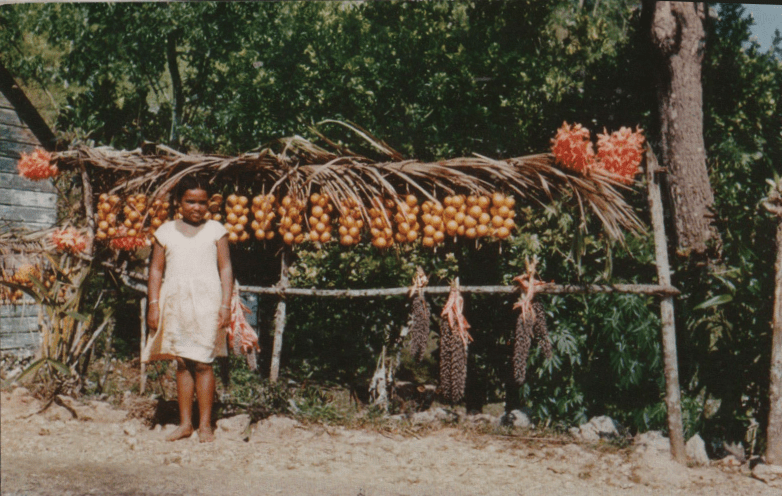
For the people who were shovelling away on the housetops were jovial and full of glee; calling out to one another from the parapets, and now and then exchanging a facetious snowball==better-natured missile far than many a wordy jest–laughing heartily if it went right, and not less heartily if it went wrong. The poulterers’ shops were still half open, and the fruiterers’ were radiant in their glory. There were great round, pot=bellied baskets of chestnuts, shaped like waistcoats of jolly old gentlemen, lolling at the doors, and tumbling out into the street in their apoplectic opulence. There were ruddy, brown-faced, broad-girthed Spanish Onions, shining in the fatness of their growth like Spanish friars, and winking from their shelves in wanton slyness at the girls as they went by; and glanced demurely at the hung-up mistletoe. There were pears and apples, clustered high in blooming pyramids; there were bunches of grapes, made in the shopkeepers’ benevolence to dangle from conspicuous hooks, that people’s mouths might water gratis as they passed; there were piles of filberts, mossy and brown, recalling, in their fragrance, ancient walks among the woods, and pleasant shufflings ankle deep through withered leaves; there were Norfolk Biffins, squat and swarthy setting off the yellow of the oranges and lemons, and, in the great compactness of their juicy persons, urgently entreating and beseeching to be carried home in paper bags and eaten after dinner. The very gold and silver fish, set forth among these choice fruits in a bowl, though members of a dull and stagnant-blooded race, appeared to know that there was something going on; and, to a fish, were gasping round and round their little world in slow and passionless excitement.
The Grocers’! Ah, the Grocers’! nearly closed, with perhaps two shutters down, or one; but through these gaps such glimpses! It was not alone that the scales descending on the counter made a merry sound, or that the twine and roller parted company so briskly, or that the canisters were rattled up and down like juggling tricks, or even that the blended scents of tea and coffee were so grateful to the nose, pr even that the raisins were so plentiful and rare, the almonds so extremely white, the sticks of cinnamon so long and straight, the other spices so delicious, the candied fruits so caked and spotted with molten sugar as to make the coldest lookers-on feel faint and subsequently bilious. Nor was it that the figs were moist and pulpy, or that the French plums blushed in modest tartness from their highly-decorated boxes, or that everything was so good to eat and in its Christmas dress: but the customers were all so hurried and so eager in the hopeful promise pf the day that they tumbled up against each other at the door, clashing their wicker baskets wildly, and left their purchases upon the counter, and came running back to fetch them, and committed hundreds of the like mistakes in the best humour possible; while the Grocer and his people were so frank and fresh that the polished hearts with which they fastened their aprons behind them might have been their own, worn outside for general inspection, and for Christmas daws to peck at if they chose.
But soon the steeples called good people all, the church and chapel, and away they came, flocking through the streets, lanes, and nameless turnings, innumerable people, carrying their dinners to the bakers’ shops. The signs of these poor revellers appeared to interest the Spirit very much, for he stood with Scrooge beside him in a baker’s doorway. And, taking off their covers as the bearers passed, sprinkled incense on their dinners from his torch. And it was a very uncommon kind of torch, for once or twice when there were agry words between some dinner-carriers who had jostled each other, he shed a few drops of water on them from it, and their good humour was restored directly. For they said, it was a shame to quarrel upon Christmas Day. And so it was! God love it, so it was!
In time the bells ceased, and the bakers’ were shut up; and yet there was a genial shadowing forth pf all these dinners and the progress of their coking, in the thawed blotch of wet above each baker’s oven; where the pavement smoked as if the stones were cooking, too.
“Is there a peculiar flavour in what you sprinkle from your torch?” asked Scrooge.
“There is. My own.”
“Would it apply to any kind of dinner on this day?” asked Scrooge.
“To any kindly given. To a poor one most.”
“Why to a poor one most?” asked Scrooge.
“Because it needs it most.”
Dickens sets out a detailed picture of early Christmas day for us. We can use this material to bring on another opulent display of props, set the scene, and give Scrooge another hint about Christmas, OR scoot right past it to the Cratchit Christmas dinner. Voting is split pretty evenly among the various versions.
Hicks goes straight to Bob’s house.
Sim I flies with the Ghost, who shows Scrooge “a place where miners dwell”. The family group is singing “Hark! The Herald Angels Sing”. After this they spot Bob Cratchit.
March materializes inside the Cratchit house. Magoo materializes just outside. Haddrick flies over London to land there. Finney skips all of this completely. Rathbone and the Spirit dematerialize as before and rematerialize in the Cratchits’.
Matthau and the Spirit fly over the city. The Ghost cries, “Look! The City of London at Christmas!” THEN they fly on to Bob’s place.
Using a streetlight as a flashlight and lifting roofs to peer into various houses, the Spirit takes McDuck straight to Bob Cratchit’s.
Curry and the Spirit fly to daylight. The Ghost, joyous, cries “Happy me! Happy everyone!” “Happy Humbug!” snorts Scrooge. The ghost asks if he is backsliding already. He replies, “Why should I be accused of being selfish when Christmas is such a selfish holiday?” Outraged, the Spirit lets him fall. Catching him in the nick of time, she asks if THAT was selfish. He says it was; she saved him only so she could annoy hi further. “Let’s see if I can convince you otherwise,” she says.
Versions which make more of the passage, if only a little, include Sim II, who finds himself standing with the Spirit in a snowy, thickly-populated, rather dark town square. The narrator explains that the Spirit dropped a few drops of good cheer from his torch. We spot Bob Cratchit galloping through the snow with Tim on his shoulder.
Bells ring; Scott walks with the Spirit in a daylit street. “What day is it now?” Scrooge demands. “Don’t you know? Christmas morning.” They pass a fish stall and a butcher shop. “There’s a lot of buying, isn’t there?” says Scrooge, rubbing his hands together. “Oh, Ebenezer, is that all you can see? Follow me and I’ll show you to what good use these things can be put.” “Is there some peculiar power that emanates from your torch?” “Oh, yes. There is.” Nodding, the Spirit moves on and declines to explain further.
Caine and the Spirit materialize in a dark square, but daylight and a crowd appear a moment after. It is time for the jolliest number of the production, “It Feels Like Christmas”, a musical evocation of what Christmas truly means (at least in this version.) The pair move through a cheerful bustle; Scrooge is detached and dubious. Making himself tiny, the Spirit moves in to bless a family of mice; Scrooge, peering into the mousehole, suddenly smiles. As holiday excitement expands through the crowd, Scrooge begins to look as if he regrets not being a part of it. The Ghost rejoins him, leading him into the dance. At the end, he is exhilarated. “Spirit, I had no idea! I wish to see friends, kin! Show me family!” (We will be transported to Fred’s Christmas party now, before we go to the Cratchits’.)
When Stewart reaches for the Spirit’s robe, we seem to see apples pouring from under it. The camera pulls back to show us the fruiterer in the square is refilling a bin. The Ghost casts a significant glance at Scrooge and sprinkles glitte4ing water from the torch as they move along. Scrooge asks why. “Is there a blessing in it?” “There is. My own.” They converse as described; when Scrooge asks “Why to a poor one most?” the Spirit answers in a tone that suggests Scrooge should have known this answer already.

It is Owen’s version which makes the most of this section. A pudd of smoke surrounds Scrooge and then we see people moving in and out of the baker’s. Scrooge asks what’s going on; the Spirit explains that the poor find it cheaper to take their dinners to the baker to be cooked. As we watch, two men bump into each other and start to snarl. Light blinks from the horn the Spirit carries, and the two men wonder aloud why they’re fighting. Scrooge asks what happened and is told that what is sprinkled from the horn is a spirit five times distilled: the Spirit of Christmas cheer, of love, of all that’s good, of all that makes this time of year different from any other time. The explanation goes on, but Scrooge has noticed two other men arguing. He points them out to the Spirit, who again flashes his torch and makes peace. Turning to Scrooge, he says “We stopped that.” Scrooge beams. “Yes, we did, didn’t we?” A bell chimes. “That church,” says the Ghost, “We have business there.” In the congregation, we find Fred and his fiancée sharing a hymnal. The Spirit leans over to confide in Scrooge, “I don’t believe for a moment that they love one another.” Scrooge disputes this. The Ghost goes on to say it is fortunate that the two don’t have the wherewithal to marry; their love will soon fade. Scrooge takes exception to that as well. “Their love will grow. They SHOULD be married.” Farther down the pew, we find Bob Cratchit and Tiny Tim singing “O Come, All Ye Faithful.” Looking down at Tim, Bob’s voice chokes off. A clasp of Tim’s hand hives him courage and volume again. When church lets out, , Fred and fiancée chat with Bob and Tim. As the Cratchits move on, Fred observes that the ice is perfect for sliding. His fiancée says they really shouldn’t: not in front of a church. She would seem to be borne out in this when the boys who ARE sliding are chased away by a clergyman. But when the boys are gone, that worthy has a quick slide himself. Convinced now, the young lady joins Fred in a glide along the ice. Of course they fall gleefully into the snow, where Fred kisses her. Our attention then shifts to Bob and Tim walking home.
 Blogsy Babbles