
This was not addressed to Scrooge; nor to anyone whom he could see, but it produced an immediate effect. For again Scrooge was himself. He was older now, a man in the prime of life. His face had not the harsh and rigid lines of later years; but it had begun to wear the signs of care and avarice. There was an eager, greedy, restless action in the eye, which showed the passion that had taken root, and where the shadow of growing trees would fall.
He was not alone, but sat by the side of a fair young girl in a mourning dress: in whose eyes there were tears, which sparkled in the light that shone out of the Ghost of Christmas Past.
“It matters little,” she said, softly, “To you, very little. Another idol has displaced me; and if it can cheer and comfort you in time to come, as I would have tried to do, I have no just cause to grieve.”
“What idol has displaced you?” he rejoined.
“A golden one.”
“This is the evenhanded dealing of the world!” he said. “There is nothing on which it is so hard as poverty, and there is nothing which it professes to condemn with such severity as the pursuit of wealth!”
“You fear the world too much,” she answered, gently. “All your other hopes have merged into the hope of being beyond the chance of its sordid reproach. I have seen your nobler aspirations fall off one by one, until the master-passion, Gain, engrosses you. have I not?”
“What then?” he retorted. “Even if I have grown so much wiser, what then? I have not changed towards you.”
She shook her head.
“Am I?”
“Our contract is an old one. It was made when we were both poor and content to be so, until, in good season, we could improve our worldly fortune by our patient industry. You ARE changed. When it was made, you were another man.”
“I was a boy,” he said impatiently.
“Your own feeling tells you that you were not what you are,” she returned. “I am. That which promised happiness when we were one in heart, is draught with misery now that we are two. How often and how keenly I have thought of this, I will not say. It is enough that I HAVE thought of it, and can release you.”
“Have I ever sought release?”
“In words. No. Never.”
“In what then?”
“In a changed nature; in an altered spirit; in another atmosphere of life; another hope as its great end. In everything that made my love of any worth or value in your sight. Of this had never been between us,” said the girl, looking mildly, but with steadiness, upon him; “tell me, would you seek me out and try to win me now? Ah. No!”
He seemed to yield to the justice of this supposition, in spite of himself. But he said, with a struggle, “You think not.”
“I would gladly think otherwise if I could,” she answered,. “Heaven knows! WhenI have learned a Truth like this, I know how strong and irresistible it must be. But if you were free today, to-morrow, yesterday, can even I believe that you would choose a dowerless girl—you who, in your every confidence with her, weigh everything by Gain, or, choosing her, if for a moment you were false enough to your one guiding principle to do so, do I not know your repentance and regret would surely follow? I do; and I release you, with a full heart, for the love of hm you once were.”
He was about to speak, but with her head turned from him, she resumed.
“You may—the memory of what is past half make me hope you will—have pain in this. A very, very brief time, and you will dismiss the recollection of it, gladly, as an unprofitable dream, from which it happened well that you awoke. May you be happy in the life you have chosen!”
She left him; and they parted.
“Spirit!” said Scrooge, “Show me no more! Conduct me home. Why do you delight to torture me?”
“One shadow more!” exclaimed the Ghost.
“No more!” cried Scrooge. “No more. I don’t wish to see it. Show me no more!”
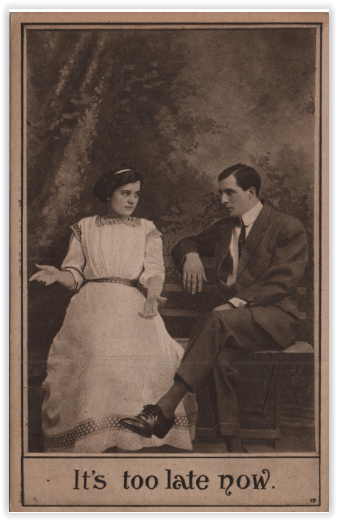
A whole lot of this never makes it to the screen. Scrooge’s remark about the evenhanded dealing of the world sounds too much like sense to be allowed. Belle is hardly ever dressed in mourning, And many of her speeches are removed, as they are unnecessary if we have been shown the happy couple plighting their troth earlier on.
But the sequence must not be omitted entirely, as it is the only place a musical version can logically slip in a love song (a musical without a love song might as well not even bother.) And it provides a good, solid role for a woman, something the Carol is not replete with. It also serves an important purpose in moving te plot along: this is the first time Scrooge is shown that part of his misery is his own fault. (It is traditional to compare Scrooge’s engagement to Fred’s, claiming that Scrooge kept putting off marriage until he achieved some goal of financial stability, from fear of marrying someone while he was poor. There is only the barest hint of this in the text.)
Hicks begins with a young couple in the counting house, pleading for more time to pay off their loan. Scrooge refuses brusquely, unaware that Belle has entered and is listening to everything. When the despondent couple depart, she informs him that she has refused to believe what she’s heard about the kind of man he has become. Now she has seen for herself, and she is furious. “But this is business,” Scrooge tells her, “If I were to allow sentiment to enter this counting house, I should be in bankruptcy court within a year.” He explains that the couple she has seen is a worthless, shifty pair who “have spent my good money.” She is adamant; he grows stubborn. She is to leave business affairs to him. “When we are married, I shall insist….” She takes off her ring and plants it on the mantel. “Have you taken leave of your senses?” he demands. This doesn’t serve to win her over, somehow; she grows more and more agitated. He tries to convince her that he has not changed toward her, but she stalks away, hoping he will be happy—alone—in the life he has chosen.
Owen omits this sequence.
Sim I and Alice rearrange the text, but the scene runs very much along the lines Dickens has drawn. At the end, when they have released each other from the engagement, Scrooge snatches up the ring. “You know I’m right,” says Alice. “I bow to your conviction,” he replies. “May you be happy in the life you have chosen.” “Thank you. I shall be.” When she is alone, Alice breaks down; apparently, she expected him to relent. The older Scrooge demands, “Show me no more.”
March redesigns the sequence, putting it right during Fezziwig’s party. The Ghost tells Scrooge “Your happiness was short-lived. Look again.” The happy couple argue; Ebenezer tries to explain, “That is not what I meant.” This does him as much good as it would any man; Belle says she has seen his nobler aspirations fall off, concluding, “You no longer need me.” “Have I ever said so?” “In words, no. In a changed manner” and so on. She finally walks away, declaring that he would never choose a dowerless girl. “Perhaps you will never choose any.”
The Ghost orders Rathbone to “look again”. He gets a much closer look at Belle as she sits on a bench under green trees. Her clothes are rather nice, but not so nice as Ebenezer’s. She explains how another idol has taken her place, and he replies with the line about there being nothing so hard as poverty. The conversation proceeds much as written; Ebenezer seems quite a pleasant, amiable chap, honestly confused by her attitude. She notes that their contract is an old one, made “before I was poor,” and she releases him. Neither of them seem terribly upset by all this, but old Scrooge begs to be taken away.
Magoo is one of the few Scrooges who is actually sitting with Belle when the scene opens. “It matters little,” she is telling him, and the dialogue runs much as written through the declaration that the master passion, Gain, has engrossed him. “True!” he says, “I’ve grown so much wiser!” She offers to release him. “Have I ever sought release?” “In words. No. Never.” “In what, then?” “In the very things you worship. Tell me truthfully: if you were free, now, would you choose a girl whose father left her so little money?” The older Scrooge cries “Yes, Belle! Yes!” while his younger self turns away. Belle wanders to the parlor window for the musical number “Winter was Warm”. Belle finally leaves, with a simple “Goodbye.” (Was it Scrooge’s parlor, then?) The older Scrooge calls after her, pleading, and when she does not turn back, cries “Spirit! Show me no more!”
Haddrick is in a green park with a Bell dressed in poor, drab garments. “It doesn’t matter to you; it doesn’t seem to matter at all. I love you, Ebenezer, but you love something more than me. I take only second place in your life.” “What do I love more than you?” “A golden idol, which you seemingly worship: money.” She leaves; the Ghost turns to the old Scrooge to say “Well?” “Bah! If she’d had sense and stayed with me, she’d be well off now.” “You have a cold heart, Ebenezer Scrooge.” “And a cold body, Spirit! Haunt me no more. Take me back.”
Sim II shows us a couple under a weeping willow; the field is green. This Belle is dressed in mourning, and looks a bit middle-aged. “You ae changed,” she announces, and explains about his nobler aspirations falling off. Ebenezer is now a heftier, harder man, who rolls his eyes impatiently as she speaks what he regards as missish nonsense. They go through the dialogue offering him release; when he fails to answer her question about whether he would do it all over, she concludes, “May you be happy in the life you have chosen.” Old Scrooge demands to be taken home, and wants to know why the Spirit delights in torturing him.
Finney is in the counting house. (This is one of a small number of versions, like hicks, in which young Ebenezer and old Scrooge are played by the same actor.) Isabel enters and calls his name. He grunts acknowledgement, and she announces, “I’ve come to day goodbye. I’m going away, Ebenezer. You will not see me again.” This attracts his attention. “But you’re going to marry me!” “No. You’ve found another love to replace me. She is much more desirable than I am.” He has no idea what she’s talking about, until she runs a hand through his gold coins. “How shall I ever understand this world?” he exclaims. “There is nothing on which it is so hard as poverty, and yet there is nothing it condemns with such severity as the pursuit of wealth!” They work through the dialogue much as written, save for Isabel’s cry of “Yes you are!” when he says he is not changed toward her. This is obviously difficult for them both, but harder on the two spectators. When Isabel asks if Ebenezer thinks he would still seek her out now, old Scrooge cries “I would! I do! I still do!” The Ghost shushes him. “I’m trying to listen.” Ebenezer finally refuses to discuss this any further in the office. Isabel tosses her ring into one pan of his scales, and puts two coins in the other. The coins outweigh the ring. “I am not good enough for you,” she tells him, and goes on with the “I would gladly think otherwise” speech. Ebenezer is silent; his older counterpart shouts, “Say something, you fool” Isabel delivers her last speech; old Scrooge calls “Don’t go! It’s a mistake!” When she leaves, Ebenezer calls after her, and does follow as far as the stairs. Then he returns to his desk. The older Scrooge calls him a fool, and reprises her song from earlier, watching her from the window. Ebenezer joins him for a moment, but then goes back and, resentfully, snatches up the ring from the scales and drops it into a drawer. “Spirit, remove me from this place! I can bear it no more!”
Matthau is informed, “There is another Christmas. You had just formed your partnership with Marley. Your business was new, but your ways were set.” “Oh, Spirit! Spare me the rest!” “You must drink this cup to the dregs.” Belle has just confronted Ebenezer in his office. “Yes! Another idol has taken my place!” Ebenezer is sarcastic. “Oh, really? That’s going a bit far, don’t you think, Belle?” Working on figures, he starts to explain that business is more important than Christmas, which is a humbug. This turns into a song, wherein much of the scene’s dialogue is delivered. As Belle sings about what might have been, we see visions of the possible Mr. and Mrs. Scrooge with two children, next to a Christmas tree. She eventually ends the engagement and flees the room. Ebenezer takes two steps after her, changes his mind, and sits at his desk again.
McDuck is in his counting house, counting. Isabel enters, saying she has been waiting for years in the honeymoon cottage she bought. She must have an answer: has he made up his mind? He has. She was an hour late with her last payment; he’s repossessing the cottage. In case old Scrooge has missed the point, the Ghost gives him a lecture about his failure.
“But you did forget, often,” Scott is told. “Oh?” “Look: another Christmas Eve. Delayed by the pressure of business. Do you remember?” “No!” he shouts, not answering the question but recognizing the scene. The couple are outside in the snow. Belle’s face is tragic as she tells Ebenezer she thought he might not come at all, now that he’s so busy. Ebenezer is brisk, well-dressed, somewhat after the manner of his father. He tries to explain about business; she exclaims, “Another idol has taken my place!” “What idol has replaced you?” “A golden one. You fear the world too much.” The scene goes on as written. She asks if he would seek her out, and, after a long pause, he answers as in the text. “Oh, Ebenezer,” she cries, “What a safe and terrible answer!” Both faces show great pain. “Ebenezer, I release you! You are a free man! I let you go with a full heart. May you be happy, etc.” The music swells; she walks away, still tragic. Old Scrooge remarks to the Spirit, “I almost went after her.” “Almost carries no weight,” the Ghost informs him, “Especially in matters of the heart.” She asks why he didn’t follow, and he explains how his father’s death left him a small inheritance, which he had invested toward their future. He was laying the foundation for success, which he has achieved. “Congratulations.” “I’ll thank you not to sneer, Spirit, show me no more. Conduct me home.” “You have explained what you gained. Now I will show you what you have lost.”
Caine is told, “There was, of course, another Christmas with this young woman, some years later.” “Oh, please. Do not show me that Christmas.” The Spirit concentrates; her eyes are all that show in the flash of white that follows. Then they are outdoors. Belle explains that Ebenezer has put off their wedding again, but that he is, after all, a partner in his own firm now. He keeps setting higher standards for his business before they can marry; he points out that he is doing this for her. “I love you,” he tells her. “you did once.” This leads to a song, “The Love Is Gone”. She moves to a bridge. Every time Ebenezer joins her, she moves farther along. He finally quits trying. The old Scrooge steps up behind her, joining the song until he is weeping too much to continue. Dickens and Rizzo are crying as well. “Spirit! Show me no more! Why do you delight in torturing me?”
It seems to be autumn. Curry is also late for a meeting with Belle; they are outside, and meet on a bridge. “Good news, mt darling! Guess what I’ve got!” “Give me a hint, Ebenezer.” “It’s small and round and gold, and holds the future.” “A ring?” “No. The profits from my first business venture.” Belle’s eyes dim as Ebenezer tells her all about it; Scrooge snaps at his younger self, “Stop talking, you mindless bump!” The song “I’ll Cross This bridge with You” presents the debate between Love/Passion and Gold/Security. Old Scrooge grows depressed; as belle leaves, he tells his younger self, “Go after her, you fool!” he then turns to the Ghost. “Stop. Don’t show me any more.”
We are outdoors with Stewart as well; it is snowing. Recognizing the place, Scrooge turns to the Ghost. “The years change people. I don’t wish to look, Sir.” “You must.” Ebenezer is complaining about the condemnation od the pursuit of wealth; the dialogue moves through Belle’s offer to release him. Old Scrooge cries “No! No!” Ebenezer asks if he has ever sought release, and they continue through the question of whether Ebenezer would seek Belle out now. Old Scrooge tries to answer for him, but Ebenezer is silent until Belle concludes “No.” “You think not,” Ebenezer counters. As belle goes through the next speech, Scrooge desperately coaches his younger self. “Speak to her! Why doesn’t he speak to her?” Belle explains that if he did choose her, “There’d be no profit in it, and if you forgot your principle of profit and did marry me, you’d regret it, my love.” She walks away; old Scrooge commands, “Go after her!” Ebenezer starts to rise from the bench, but sits again. “Don’t be afraid!” Old Scrooge implores, “Go after her!” Belle does look back twice to see if he is following; Old Scrooge watches her move on, until she disappears in snow and mist. “No more. Show me no more. Take me home. Why do you delight in torturing me?”

20 ½: Interlude
Sim I now interpolates some business episodes in the life of our protagonist. Having been ordered by Old Scrooge to take him away, the Spirit replies, “Very well. But we are not done yet, Ebenezer Scrooge. We do but turn another page.”
The Board of the firm managed by Mr. Jorkens has conducted an inquiry, turning up a deficit of 3200 pounds. Jorkens is not only a bankrupt, but an embezzler. This does not worry him much apparently, though it is a hanging offense. He warns the Board that if he prosecuted, they will gain only the eleven pounds, eight shillings, and tenpence left in the till, and a panic on the part of the shareholders which will put an end to any hope of a recovery. His young associates, however, have a proposition which offers a way out. Scrooge and Marley will make up the deficit from their savings, provided they can purchase shares to give them 51% od the enterprise. The Board expostulates; Scrooge and Marley sit back, knowing the Board members have no other choice.
The movie then jumps some years forward. Marley’s housekeeper, Mrs. Dilber, hurries to the counting house on Christas Eve. She tells a young Bob Cratchit that Mr. Marley lies dying; he is calling for Mr. Scrooge. Scrooge, however, refuses to leave the office before closing time. Business is business.
At seven, he deliberately takes his leave, declining Bob’s attempt to discuss Martley’s impending demise, and growling, “You’ll want all day tomorrow, I suppose.”
“If quite convenient, sir.”
“Every Christmas you say the same thing,” Scrooge replies, almost smiling, “And every Christmas it’s just as inconvenient as the Christmas before.”
He eventually reaches Marley’s quarters, where Mrs. Dilber and a man he mistakes for a doctor are waiting. The man turns out to be an undertaker, whom a grimly amused Scrooge apparently regards as a fellow businessman. “Is he dead yet?” he inquires
The undertaker and housekeeper offer to check, but he marches back to see for himself. A little uncertain, he leans warily over to listen for signs of life. Marley opens one eye.
“Have they seen to you properly?” asks a hearty Scrooge. “Last rites and all that, hmmm? There’s nothing I can do, hmmmm?” This last is not so much a question as a statement.
But Marley does want something. As we saw at the start of the picture, Marley has had some kind of deathbed vision of his fate; he desperately tries to warn Scrooge. Scrooge cannot figure out from what he is supposed to save himself. It seems to involve some moral principle, and he explains to Marley that they have been as good as the next man; probably better. Marley dies before he can explain. Scrooge walks out leaving the undertaker to pull the sheet up over his old partner.
“One shadow more,” says the Ghost. “No. Mo more. I cannot bear it.” The Ghost lectures him on his lack of feeling at the death of the man he worked with for eighteen years, and shows the Scrooge of seven years ago signing the register as he takes possession of Marley’s property. Scrooge, signing the book, does look a bit smug; the Ghost calls him a wretched, grasping, scraping, covetous old sinner. Scrooge replies “nonononono.”
 Blogsy Babbles